Bacterial colony petri dish
1344×768 · AVIF · CC BY 4.0
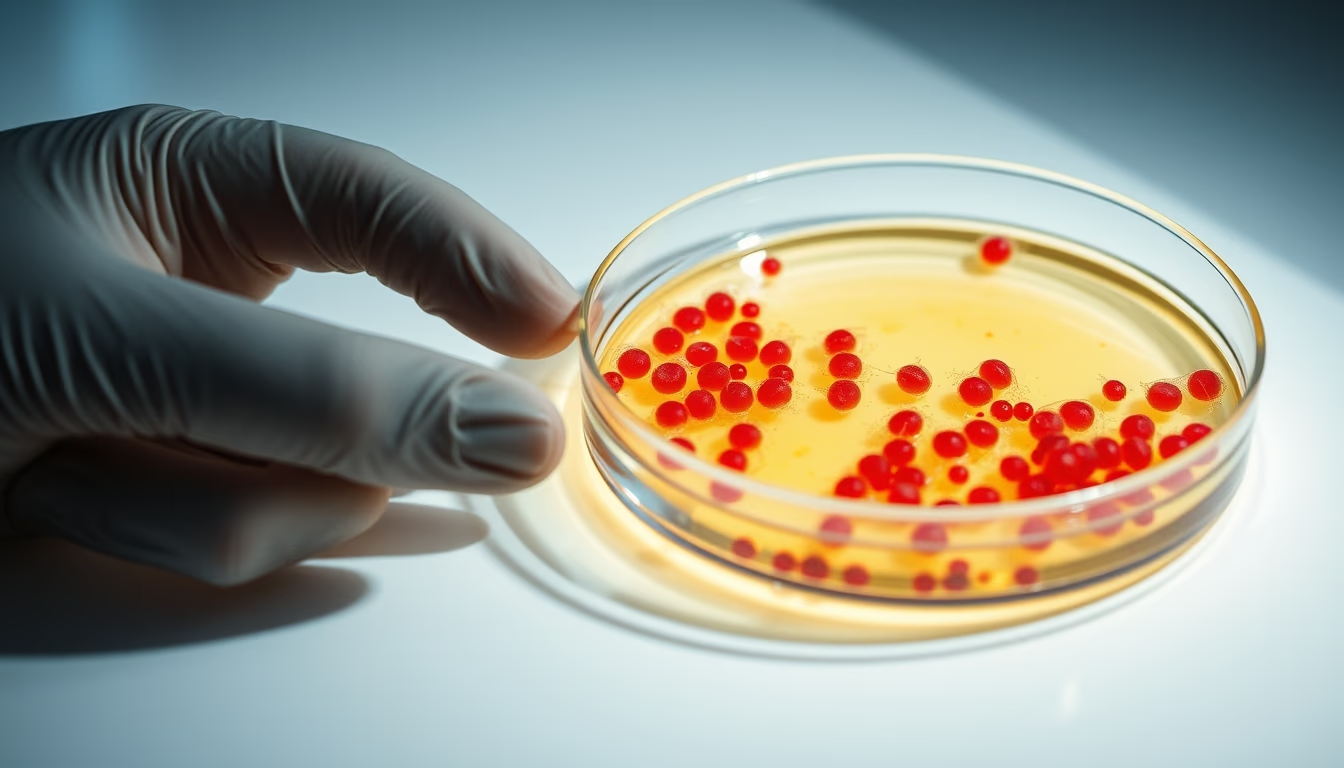
Bacterial colonies on a petri dish are fundamental to microbiological study, enabling identification, isolation, and characterization of bacterial species in the lab.
About this subject
A bacterial colony is a visible cluster of bacteria originating from a single cell that multiplies on a solid culture medium, such as agar, inside a Petri dish. This method was developed by German bacteriologist Julius Richard Petri in 1887, improving upon Robert Koch's techniques. The Petri dish allows isolated colony growth, each representing a genetic clone, essential for pure culture studies in microbiology.
The streak plate technique is the most common method to obtain isolated colonies. Using a sterile inoculation loop, the microbiologist spreads the sample in successive streaks across the agar surface. After incubation, individual cells form distinct colonies, enabling the selection of a single one for subculture. This procedure is crucial for precise identification of pathogens in clinical diagnostics, antibiotic susceptibility testing, and basic research.
Colony morphology, size, color, margin, elevation, texture, and pigment production, provides preliminary clues about the bacterial species. For example, mucoid colonies of Klebsiella pneumoniae indicate capsule production, a virulence factor. Colonies of Staphylococcus aureus often show a golden pigment. This macroscopic analysis is complemented by Gram staining and biochemical tests, forming the foundation of bacteriology.
Beyond medicine, bacterial cultivation on Petri dishes is vital in the food industry for quality control, environmental monitoring, and biotechnology for enzyme and antibiotic production. The simplicity and effectiveness of this technique make it a universal tool in laboratories worldwide, from basic education to advanced research.
Frequently Asked Questions
What is a bacterial colony?
A bacterial colony is a visible cluster of billions of bacteria, all descended from a single cell, growing on a solid culture medium. Each colony is genetically identical, forming a clone.
How is a pure bacterial colony isolated?
Isolation is performed using the streak plate technique on a Petri dish. With a sterile loop, the sample is spread in successive streaks, diluting cells until separate colonies grow, which can then be transferred to a new medium.
Why do bacterial colonies have different colors and shapes?
Colony characteristics such as color, shape, and texture depend on the bacterial species and growth conditions. Pigments, capsule production, and cell division patterns influence macroscopic appearance, aiding in preliminary identification.
Direct URL
https://pub-c7d6a6ea828543ac903a74a341ccb2e1.r2.dev/imagens/bacterial-colony-petri-dish-magazine-editorial-p8.avifHow to credit
Include a visible link back to UtilizAí. Copy one of the snippets below:
<a href="https://xn--utiliza-eza.com/en/midia/imagens/bacterial-colony-petri-dish-magazine-editorial-p8">Bacterial colony petri dish</a> by <a href="https://xn--utiliza-eza.com">UtilizAí</a>, licensed under <a href="https://creativecommons.org/licenses/by/4.0/">CC BY 4.0</a>.
[Bacterial colony petri dish](https://xn--utiliza-eza.com/en/midia/imagens/bacterial-colony-petri-dish-magazine-editorial-p8) by [UtilizAí](https://xn--utiliza-eza.com), CC BY 4.0
License: CC-BY-4.0