Bacterial colony petri dish
1344×768 · AVIF · CC BY 4.0
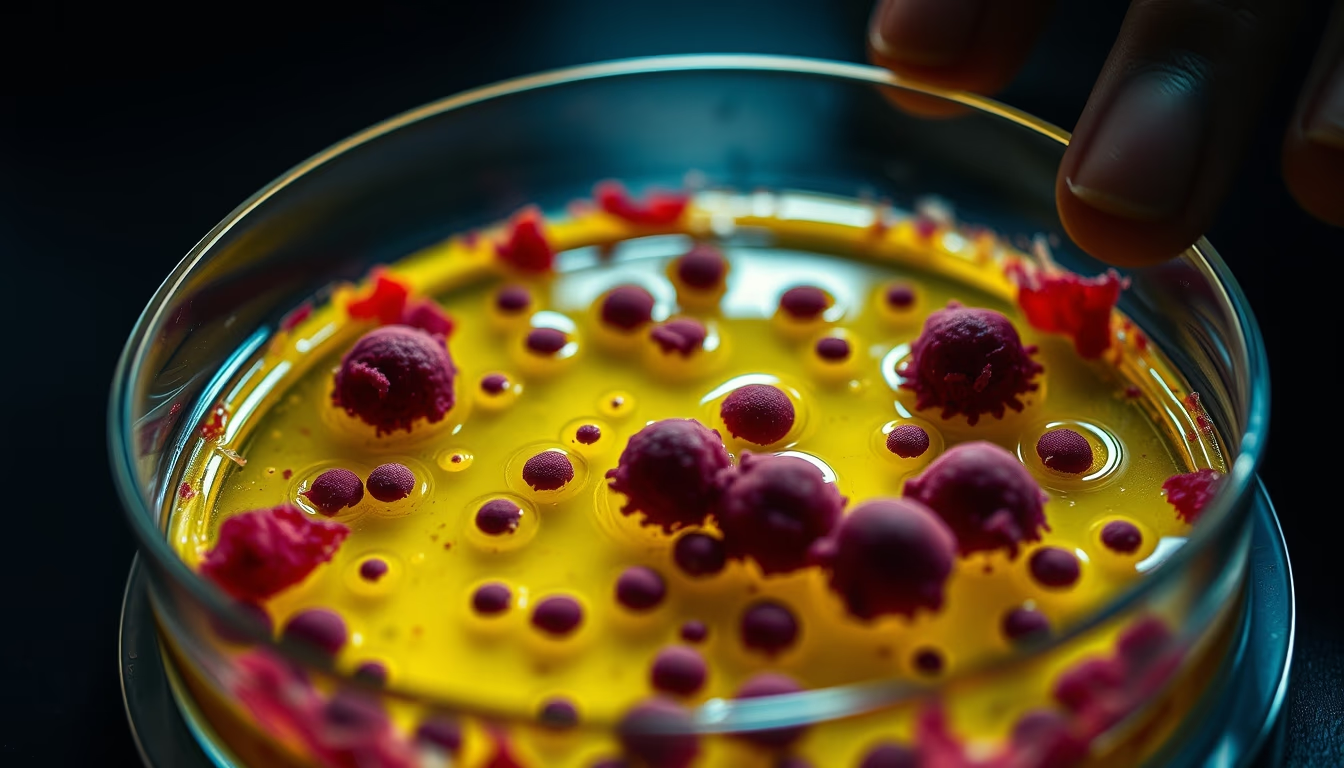
Bacterial colonies grown on petri dishes are essential tools for studying microorganisms, identifying species, and testing antibiotic resistance.
About this subject
Bacterial colonies observed on petri dishes are visible clusters of cells derived from a single mother cell. Each colony has distinct morphological features such as shape, margin, elevation, surface, and color, aiding in preliminary species identification. Cultivation techniques on solid media like nutrient agar or blood agar allow isolation and quantification of bacteria from clinical, food, or environmental samples.
Colony development depends on factors like temperature, pH, nutrient availability, and oxygen. For instance, Escherichia coli forms smooth, creamy colonies on MacConkey agar, while Staphylococcus aureus produces golden, hemolytic colonies on blood agar. Colonial morphology is one of the first steps in bacterial taxonomy, complemented by Gram staining and biochemical tests.
In clinical microbiology, colony counting (CFU/mL) is crucial for diagnosing infections. In the pharmaceutical industry, petri dishes are used in disk diffusion tests to determine bacterial susceptibility to antibiotics. Standardized methods, such as those from CLSI, ensure result reproducibility.
Interestingly, the petri dish was invented by German bacteriologist Julius Richard Petri in 1887 while working with Robert Koch. Since then, it has become a universal symbol of microbiology. Stylized photography of colonies, with dramatic lighting and intense colors, can be used in fashion editorials to evoke concepts of growth, contamination, or microscopic beauty, merging science and art.
Frequently Asked Questions
What determines the color of a bacterial colony?
Color can be due to natural pigments produced by the bacterium (e.g., the blue-green pyocyanin of Pseudomonas aeruginosa) or pH indicators in the culture medium (e.g., MacConkey agar differentiates lactose fermenters by pink coloration).
Why do colonies have different shapes?
Colony shape reflects genetic and environmental traits: circular colonies indicate uniform growth, while irregular or filamentous forms may result from bacterial motility or production of extracellular substances.
How is colony counting performed on a plate?
Usually, manual or automated counters are used. The rule is to count plates with 30 to 300 colonies to avoid statistical errors. The result is expressed as colony-forming units per milliliter (CFU/mL) of the original sample.
Direct URL
https://pub-c7d6a6ea828543ac903a74a341ccb2e1.r2.dev/imagens/bacterial-colony-petri-dish-high-fashion-editorial-p12.avifHow to credit
Include a visible link back to UtilizAí. Copy one of the snippets below:
<a href="https://xn--utiliza-eza.com/en/midia/imagens/bacterial-colony-petri-dish-high-fashion-editorial-p12">Bacterial colony petri dish</a> by <a href="https://xn--utiliza-eza.com">UtilizAí</a>, licensed under <a href="https://creativecommons.org/licenses/by/4.0/">CC BY 4.0</a>.
[Bacterial colony petri dish](https://xn--utiliza-eza.com/en/midia/imagens/bacterial-colony-petri-dish-high-fashion-editorial-p12) by [UtilizAí](https://xn--utiliza-eza.com), CC BY 4.0
License: CC-BY-4.0