Bacterial colony petri dish
1344×768 · AVIF · CC BY 4.0
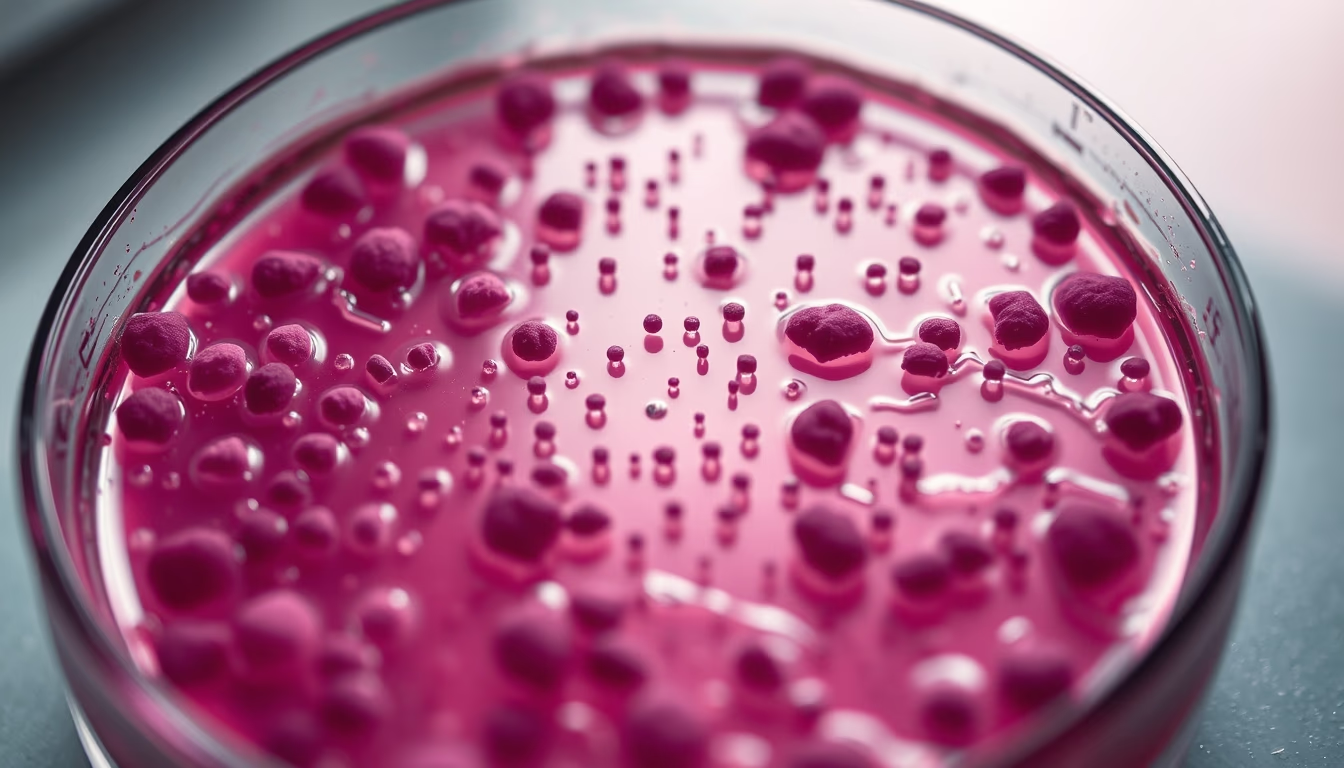
Bacterial colonies in a Petri dish are used in microbiology for isolation and identification of microorganisms, enabling studies of growth, morphology, and antibiotic resistance.
About this subject
A bacterial colony is a visible cluster of microorganisms originating from a single parent cell that multiplied on a solid culture medium. In Petri dishes containing agar, bacteria form colonies with characteristics such as shape, margin, elevation, color, and texture, aiding in species identification. Development depends on factors like temperature, humidity, and medium composition.
In clinical and laboratory practice, cultivation on Petri dishes is essential for diagnosing infections. Patient samples are streaked onto selective or differential media to isolate pathogens. Colony counting allows estimation of initial bacterial load, while antibiotic sensitivity tests (antibiograms) use impregnated disks on plates to determine resistance.
Historically, the technique was developed by Julius Richard Petri, an assistant to Robert Koch, in 1887. The Petri dish enables prolonged incubation without external contamination. Each colony can contain millions of bacteria; colony morphology is one of the first steps in identification, although molecular methods now complement analysis. Interestingly, some culture media produce specific colors, such as MacConkey agar which differentiates enterobacteria.
Frequently Asked Questions
What is a bacterial colony?
A bacterial colony is a visible cluster of bacteria originating from a single cell that multiplied on a solid medium, such as agar in a Petri dish. Each colony represents a genetic clone of the initial cell.
How are colonies cultivated in Petri dishes?
Petri dishes contain nutrient agar and are inoculated with bacterial samples using streaking or spreading techniques. After incubation at a suitable temperature (usually 37°C for 24 hours), colonies become visible.
Why is colony morphology important?
Colony morphology (shape, margin, elevation, color, texture) provides initial clues for identifying bacterial genera and species, helping microbiologists direct further tests such as Gram staining or biochemical assays.
Direct URL
https://pub-c7d6a6ea828543ac903a74a341ccb2e1.r2.dev/imagens/bacterial-colony-petri-dish-documentary-photography-p1.avifHow to credit
Include a visible link back to UtilizAí. Copy one of the snippets below:
<a href="https://xn--utiliza-eza.com/en/midia/imagens/bacterial-colony-petri-dish-documentary-photography-p1">Bacterial colony petri dish</a> by <a href="https://xn--utiliza-eza.com">UtilizAí</a>, licensed under <a href="https://creativecommons.org/licenses/by/4.0/">CC BY 4.0</a>.
[Bacterial colony petri dish](https://xn--utiliza-eza.com/en/midia/imagens/bacterial-colony-petri-dish-documentary-photography-p1) by [UtilizAí](https://xn--utiliza-eza.com), CC BY 4.0
License: CC-BY-4.0