Autonomous delivery robot
1344×768 · AVIF · CC BY 4.0
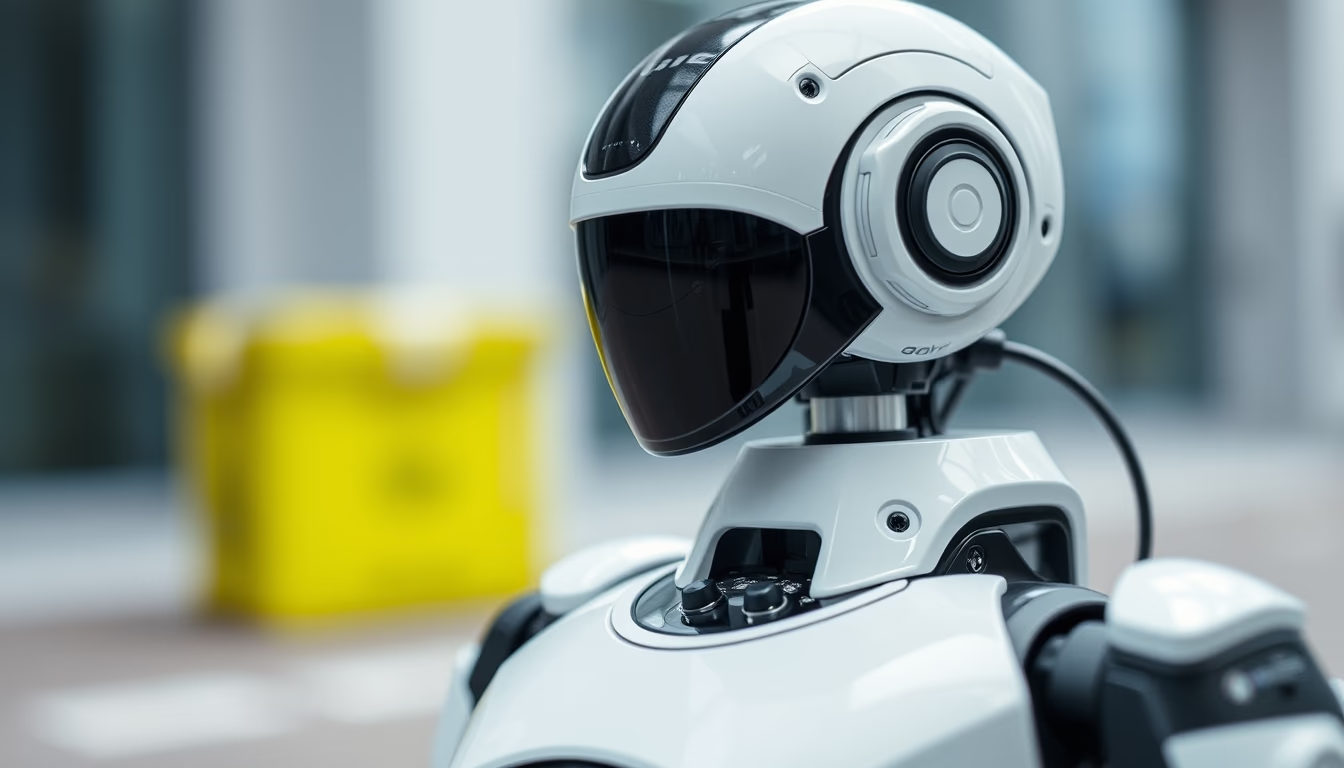
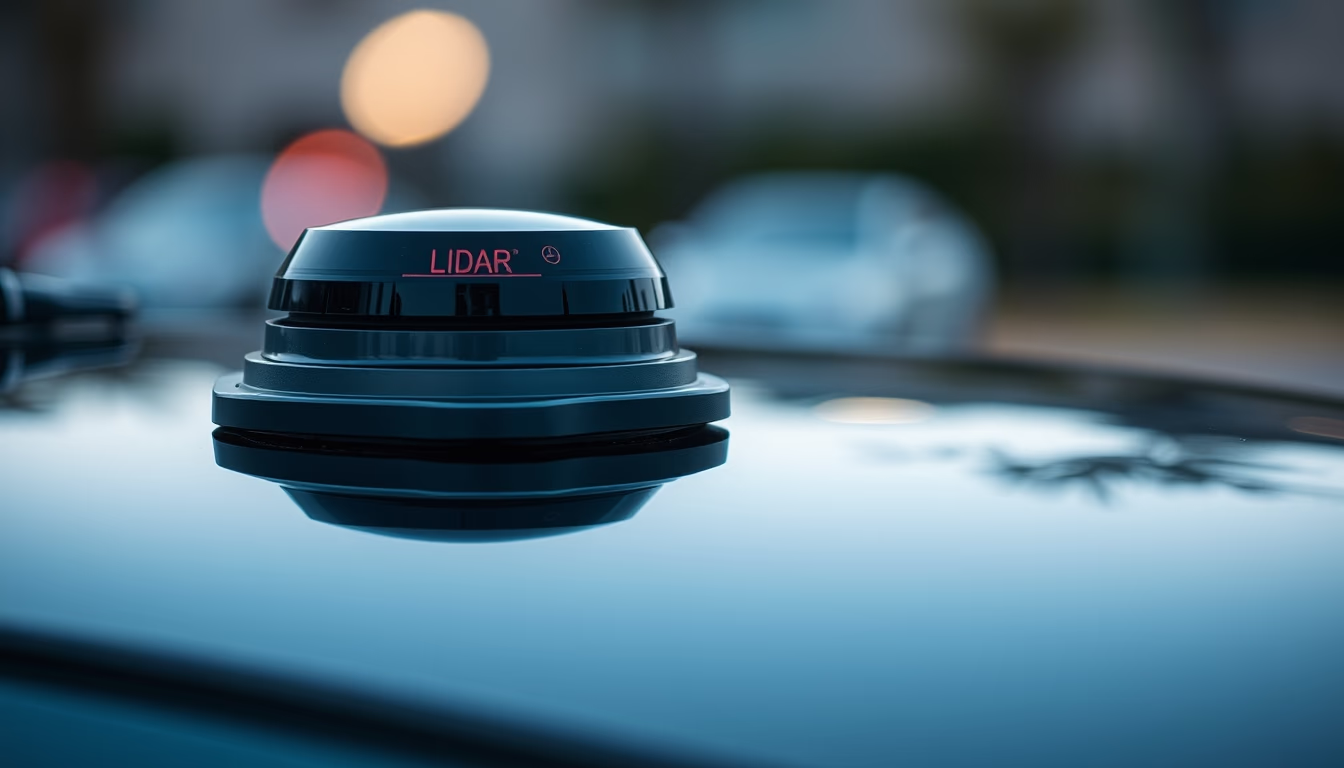
Macro close-up of an autonomous delivery robot reveals sensors and compact design enabling urban last-mile delivery.
About this subject
Autonomous delivery robots are a growing solution for last-mile logistics in urban areas. Designed to operate on sidewalks, bike lanes, and low-speed roads, these robotic vehicles integrate advanced sensors such as LIDAR, stereo cameras, and ultrasonic systems, enabling precise navigation in dynamic environments. Companies like Starship Technologies, Nuro, and Kiwibot already deploy fleets in dozens of cities worldwide, delivering food, groceries, and parcels in under 30 minutes.
The onboard technology is the key differentiator of these robots. Using edge computing, they make real-time decisions to avoid pedestrians, animals, potholes, and other obstacles. Proximity sensors and automatic braking systems ensure safety even in mixed traffic. Cellular or WiFi communication enables remote monitoring and route updates from a control center.
In Brazil, adoption is still nascent but promising. Pilot tests are taking place on university campuses such as USP and Unicamp, and in gated communities. Regulatory challenges, including defining circulation lanes and legal liability, limit expansion to public roads. However, the potential is huge: the global autonomous delivery robot market is expected to exceed 90 billion USD by 2030, according to consultancy estimates.
Beyond automation, these robots help reduce carbon emissions, as most are electric. They also lower operational costs for retailers and restaurants by reducing reliance on human couriers for short distances. With sensor costs dropping and artificial intelligence advancing, robots are likely to become an everyday sight in cities, operating 24/7 in coordinated fleets.
Frequently Asked Questions
How does an autonomous delivery robot avoid obstacles?
It uses sensors like LIDAR and cameras to create a 3D map, identifying pedestrians, animals, vehicles, and adjusting its path in real time.
Where are these robots currently operating?
They are deployed on university campuses and in pilot cities globally, such as in the US, UK, Estonia, and some cities in China.
What is the typical payload capacity?
Most models can carry up to 10 kg in a secure compartment, enough for meals, groceries, and small parcels.
Direct URL
https://pub-c7d6a6ea828543ac903a74a341ccb2e1.r2.dev/imagens/autonomous-delivery-robot-macro-closeup-p1.avifHow to credit
Include a visible link back to UtilizAí. Copy one of the snippets below:
<a href="https://xn--utiliza-eza.com/en/midia/imagens/autonomous-delivery-robot-macro-closeup-p1">Autonomous delivery robot</a> by <a href="https://xn--utiliza-eza.com">UtilizAí</a>, licensed under <a href="https://creativecommons.org/licenses/by/4.0/">CC BY 4.0</a>.
[Autonomous delivery robot](https://xn--utiliza-eza.com/en/midia/imagens/autonomous-delivery-robot-macro-closeup-p1) by [UtilizAí](https://xn--utiliza-eza.com), CC BY 4.0
License: CC-BY-4.0