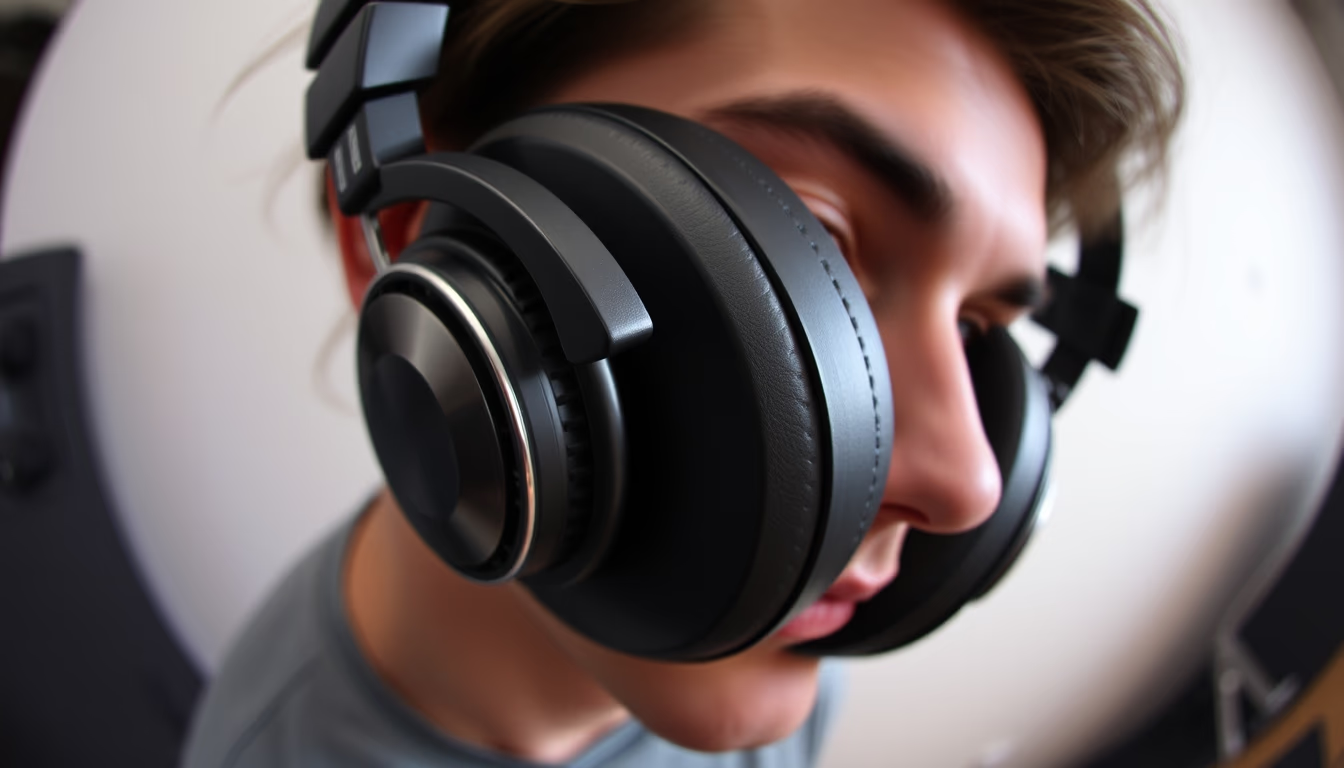
Audiophile headphones planar
1344×768 · AVIF · CC BY 4.0

Planar magnetic headphones deliver ultra-high fidelity sound with an ultra-thin diaphragm and linear response, ideal for audiophiles and professional studios.
About this subject
Planar magnetic headphones, also known as isodynamic or orthodynamic headphones, use a different technology than traditional dynamic drivers. Instead of a paper or plastic cone attached to a voice coil, they employ a thin, flexible diaphragm coated with a conductive circuit, suspended between two arrays of magnets. When the audio signal's electric current passes through this circuit, the diaphragm moves uniformly, pushing air in a planar fashion. This results in an extremely linear frequency response, low distortion, and excellent transient control.
The planar technology has roots in electrostatic speaker development and was adapted for headphones from the 1970s onward, with pioneering brands like Yamaha, Fostex, and AKG. Iconic models such as the HiFiMan HE400, Audeze LCD-2, and HiFiMan Susvara are benchmarks in this category, prized by audiophiles for their sonic accuracy and ability to reveal subtle details in recordings. These headphones typically have low impedance (between 20 and 50 ohms) and low sensitivity, requiring dedicated amplifiers to achieve adequate volume.
In global markets, the planar headphone segment has expanded rapidly. Entry-level models like the HiFiMan HE400se cost around $150, while flagship models can exceed $5,000. A technical curiosity: unlike dynamic drivers, planars do not suffer from cone breakup at high frequencies, ensuring a more coherent soundstage and precise imaging.
For professional use, these headphones are employed in mastering and critical listening, where fidelity is paramount. Build quality is usually robust, with metal headbands and leather or velour pads, but weight can be a comfort issue during long sessions. Heat dissipation is also higher since the magnets remain magnetized even without signal. Maintenance requires care for the diaphragm, which can be damaged by excessive pressure or dust.
Frequently Asked Questions
What differentiates a planar headphone from a dynamic one?
In dynamic headphones, sound comes from a cone moving like a piston. In planar headphones, a thin, flat diaphragm is driven uniformly by magnets, reducing distortion and providing a more linear and detailed response.
Do I need a special amplifier to use planar headphones?
Yes, most planar headphones have low sensitivity and require amplifiers with sufficient power to reach adequate volume levels. Dedicated headphone amplifiers or high-power audio systems are recommended.
What are the main planar headphone brands?
HiFiMan (China), Audeze (USA), Monoprice (USA), Fostex (Japan), and OLLO Audio (Slovenia) are some of the most recognized brands, with models ranging from entry-level to high-end.
Direct URL
https://pub-c7d6a6ea828543ac903a74a341ccb2e1.r2.dev/imagens/audiophile-headphones-planar-long-exposure-fresh16.avifHow to credit
Include a visible link back to UtilizAí. Copy one of the snippets below:
<a href="https://xn--utiliza-eza.com/en/midia/imagens/audiophile-headphones-planar-long-exposure-fresh16">Audiophile headphones planar</a> by <a href="https://xn--utiliza-eza.com">UtilizAí</a>, licensed under <a href="https://creativecommons.org/licenses/by/4.0/">CC BY 4.0</a>.
[Audiophile headphones planar](https://xn--utiliza-eza.com/en/midia/imagens/audiophile-headphones-planar-long-exposure-fresh16) by [UtilizAí](https://xn--utiliza-eza.com), CC BY 4.0
License: CC-BY-4.0