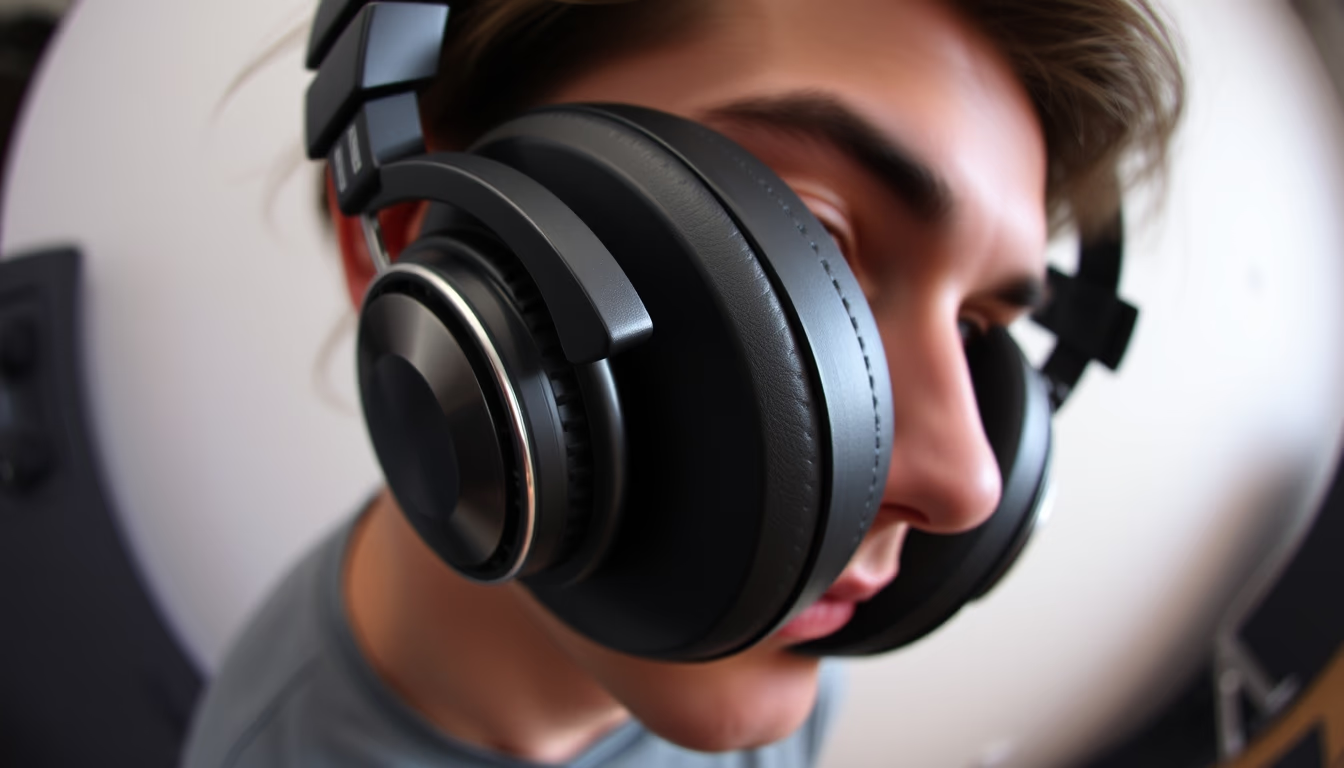
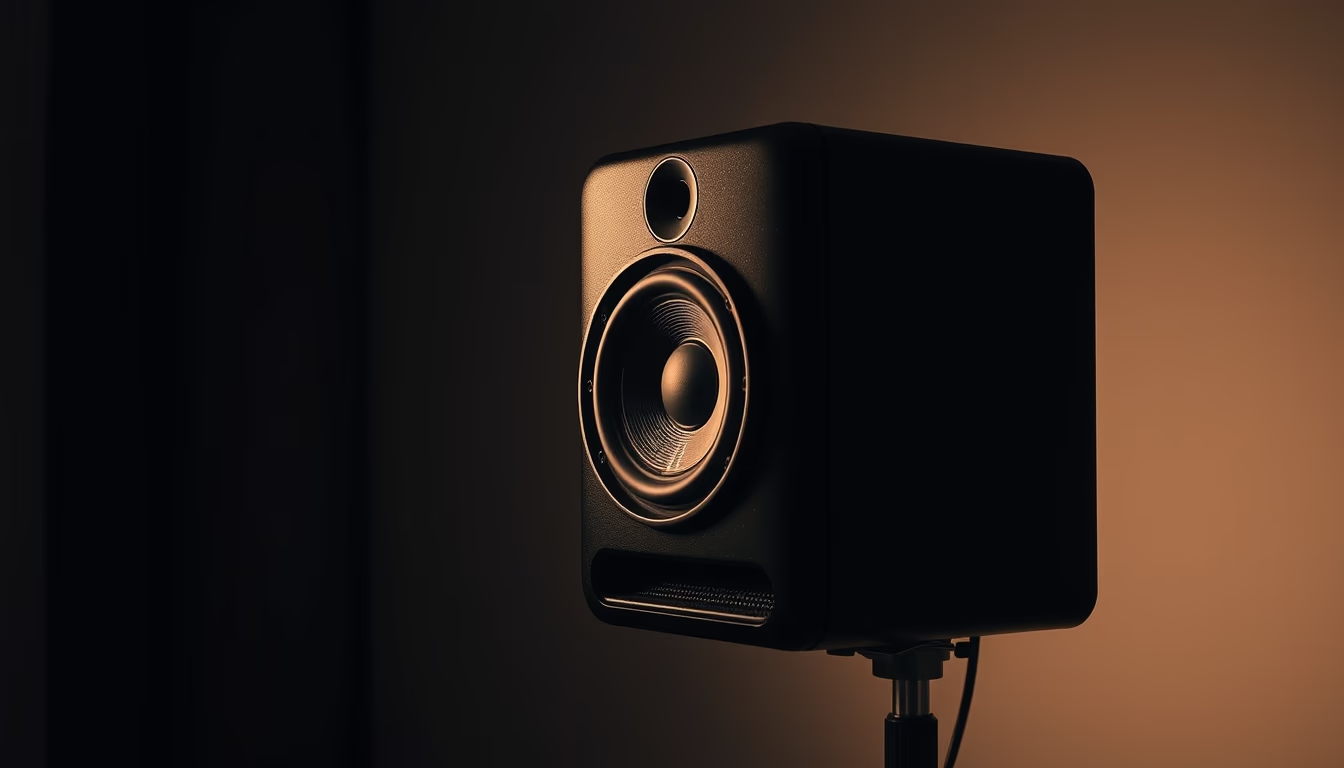
Audiophile headphones planar
1344×768 · AVIF · CC BY 4.0

Planar magnetic headphones deliver ultra-low distortion and high-fidelity sound, catering to discerning audiophiles.
About this subject
Planar magnetic headphones, also called isodynamic or orthodynamic, use a different driver technology compared to traditional dynamic drivers. Instead of a moving coil attached to a cone, they employ a thin diaphragm with embedded conductive traces suspended between two arrays of magnets. This design ensures uniform force across the entire diaphragm surface, resulting in extremely fast transient response and very low harmonic distortion. Audiophiles prize these traits for critical listening, where instrument separation and accuracy are paramount.
Commercial planar headphones date back to the 1970s with the Yamaha HP-1, but the technology saw a renaissance in the 2000s. Brands like Audeze, Hifiman, Dan Clark Audio, and Focal now offer models ranging from budget-friendly to ultra-high-end. The sound signature of planars is often described as fast, detailed, and airy, with a distinct “slam” in the bass region. However, they tend to be heavier and less sensitive than dynamic headphones, requiring powerful amplifiers to reach their full potential.
One interesting aspect is that planar drivers excel at reproducing deep, controlled bass due to the large diaphragm area and uniform magnetic force. Yet their lower sensitivity (typically 90-100 dB/mW) means they need more power; many audiophiles see this as a worthwhile trade-off for superior sound quality. In professional studios, models like the Audeze LCD-X are used for mixing and mastering because of their neutral frequency response.
The planar headphone market has expanded globally, including in Brazil, where enthusiasts import or buy from local distributors. High prices remain a barrier, but interest grows as more people seek immersive audio experiences. For beginners, the Hifiman Sundara is widely recommended as one of the best value options in the planar category.
Frequently Asked Questions
What are planar magnetic headphones?
Planar headphones use a thin diaphragm with embedded circuits suspended between magnets, instead of a moving coil. This results in lower distortion and faster response than traditional dynamic headphones.
Do planar headphones need an amplifier?
Yes, most planar headphones have low sensitivity and high impedance, requiring dedicated amplifiers to achieve adequate volume and optimal performance.
What is the difference between planar and dynamic?
Dynamic drivers use a cone with a moving coil; planar drivers use a flat diaphragm in a magnetic field. Planares offer lower distortion and better transient response but are heavier and more expensive.
Direct URL
https://pub-c7d6a6ea828543ac903a74a341ccb2e1.r2.dev/imagens/audiophile-headphones-planar-isometric-flat-lay-fresh17.avifHow to credit
Include a visible link back to UtilizAí. Copy one of the snippets below:
<a href="https://xn--utiliza-eza.com/en/midia/imagens/audiophile-headphones-planar-isometric-flat-lay-fresh17">Audiophile headphones planar</a> by <a href="https://xn--utiliza-eza.com">UtilizAí</a>, licensed under <a href="https://creativecommons.org/licenses/by/4.0/">CC BY 4.0</a>.
[Audiophile headphones planar](https://xn--utiliza-eza.com/en/midia/imagens/audiophile-headphones-planar-isometric-flat-lay-fresh17) by [UtilizAí](https://xn--utiliza-eza.com), CC BY 4.0
License: CC-BY-4.0