Arctic fox white snow
1344×768 · AVIF · CC BY 4.0
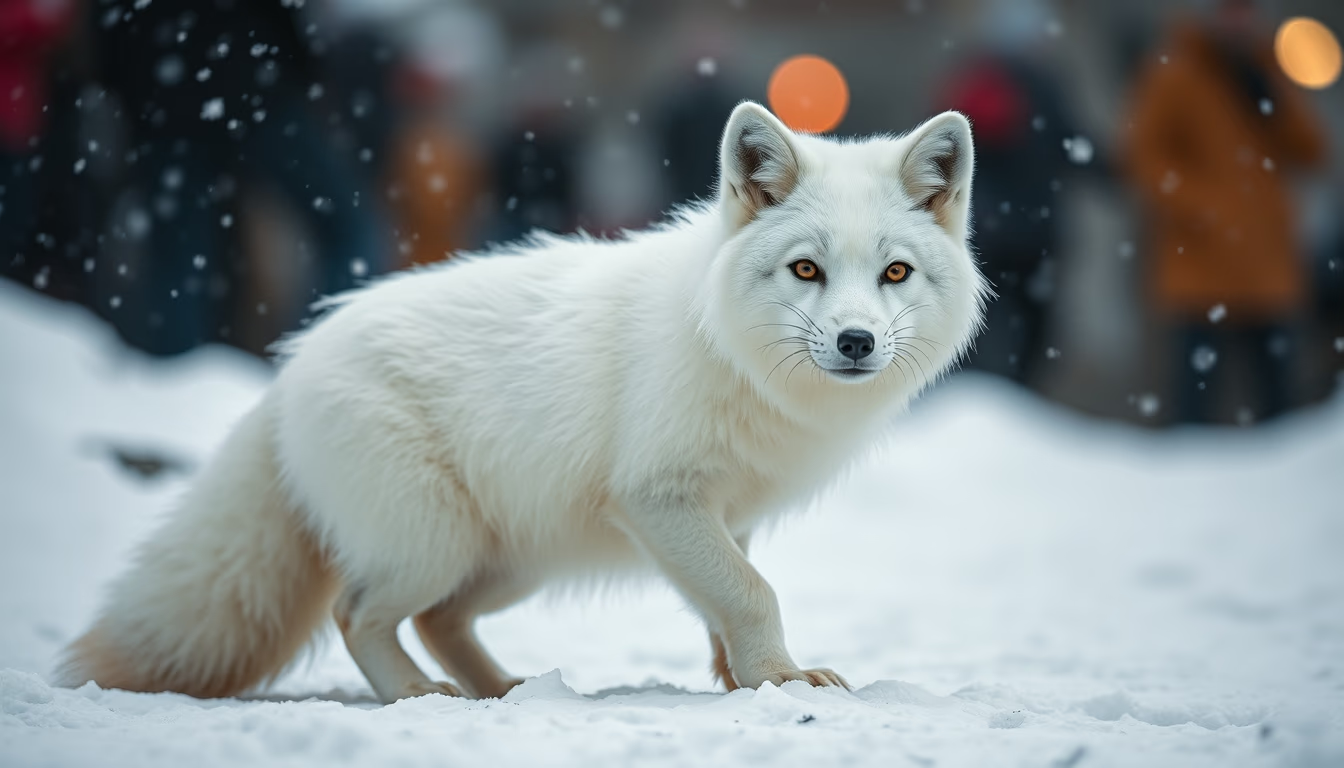
The Arctic fox (Vulpes lagopus) is a small mammal perfectly adapted to the extreme cold of the Arctic Circle.
About this subject
The Arctic fox, also known as the polar fox, is a species native to the Arctic regions of the Northern Hemisphere. Its white winter coat provides ideal camouflage in snow, while in summer it turns grayish or brown to blend with the rocky tundra. This seasonal adaptation is essential for survival, as the fox hunts small rodents like lemmings and also feeds on eggs, birds, and carcasses left by polar bears.
The Arctic fox's habitat spans Alaska, Canada, Greenland, Iceland, Svalbard, and northern Russia. It is known for its endurance at temperatures as low as -50°C, thanks to dense fur and specialized blood circulation in its paws that prevents freezing. Additionally, its thick tail serves as a blanket when it curls up to sleep.
A remarkable fact is that Arctic foxes undertake impressive migrations: individuals tagged in Canada have been found in Greenland, traveling over 3,500 km in search of food. The species is also known for forming monogamous pairs and raising pups in underground dens that may have multiple chambers and entrances.
Currently, the Arctic fox is classified as Least Concern by the IUCN, but local populations can be affected by climate change, which reduces snow cover and alters prey availability. Hunting for its valuable fur also pressures some subspecies, such as the blue fox of Iceland.
Frequently Asked Questions
What is the diet of the Arctic fox?
The Arctic fox primarily feeds on lemmings and other small rodents, but also eats eggs, birds, fish, and carcasses of larger animals such as seals and polar bears.
How does the Arctic fox adapt to extreme cold?
It has a dense coat that changes color seasonally, specialized blood circulation in its paws to prevent freezing, and a thick tail it uses as a blanket when sleeping.
Is the Arctic fox endangered?
The species is classified as Least Concern by the IUCN, but climate change and hunting pose local threats, especially for subspecies like the blue fox.
Direct URL
https://pub-c7d6a6ea828543ac903a74a341ccb2e1.r2.dev/imagens/arctic-fox-white-snow-street-photography.avifHow to credit
Include a visible link back to UtilizAí. Copy one of the snippets below:
<a href="https://xn--utiliza-eza.com/en/midia/imagens/arctic-fox-white-snow-street-photography">Arctic fox white snow</a> by <a href="https://xn--utiliza-eza.com">UtilizAí</a>, licensed under <a href="https://creativecommons.org/licenses/by/4.0/">CC BY 4.0</a>.
[Arctic fox white snow](https://xn--utiliza-eza.com/en/midia/imagens/arctic-fox-white-snow-street-photography) by [UtilizAí](https://xn--utiliza-eza.com), CC BY 4.0
License: CC-BY-4.0