Antarctic ozone hole
1344×768 · AVIF · CC BY 4.0
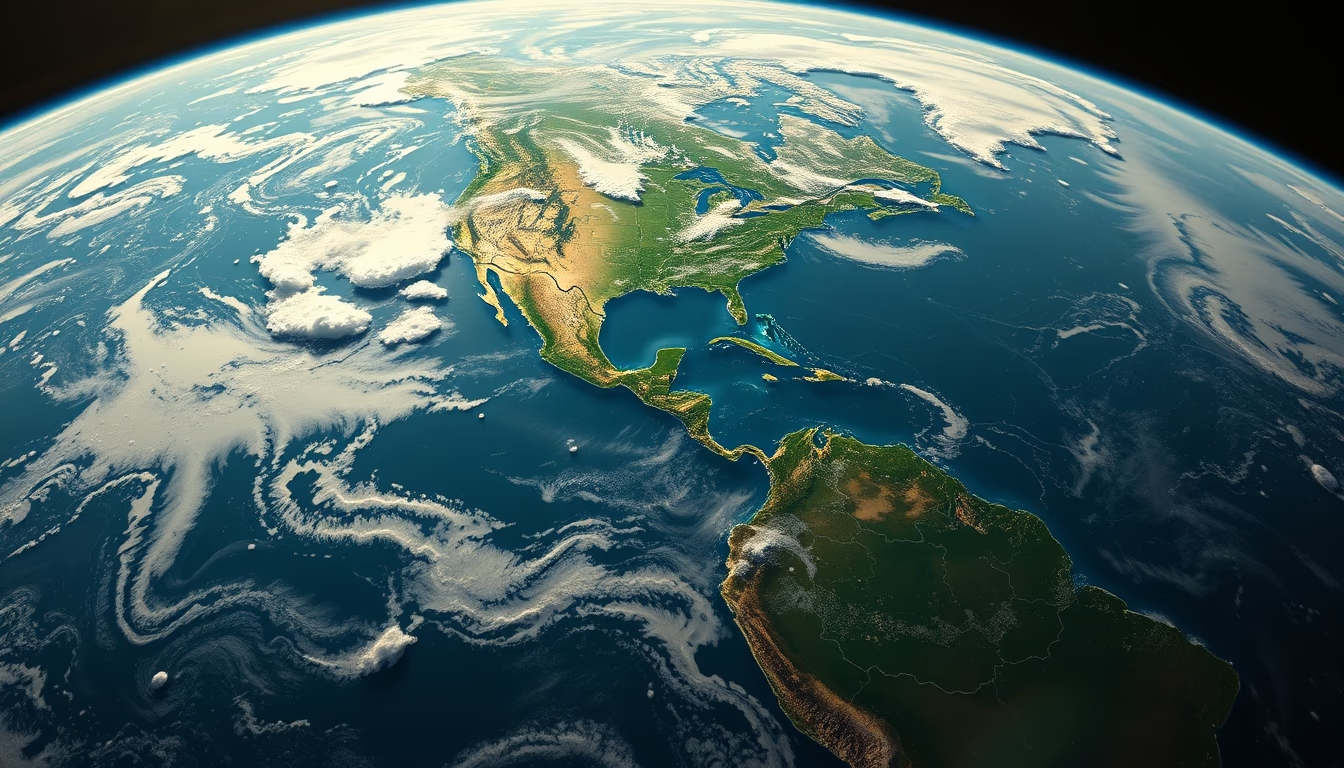
The Antarctic ozone hole is a seasonal phenomenon monitored by satellites since the 1970s, highlighting the impact of human activities on the stratosphere.
About this subject
The Antarctic ozone hole is one of the most iconic environmental phenomena of the 20th century. Discovered in 1985 by scientists from the British Antarctic Survey, the hole refers to a significant reduction in stratospheric ozone concentration, occurring mainly during the austral spring (September to November). The primary cause is chlorofluorocarbons (CFCs), chemical compounds used in refrigerants, aerosols, and foams, which release chlorine and bromine in the stratosphere, destroying ozone molecules.
The formation of the hole is exacerbated by Antarctic climatic conditions: the polar vortex, a system of winds that isolates the air over the continent, and low temperatures that allow the formation of polar stratospheric clouds. These clouds facilitate chemical reactions that release active chlorine, accelerating ozone destruction. The hole reaches its maximum area and depth between September and October, sometimes covering more than 20 million square kilometers.
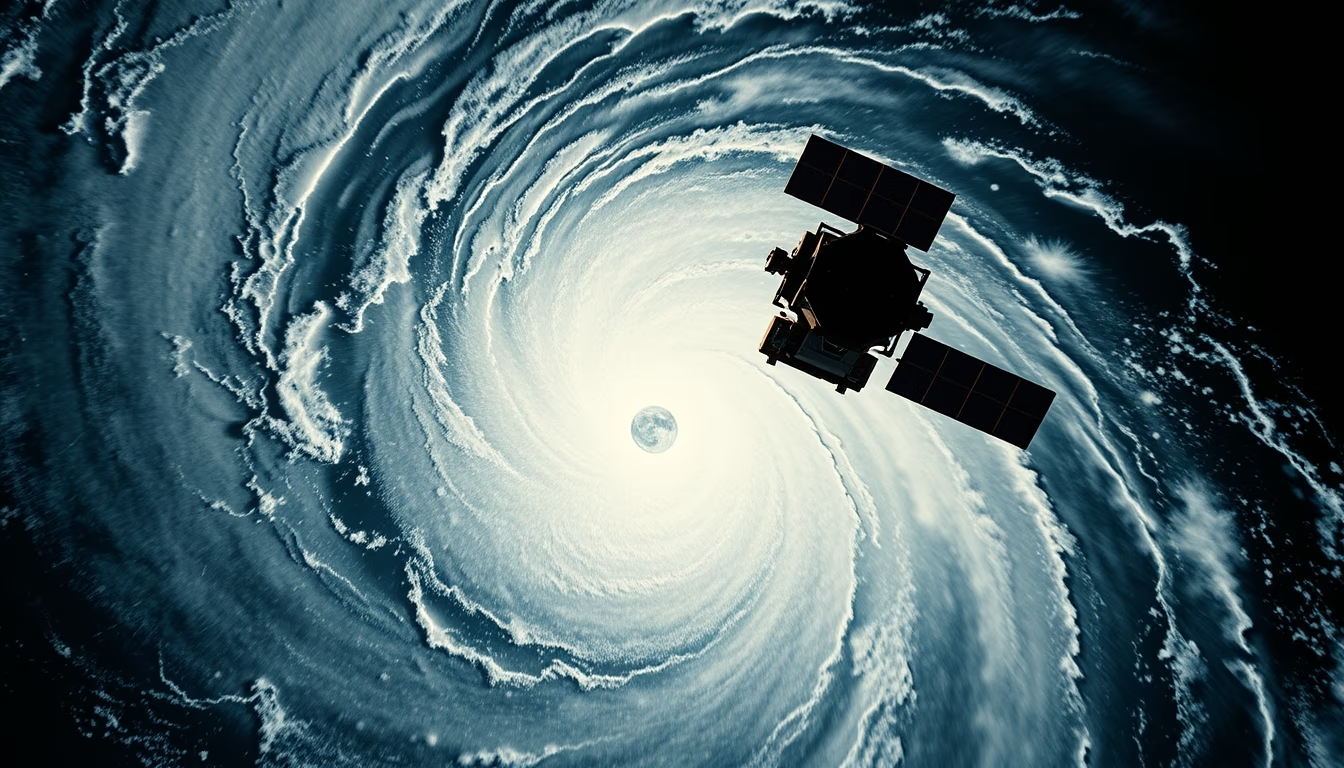
The Montreal Protocol, signed in 1987, was a global milestone to phase out the production of ozone-depleting substances. As a result, CFC concentrations in the atmosphere have been decreasing, and the Antarctic ozone hole shows signs of slow recovery. Full recovery is expected only around 2060 to 2070, depending on residual emissions and climate change. Satellites such as NASA's OMI (Ozone Monitoring Instrument) and Copernicus's Sentinel-5P continue to closely monitor the hole's evolution, providing crucial data for science and environmental policy.
Frequently Asked Questions
What causes the Antarctic ozone hole?
The hole is mainly caused by the release of chlorofluorocarbons (CFCs) into the atmosphere. In the stratosphere, CFCs are broken down by ultraviolet radiation, releasing chlorine that catalyzes the destruction of ozone molecules.
When was the Antarctic ozone hole discovered?
It was discovered in 1985 by scientists from the British Antarctic Survey. The finding of a drastic reduction in ozone concentration over Antarctica during spring led to immediate global action.
Is the ozone hole recovering?
Yes, thanks to the Montreal Protocol, emissions of ozone-depleting substances have been significantly reduced. Studies indicate that the hole is slowly recovering, with complete closure expected between 2060 and 2070.
Direct URL
https://pub-c7d6a6ea828543ac903a74a341ccb2e1.r2.dev/imagens/antarctic-ozone-hole-minimalist-composition-fresh1.avifHow to credit
Include a visible link back to UtilizAí. Copy one of the snippets below:
<a href="https://xn--utiliza-eza.com/en/midia/imagens/antarctic-ozone-hole-minimalist-composition-fresh1">Antarctic ozone hole</a> by <a href="https://xn--utiliza-eza.com">UtilizAí</a>, licensed under <a href="https://creativecommons.org/licenses/by/4.0/">CC BY 4.0</a>.
[Antarctic ozone hole](https://xn--utiliza-eza.com/en/midia/imagens/antarctic-ozone-hole-minimalist-composition-fresh1) by [UtilizAí](https://xn--utiliza-eza.com), CC BY 4.0
License: CC-BY-4.0