Antarctic ozone hole
1344×768 · AVIF · CC BY 4.0
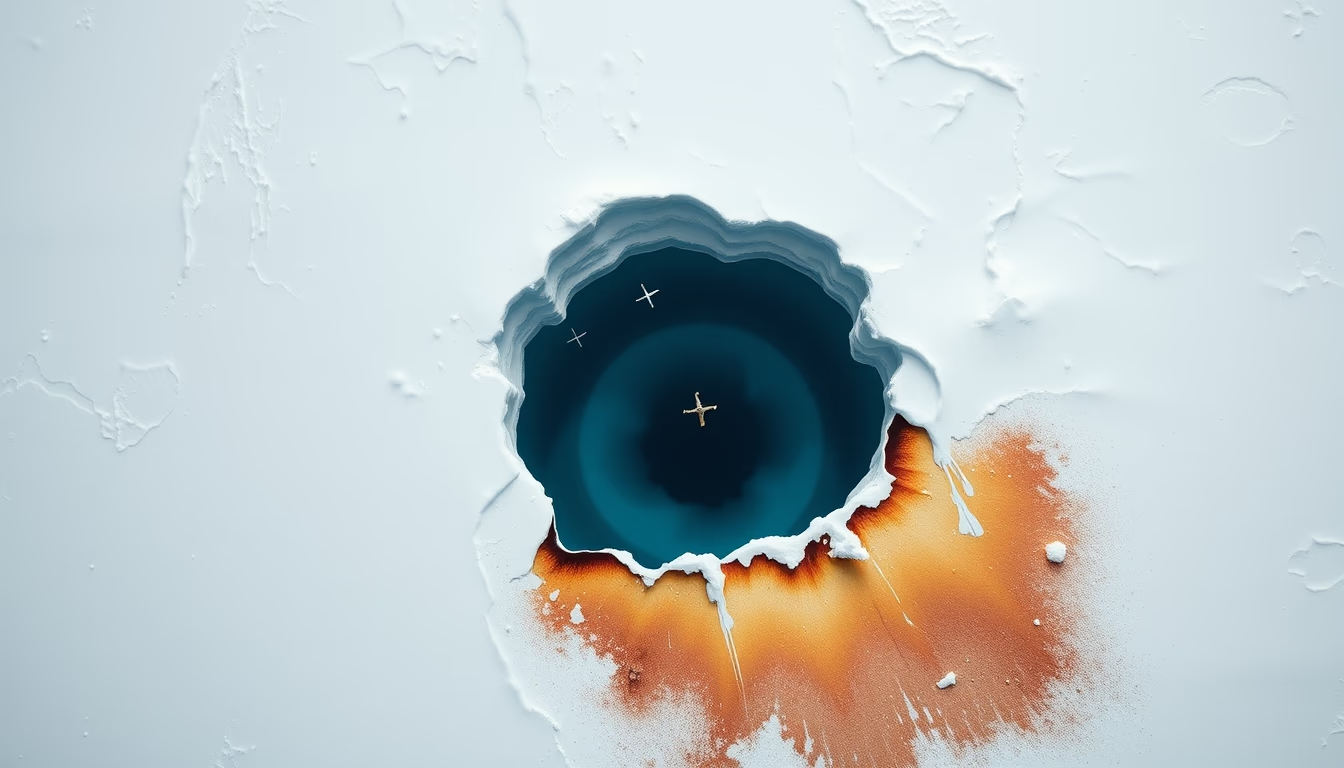
The Antarctic ozone hole is a seasonal phenomenon linked to CFC emissions, monitored by satellites since the 1980s.
About this subject
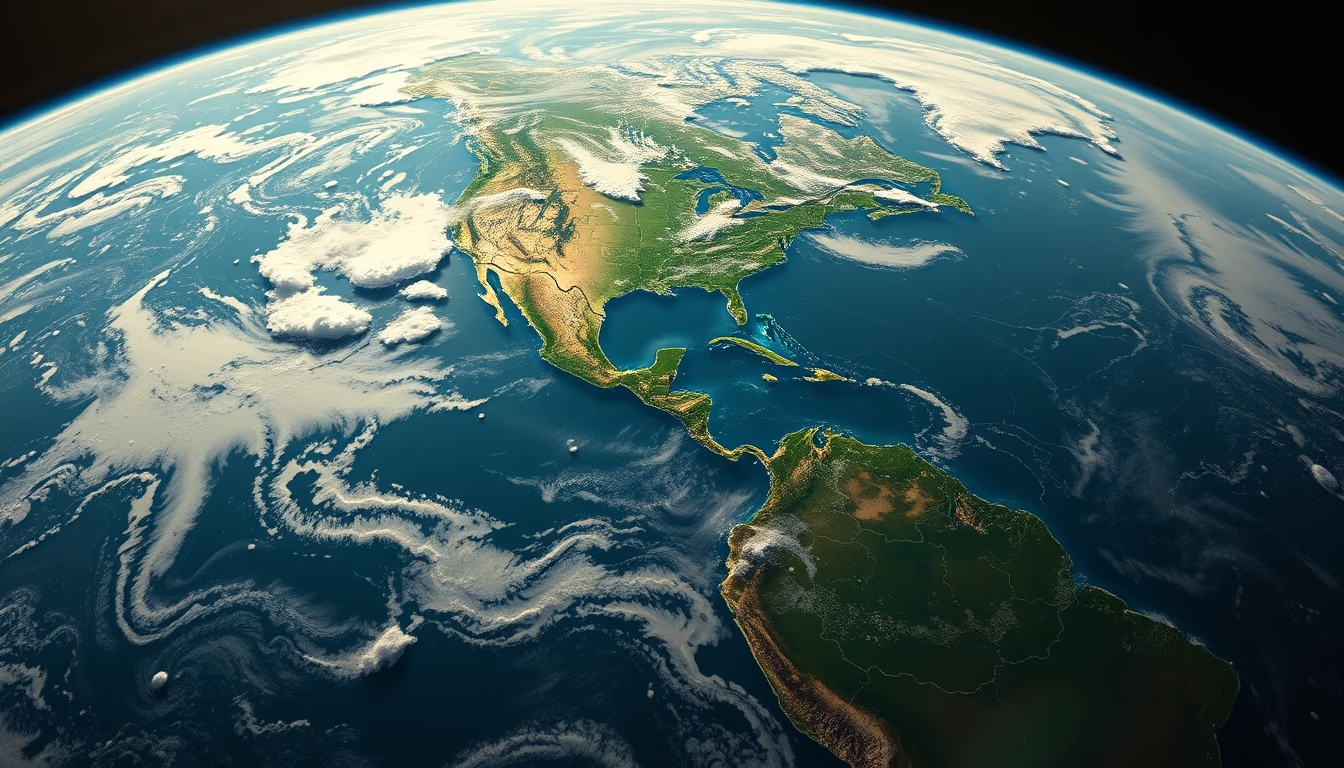
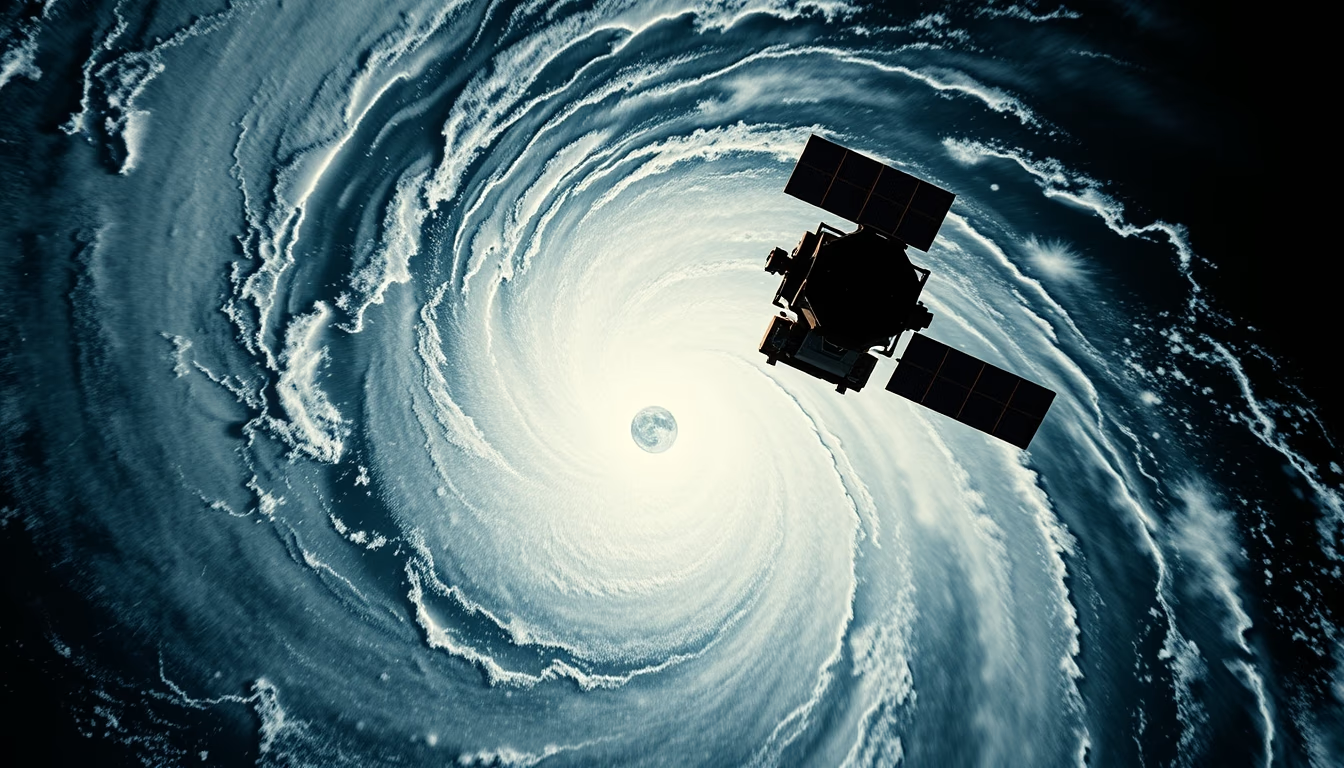
The Antarctic ozone hole was discovered in 1985 by scientists from the British Antarctic Survey, who observed a drastic decline in stratospheric ozone levels during the austral spring. This phenomenon is primarily caused by chlorofluorocarbons (CFCs), chemicals once widely used in aerosols, refrigeration, and foam manufacturing. CFCs rise to the stratosphere, where ultraviolet radiation breaks them down, releasing chlorine that catalytically destroys ozone, especially under extremely cold conditions (below -78°C) that form polar stratospheric clouds. The hole's area varies seasonally, typically spanning 20 to 25 million km², peaking in September and October. Since the 1987 Montreal Protocol, CFC production has been drastically reduced, and ozone levels are slowly recovering, with projections of returning to pre-1980 levels by around 2070. Satellites such as NASA's OMI (Ozone Monitoring Instrument) and ESA's Sentinel-5P continuously monitor ozone concentrations, providing critical data on the hole's dynamics and recovery. The image likely shows an isometric visualization of satellite data, highlighting the region of low ozone over Antarctica.
Frequently Asked Questions
What causes the Antarctic ozone hole?
The hole is caused by chlorofluorocarbons (CFCs), which release chlorine in the stratosphere. Chlorine destroys ozone molecules, a process accelerated by the very low temperatures and polar stratospheric clouds over Antarctica.
Is the ozone hole recovering?
Yes, since the 1987 Montreal Protocol, global CFC emissions have been drastically reduced. Studies indicate that the ozone layer is slowly regenerating, with full recovery expected by around 2070.
How do satellites monitor the ozone hole?
Satellites like NASA's OMI and ESA's Sentinel-5P measure ozone concentrations using spectrometers that detect reflected ultraviolet light. The data produce daily maps showing the hole's extent and depth.
Direct URL
https://pub-c7d6a6ea828543ac903a74a341ccb2e1.r2.dev/imagens/antarctic-ozone-hole-isometric-flat-lay-fresh12.avifHow to credit
Include a visible link back to UtilizAí. Copy one of the snippets below:
<a href="https://xn--utiliza-eza.com/en/midia/imagens/antarctic-ozone-hole-isometric-flat-lay-fresh12">Antarctic ozone hole</a> by <a href="https://xn--utiliza-eza.com">UtilizAí</a>, licensed under <a href="https://creativecommons.org/licenses/by/4.0/">CC BY 4.0</a>.
[Antarctic ozone hole](https://xn--utiliza-eza.com/en/midia/imagens/antarctic-ozone-hole-isometric-flat-lay-fresh12) by [UtilizAí](https://xn--utiliza-eza.com), CC BY 4.0
License: CC-BY-4.0