Amber baltic trade
1344×768 · AVIF · CC BY 4.0
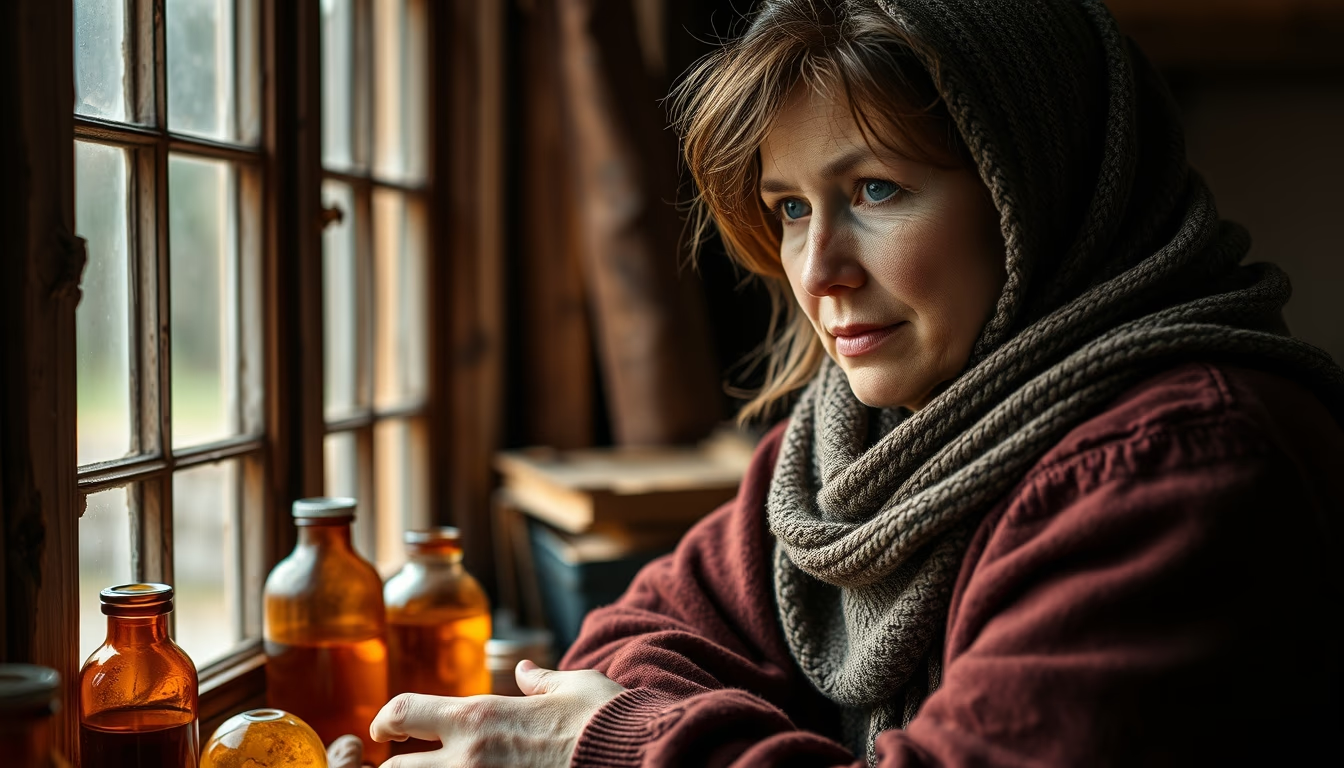
The Baltic amber trade, known as "northern gold," shaped trade routes and economies for millennia.
About this subject
Baltic amber is a fossilized resin from prehistoric pine trees, dating back 40 to 50 million years, mainly found along the shores of the Baltic Sea, especially in Poland, Lithuania, Latvia, and Russia (Kaliningrad). Its formation occurred during the Eocene, when subtropical forests covered the region and the climate was warmer. As the resin dripped from trees and hardened, it often trapped insects, plants, and small vertebrates, creating inclusions of scientific and aesthetic value.
Since the Bronze Age, amber was extracted and transported overland and by rivers to the Mediterranean, connecting the Baltic to civilizations like Greece, Rome, and Egypt. The famous Amber Road linked the Baltic coast to the Adriatic, passing through present-day Poland, Czech Republic, and Austria. Pliny the Elder already mentioned the amber trade in the 1st century AD, and amber objects have been found in Mycenaean and Egyptian tombs, indicating its high ornamental and ritualistic value.
Culturally, Baltic amber is considered a symbol of protection and healing in many European traditions. In Lithuania, the so-called "Amber Sea" is part of folklore, and the Palanga Amber Museum displays a vast collection. Today, Russia (Kaliningrad exclave) holds about 90% of the world's amber reserves, extracting approximately 300 tons per year, of which only 10% is of gem quality. Legal and illegal trade moves millions of dollars, and raw amber is exported to China and other countries for cutting and jewelry making.
Frequently Asked Questions
What is Baltic amber?
Baltic amber is fossilized tree resin from the Eocene epoch, 40 to 50 million years old, found along the Baltic Sea coast. It is famous for its inclusions of prehistoric organisms.
Why was the amber trade historically important?
Baltic amber trade was crucial since the Bronze Age, linking Northern Europe to the Mediterranean via the Amber Road. Amber was used for jewelry, amulets, and ritual objects by ancient civilizations.
Where is Baltic amber found today?
The main deposits are in the Kaliningrad region (Russia), which accounts for about 90% of global production. Mining also occurs in Poland, Lithuania, and Latvia.
Direct URL
https://pub-c7d6a6ea828543ac903a74a341ccb2e1.r2.dev/imagens/amber-baltic-trade-documentary-photography-fresh4.avifHow to credit
Include a visible link back to UtilizAí. Copy one of the snippets below:
<a href="https://xn--utiliza-eza.com/en/midia/imagens/amber-baltic-trade-documentary-photography-fresh4">Amber baltic trade</a> by <a href="https://xn--utiliza-eza.com">UtilizAí</a>, licensed under <a href="https://creativecommons.org/licenses/by/4.0/">CC BY 4.0</a>.
[Amber baltic trade](https://xn--utiliza-eza.com/en/midia/imagens/amber-baltic-trade-documentary-photography-fresh4) by [UtilizAí](https://xn--utiliza-eza.com), CC BY 4.0
License: CC-BY-4.0