Amazon rainforest canopy
1344×768 · AVIF · CC BY 4.0
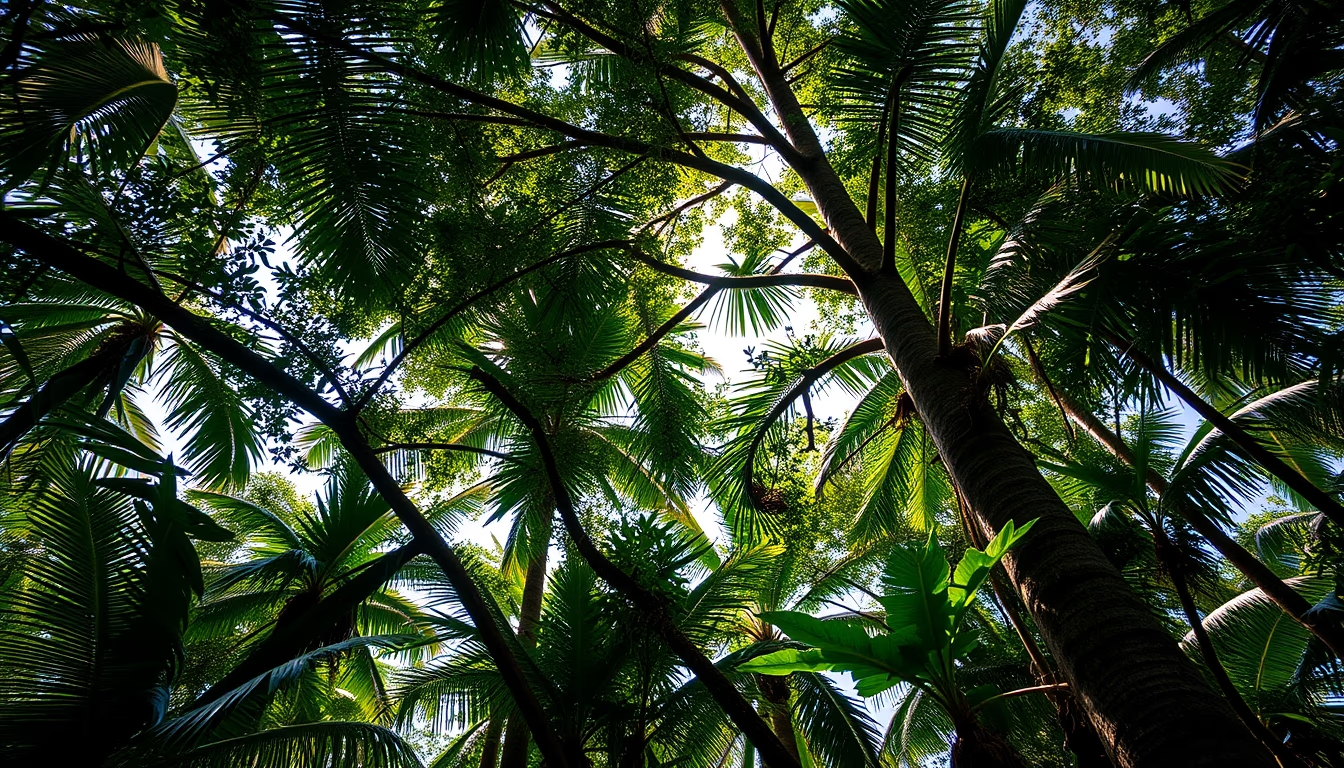
The Amazon canopy forms the planet's largest green roof, sheltering microclimates and species still unknown to science.
About this subject
The Amazon rainforest, spanning 5.5 million km², hosts the largest and most biodiverse forest canopy in the world. The canopy, formed by tree crowns that can reach 50 meters in height, acts as a complex vertical ecosystem. It is estimated that 90% of Amazonian species live in this upper layer, including monkeys, sloths, birds like the harpy eagle, and specialized insects. Canopy leaves capture up to 95% of sunlight, creating a dim understory.
Canopy structure varies between dry and wet seasons. During the dry season, many trees shed leaves to reduce water loss, allowing more light to reach the ground. In the rainy season, the canopy becomes denser. Scientists use observation towers and drones to study this layer, which still holds mysteries: new plant and animal species are regularly discovered.
The Amazon canopy plays a crucial role in global climate. It recycles about half of the rainfall through evapotranspiration, influencing precipitation patterns across South America. Additionally, the forest stores 150-200 billion tons of carbon, and canopy deforestation contributes to climate change. The 'flying rivers' phenomenon, water vapor currents from the Amazon, affects weather as far as central and southeastern Brazil.
Culturally, the canopy inspires indigenous legends, such as the Curupira, a forest protector. Riverine and extractivist communities depend on canopy fruits and seeds, like Brazil nuts and açai. Minimalist photography of the canopy, with green treetops against the sky, has become a symbol of environmental preservation, representing the grandeur and fragility of this ecosystem.
Frequently Asked Questions
What is the Amazon rainforest canopy?
The canopy is the upper layer formed by tree crowns, reaching up to 50 meters in height. It hosts most of Amazon biodiversity and regulates climate by recycling rainfall and storing carbon.
Why is the Amazon canopy important for climate?
It recycles about half of precipitation through evapotranspiration, influencing 'flying rivers' that carry moisture to other regions. It also stores billions of tons of carbon, helping mitigate climate change.
Which species live in the Amazon canopy?
Monkeys, sloths, birds like the harpy eagle, frogs, snakes, and countless insects. An estimated 90% of Amazon species inhabit this layer, many still unknown to science.
Direct URL
https://pub-c7d6a6ea828543ac903a74a341ccb2e1.r2.dev/imagens/amazon-rainforest-canopy-minimalist-composition.avifHow to credit
Include a visible link back to UtilizAí. Copy one of the snippets below:
<a href="https://xn--utiliza-eza.com/en/midia/imagens/amazon-rainforest-canopy-minimalist-composition">Amazon rainforest canopy</a> by <a href="https://xn--utiliza-eza.com">UtilizAí</a>, licensed under <a href="https://creativecommons.org/licenses/by/4.0/">CC BY 4.0</a>.
[Amazon rainforest canopy](https://xn--utiliza-eza.com/en/midia/imagens/amazon-rainforest-canopy-minimalist-composition) by [UtilizAí](https://xn--utiliza-eza.com), CC BY 4.0
License: CC-BY-4.0