Airport terminal modern with travelers walking
1344×768 · AVIF · CC BY 4.0
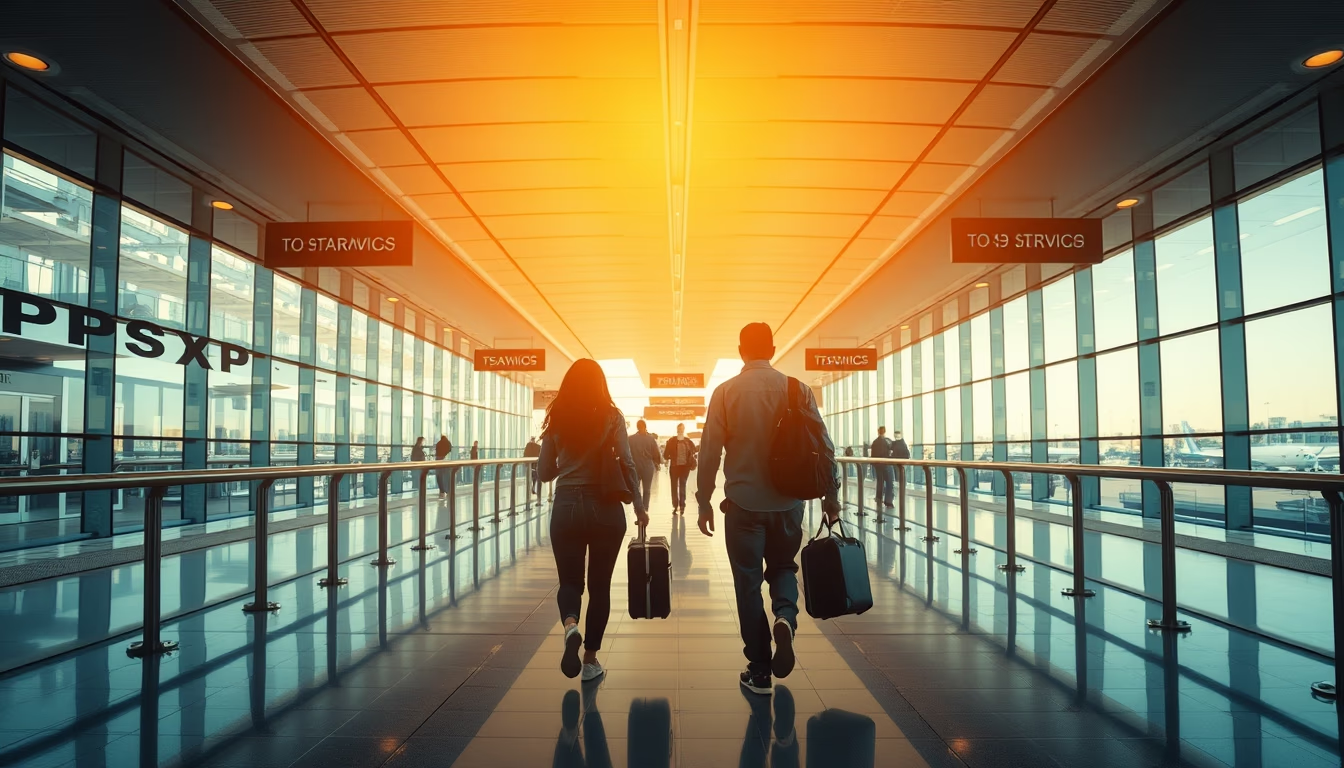
Modern airport terminals combine functional design with heavy passenger flow during peak hours.
About this subject
Contemporary airport terminals are designed to process thousands of travelers daily, balancing operational efficiency and comfort. Architecture favors large spans, high ceilings, and extensive use of glass to maximize natural light, reducing energy consumption. Wide corridors and clear signage guide passenger flow, while waiting areas with ergonomic seats and power outlets meet modern needs.
In Brazil, terminals such as São Paulo/Guarulhos International Airport (GRU) and Brasília Airport (BSB) underwent major renovations for the 2014 FIFA World Cup, incorporating sustainability and accessibility concepts. The late afternoon golden hour provides diffused lighting that enhances the aesthetics of spaces but also represents a high-demand period, with domestic and international flights overlapping.
Symmetry in architectural composition is not merely aesthetic: it facilitates intuitive passenger navigation and optimizes the distribution of services like check-in, security, and boarding. Behavioral studies indicate that symmetrical layouts reduce traveler anxiety, especially in large airports. Additionally, anomalies detected by monitoring systems, such as forgotten luggage or unexpected flows, trigger security protocols that ensure continuous operation without compromising user experience.
Interestingly, modern terminal design even influences flight punctuality: well-sized corridors and efficient boarding processes can reduce connection times by up to 15%. Airports like Singapore Changi and Seoul Incheon are global benchmarks in this regard, inspiring projects in Brazil and other emerging countries.
Frequently Asked Questions
Why do modern airport terminals use so much glass?
Glass maximizes natural light, reducing artificial lighting costs and improving passenger well-being. It also creates a sense of spaciousness and connection to the outdoors.
What is the 'golden hour' in airport photography?
It is the period just before sunset when light is soft and golden. In airports, it enhances architecture and creates a welcoming atmosphere, but also coincides with peak flight times.
How does symmetry aid navigation in airports?
Symmetrical layouts facilitate spatial orientation, reducing confusion and anxiety. Passengers find gates, counters, and exits more quickly, improving overall flow.
Direct URL
https://pub-c7d6a6ea828543ac903a74a341ccb2e1.r2.dev/imagens/airport-terminal-modern-with-travelers-walking-symmetric-composition-golden-hour-late-afternoon.avifHow to credit
Include a visible link back to UtilizAí. Copy one of the snippets below:
<a href="https://xn--utiliza-eza.com/en/midia/imagens/airport-terminal-modern-with-travelers-walking-symmetric-composition-golden-hour-late-afternoon">Airport terminal modern with travelers walking</a> by <a href="https://xn--utiliza-eza.com">UtilizAí</a>, licensed under <a href="https://creativecommons.org/licenses/by/4.0/">CC BY 4.0</a>.
[Airport terminal modern with travelers walking](https://xn--utiliza-eza.com/en/midia/imagens/airport-terminal-modern-with-travelers-walking-symmetric-composition-golden-hour-late-afternoon) by [UtilizAí](https://xn--utiliza-eza.com), CC BY 4.0
License: CC-BY-4.0