Air plants tillandsia
1344×768 · AVIF · CC BY 4.0
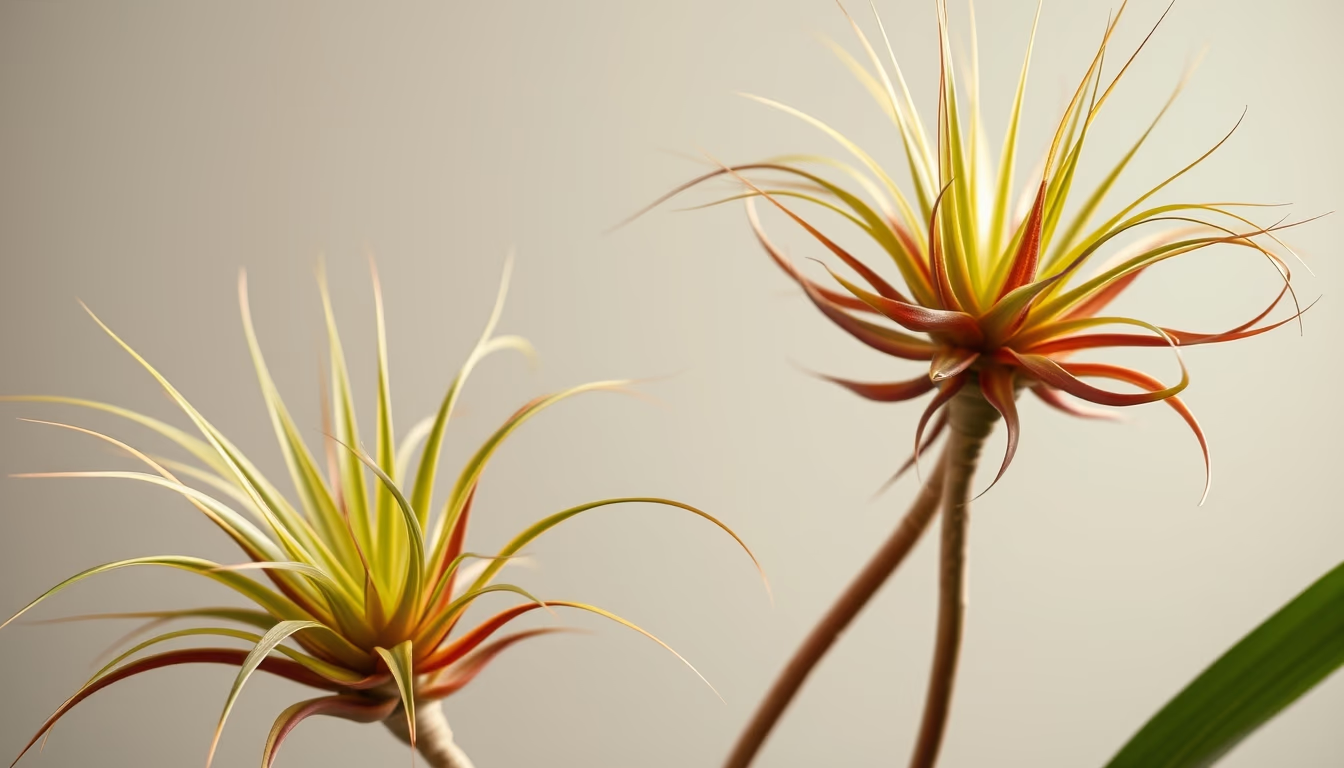
Tillandsias are epiphytic plants that absorb water and nutrients through leaves, native to tropical and subtropical regions of the Americas.
About this subject
Tillandsia, commonly known as air plants, belong to the Bromeliaceae family and are notable for not requiring soil to grow. These epiphytic plants attach themselves to branches, rocks, or trunks, using structures called trichomes, leaf scales, to capture rainwater, air moisture, and dust particles rich in nutrients. With over 650 described species, their distribution ranges from the southern United States to Argentina, with the highest diversity concentrated in Mexico, Central America, and South America.
The morphology of tillandsias varies greatly: from tiny plants measuring 5 centimeters to specimens exceeding 1 meter in length. Species with green, smooth leaves are typical of humid environments, while those with grayish, scaly leaves are adapted to arid climates, such as those found in the Andean deserts. Many produce striking inflorescences in shades of pink, purple, orange, or red, attracting hummingbirds and bees for pollination.
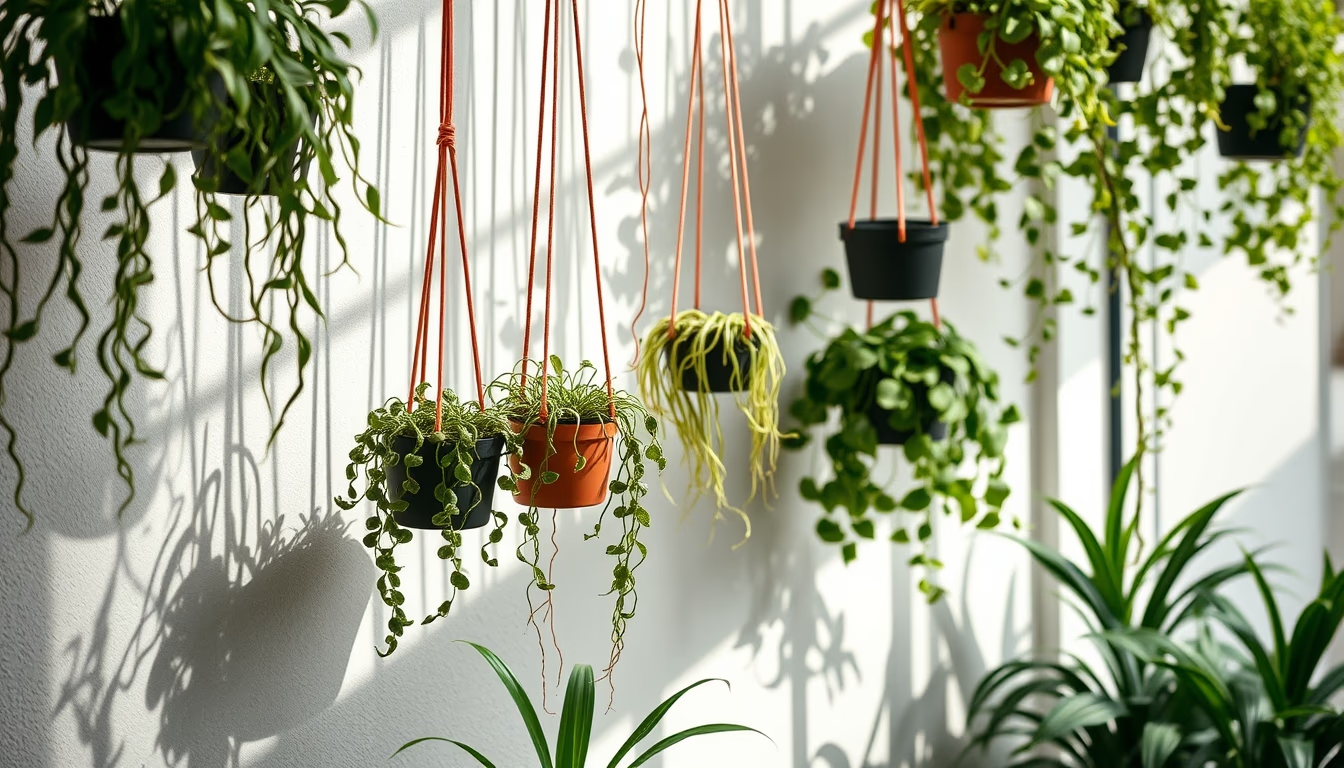
One of the most curious examples is Tillandsia usneoides, known as Spanish moss, which hangs in long strands from trees in the southern United States and Latin America. Despite its name, it is not moss but a tillandsia that reproduces by fragmentation. Popularized in interior design, air plants are used in terrariums, hanging arrangements, and living walls. Their life cycle is monocarpic: after flowering once, the mother plant dies, but it first produces lateral offsets that ensure the species' continuation.
Frequently Asked Questions
How do you water a tillandsia?
Immerse the plant in filtered or rainwater for 20 to 30 minutes once a week. After that, shake off excess water and place it upside down to dry completely before returning it to its holder.
Does tillandsia need sunlight?
It prefers bright indirect light. Direct sunlight can burn the leaves. An east or west facing window with a sheer curtain is ideal.
Why is my tillandsia dying after blooming?
This is normal: monocarpic plants bloom once and die. However, they produce offsets that will grow and bloom in the future.
Direct URL
https://pub-c7d6a6ea828543ac903a74a341ccb2e1.r2.dev/imagens/air-plants-tillandsia-studio-editorial-portrait-fresh10.avifHow to credit
Include a visible link back to UtilizAí. Copy one of the snippets below:
<a href="https://xn--utiliza-eza.com/en/midia/imagens/air-plants-tillandsia-studio-editorial-portrait-fresh10">Air plants tillandsia</a> by <a href="https://xn--utiliza-eza.com">UtilizAí</a>, licensed under <a href="https://creativecommons.org/licenses/by/4.0/">CC BY 4.0</a>.
[Air plants tillandsia](https://xn--utiliza-eza.com/en/midia/imagens/air-plants-tillandsia-studio-editorial-portrait-fresh10) by [UtilizAí](https://xn--utiliza-eza.com), CC BY 4.0
License: CC-BY-4.0