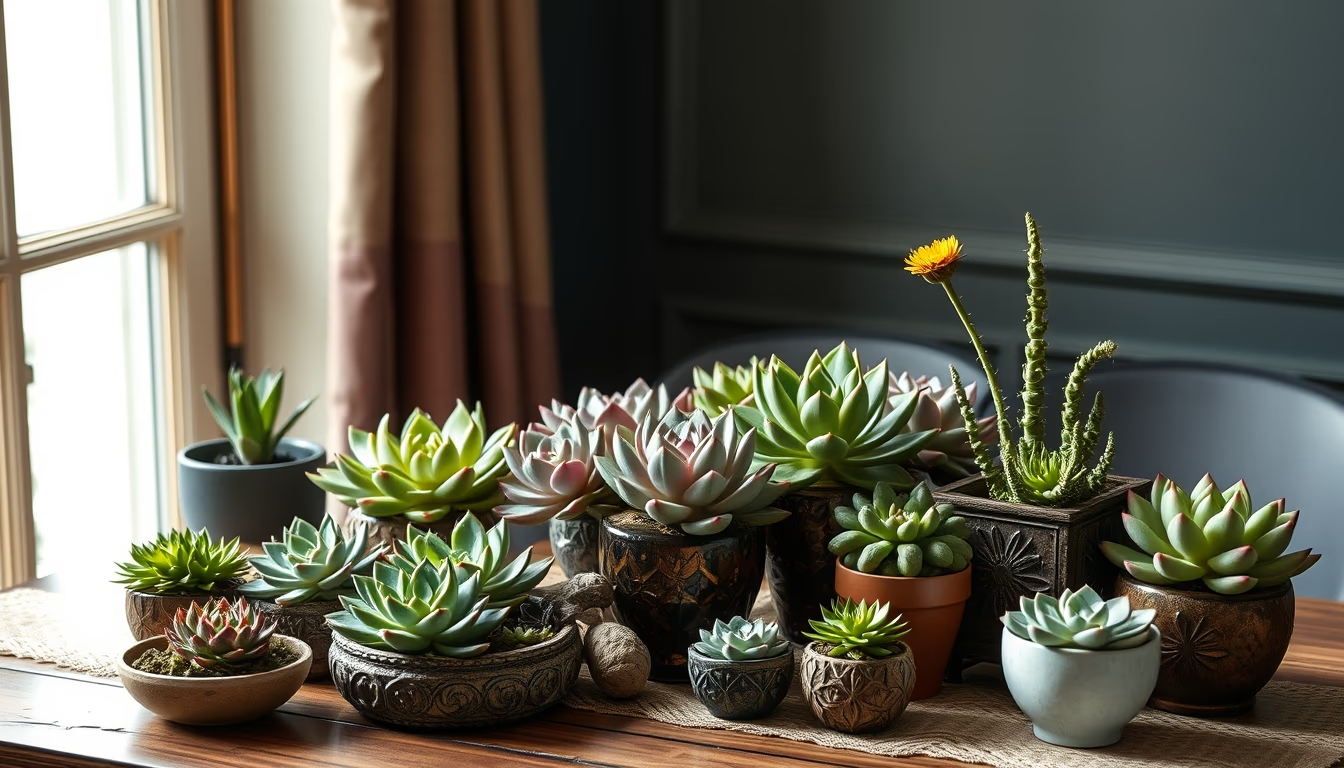
Air plants tillandsia
1344×768 · AVIF · CC BY 4.0
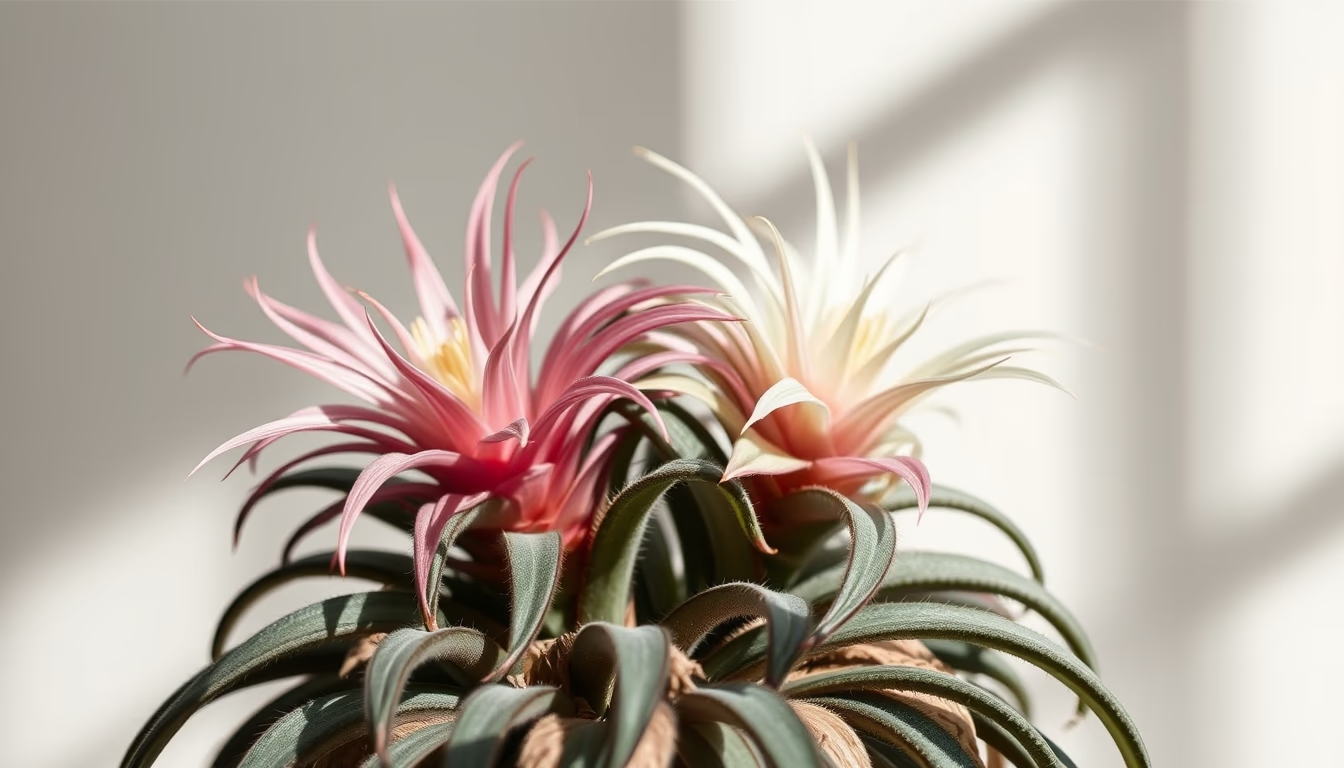
Tillandsias, or air plants, are epiphytes that grow without soil, absorbing nutrients and water from the air through specialized scales on their leaves.
About this subject
Tillandsias belong to the Bromeliaceae family and are native to the Americas, ranging from tropical rainforests to arid deserts. Over 650 species are recognized, varying from tiny specimens a few centimeters long to plants that can reach nearly a meter in length. Unlike most plants, their roots serve only for attachment to trees, rocks, or wires, not for nutrient absorption. Instead, leaves covered in trichomes (scales) capture moisture and mineral particles from the air, rain, and dew.
These plants have gained worldwide popularity as low-maintenance decorative elements. In terrariums, wall mounts, or simply placed on furniture, they require only bright indirect light and regular misting. However, watering is a critical point: overwatering can lead to rot, while underwatering can desiccate them. For many species, a weekly 20-30 minute soak followed by thorough drying is ideal. In dry climates, daily misting is recommended.
Historically, the Aztecs and Mayans used Tillandsia usneoides (Spanish moss) for medicinal purposes and as stuffing material. In the 19th century, Swedish botanist Pehr Kalm described many species during expeditions in North America. Today, most commercially available tillandsias come from controlled cultivation, although illegal collection still threatens some wild populations, especially in Central America and Brazil.
Fun fact: Tillandsia ionantha, one of the most common species, changes color during flowering, turning vibrant red. Others, like Tillandsia xerographica, may take decades to bloom, but produce inflorescences that last months. Pollination is mainly by hummingbirds and moths, attracted by nectar and intense colors. After flowering, the mother plant usually dies but leaves side shoots that ensure continuity.
Frequently Asked Questions
How to care for a tillandsia?
Water by weekly soaking (20-30 minutes) and let dry upside down. Mist between waterings in dry climates. Place in bright indirect light with good air circulation. Avoid chlorinated water (use filtered or left standing for 24h).
Do tillandsias need fertilizer?
Yes, but sparingly. Use a specific bromeliad or epiphyte fertilizer diluted to 1/4 strength, applied once a month in the soaking water during spring and summer.
How long does a tillandsia live?
The life cycle ranges from 2-5 years for small species to decades for larger ones. After flowering, the mother plant dies, but the pups (offsets) formed around it continue the cycle.
Direct URL
https://pub-c7d6a6ea828543ac903a74a341ccb2e1.r2.dev/imagens/air-plants-tillandsia-magazine-editorial-fresh15.avifHow to credit
Include a visible link back to UtilizAí. Copy one of the snippets below:
<a href="https://xn--utiliza-eza.com/en/midia/imagens/air-plants-tillandsia-magazine-editorial-fresh15">Air plants tillandsia</a> by <a href="https://xn--utiliza-eza.com">UtilizAí</a>, licensed under <a href="https://creativecommons.org/licenses/by/4.0/">CC BY 4.0</a>.
[Air plants tillandsia](https://xn--utiliza-eza.com/en/midia/imagens/air-plants-tillandsia-magazine-editorial-fresh15) by [UtilizAí](https://xn--utiliza-eza.com), CC BY 4.0
License: CC-BY-4.0