Air plants tillandsia
1344×768 · AVIF · CC BY 4.0
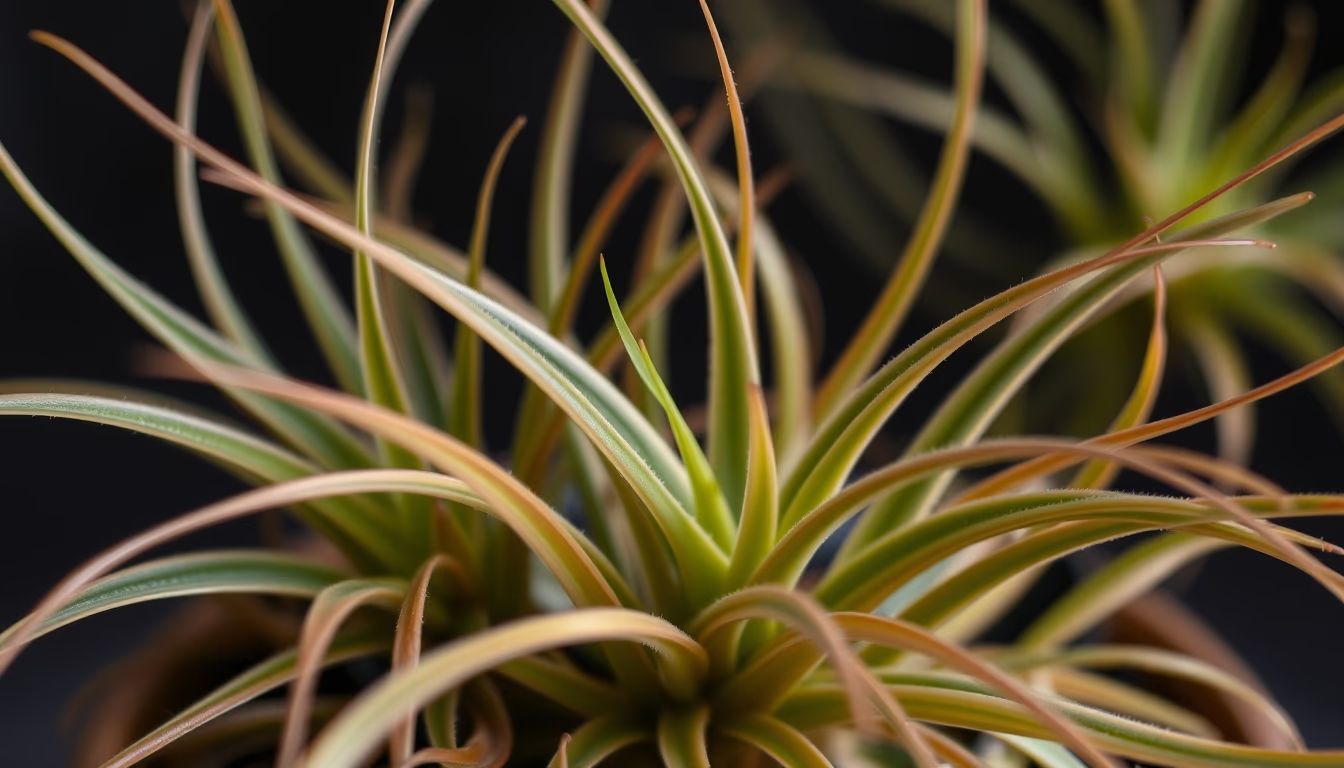
Tillandsias are air plants that absorb water and nutrients through leaves, needing no soil. Learn about their features and curiosities.
About this subject
Tillandsias belong to the genus Tillandsia, part of the Bromeliaceae family, native to the Americas from the southern United States to Argentina. These plants are epiphytes, meaning they grow on other plants without parasitizing them, using trunks and rocks as support. Unlike most plants, they do not require soil to survive, absorbing water and minerals directly from the air and rain through specialized structures called trichomes on their leaves.
There are over 650 species of tillandsia, varying greatly in size and shape. For example, Tillandsia ionantha forms small rosettes and turns red before flowering. Tillandsia xerographica is one of the largest, with silvery, curly leaves, native to arid regions of Mexico and El Salvador. Species like Tillandsia usneoides (known as Spanish moss) hang in long strands and are common in tropical landscapes.
Growing tillandsias requires attention to specific conditions. They need bright, indirect light and should be watered by soaking in filtered or rainwater for 20 to 30 minutes, once or twice a week depending on humidity. Good air circulation is crucial to prevent rot. During blooming, which can last for weeks, they display vibrant colors and some species emit fragrance.
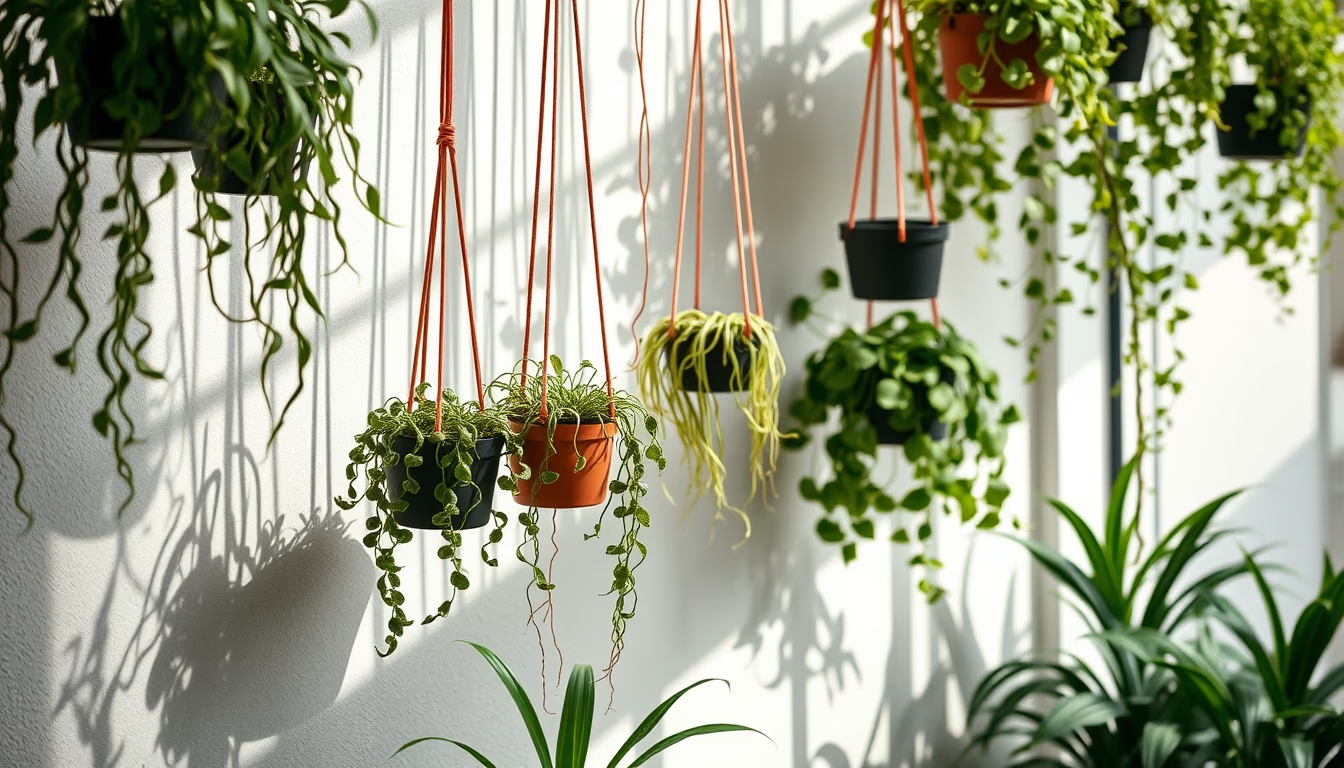
In popular culture, tillandsias have become popular as low-maintenance ornamental plants, ideal for terrariums, kokedamas, and hanging displays. They symbolize resilience due to their ability to adapt to harsh environments and are also used in vertical landscaping projects. Although not edible, some species have traditional uses in indigenous crafts, such as making adornments.
Frequently Asked Questions
How do I care for a tillandsia?
Tillandsias need bright indirect light, weekly soaking (20-30 minutes in filtered water), and good air circulation. Avoid prolonged direct sun and water accumulation in the leaves.
Do tillandsias need soil?
No. Tillandsias are epiphytes and absorb water and nutrients through their leaves, so they do not require soil. They can be mounted on wood, rocks, or decorative holders.
How many species of tillandsia are there?
There are over 650 recognized species of Tillandsia, varying in size, shape, and color. Common cultivated species include Tillandsia ionantha, Tillandsia xerographica, and Tillandsia usneoides.
Direct URL
https://pub-c7d6a6ea828543ac903a74a341ccb2e1.r2.dev/imagens/air-plants-tillandsia-documentary-nature-style-fresh17.avifHow to credit
Include a visible link back to UtilizAí. Copy one of the snippets below:
<a href="https://xn--utiliza-eza.com/en/midia/imagens/air-plants-tillandsia-documentary-nature-style-fresh17">Air plants tillandsia</a> by <a href="https://xn--utiliza-eza.com">UtilizAí</a>, licensed under <a href="https://creativecommons.org/licenses/by/4.0/">CC BY 4.0</a>.
[Air plants tillandsia](https://xn--utiliza-eza.com/en/midia/imagens/air-plants-tillandsia-documentary-nature-style-fresh17) by [UtilizAí](https://xn--utiliza-eza.com), CC BY 4.0
License: CC-BY-4.0