AI engineer training neural network on workstation
1344×768 · AVIF · CC BY 4.0
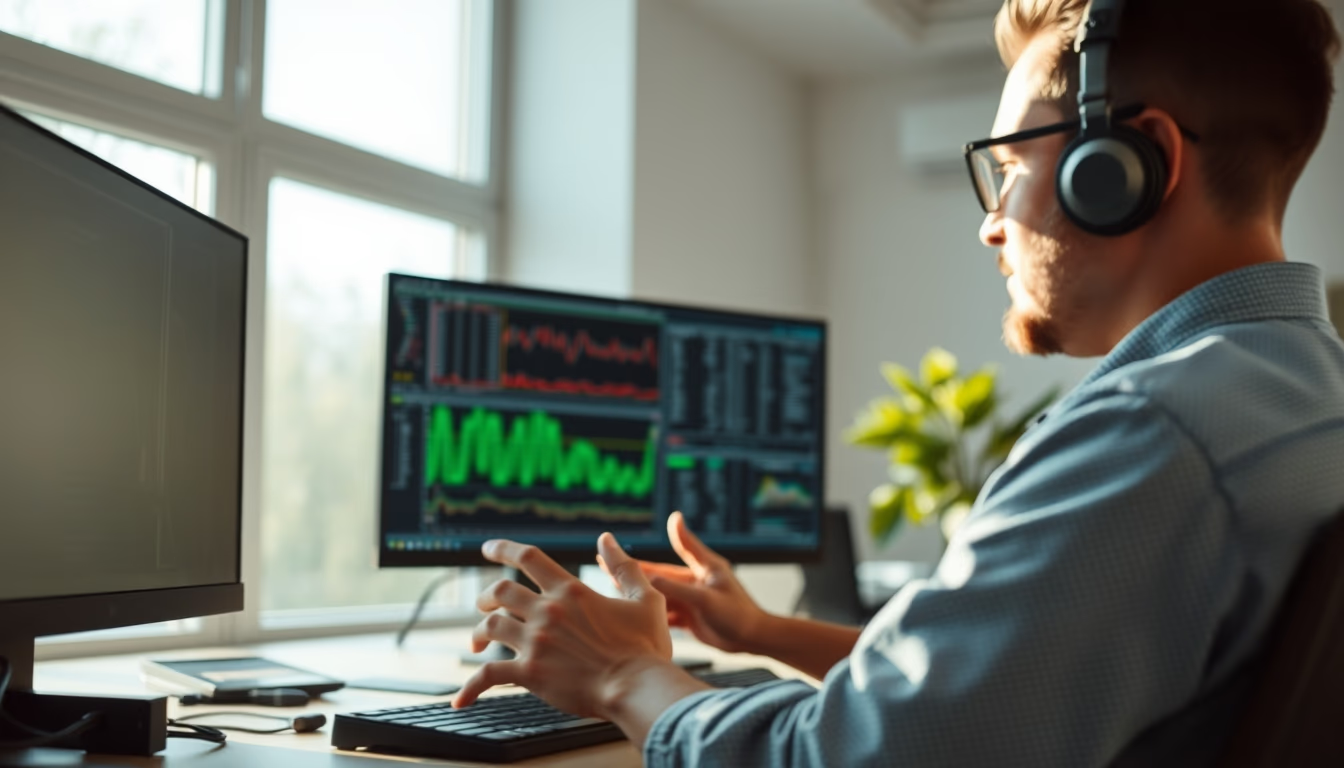
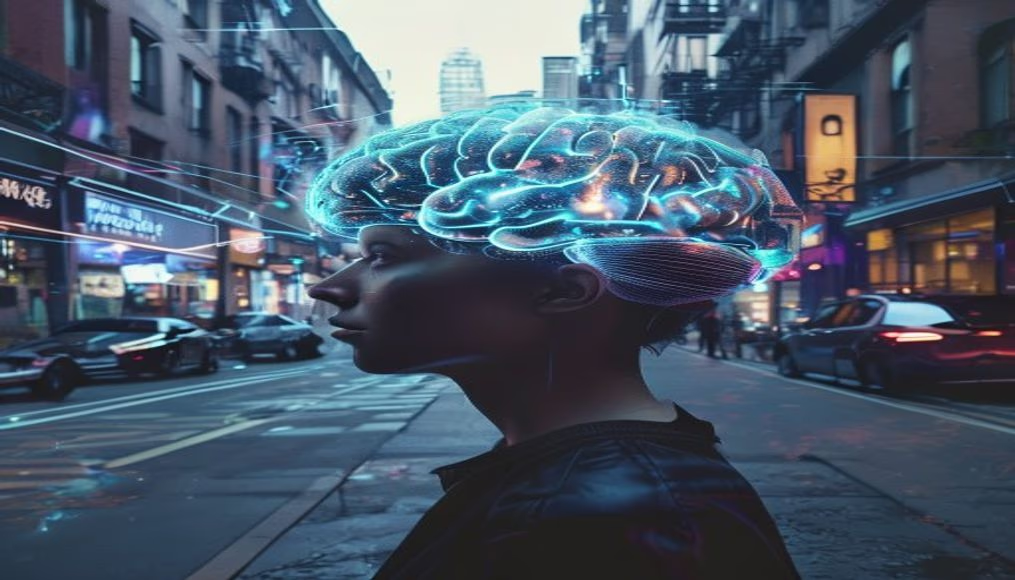
An AI engineer trains a neural network on a workstation in the morning, a scene blending cutting-edge technology and professional routine.
About this subject
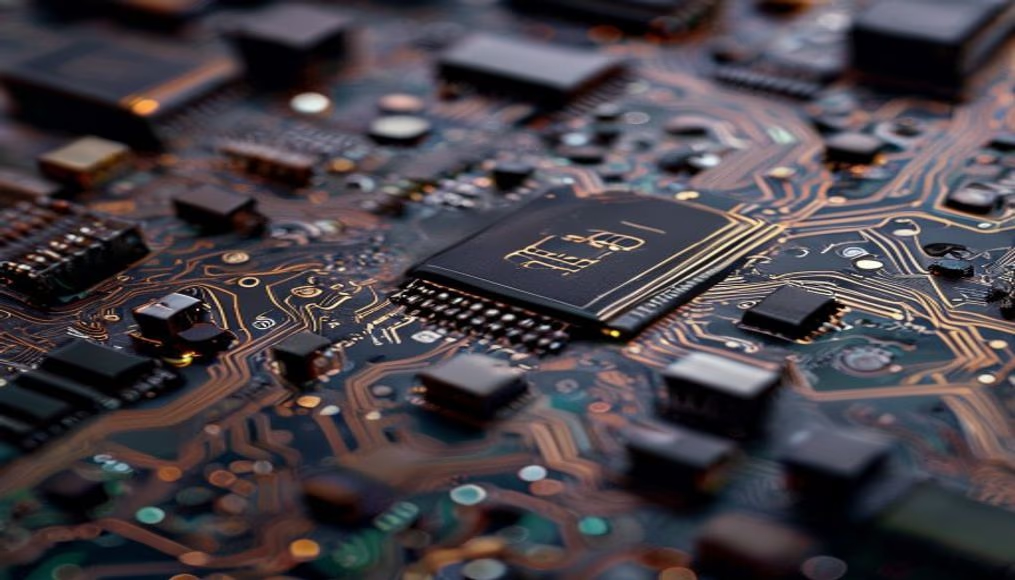
Training neural networks is a critical step in developing artificial intelligence systems. This process involves feeding a model large volumes of data and adjusting its internal parameters so it learns to recognize patterns and make decisions. AI engineers use workstations equipped with powerful GPUs, such as the NVIDIA RTX or A100 series, capable of performing billions of operations per second. Hardware choice directly impacts training time: a complex neural network can take days or even weeks on conventional hardware, but with GPU acceleration this time can be reduced to hours.
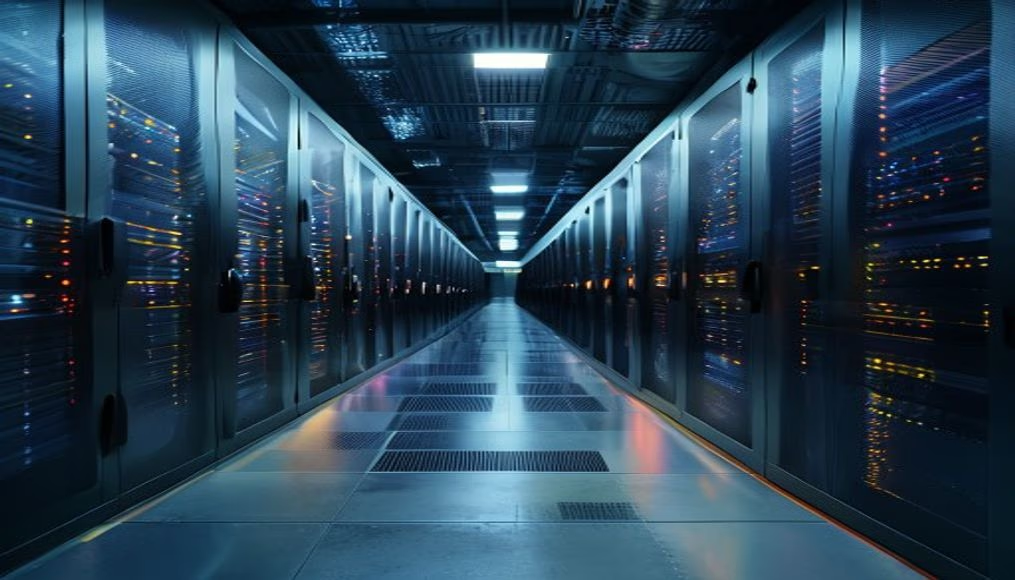
An AI engineer's routine involves not only training but also data preparation, network architecture definition, and result evaluation. In the morning, it is common for these professionals to check the progress of overnight training runs, adjust hyperparameters, and start new executions. The work environment typically includes multiple monitors displaying loss and accuracy graphs, along with terminals showing execution logs. Companies like Google, Meta, and OpenAI invest heavily in training infrastructure, but small startups and researchers also use local workstations for rapid prototyping before migrating to the cloud.
Neural network optimization is a constantly evolving field. Techniques such as transfer learning, regularization, and fine-tuning allow pre-trained models to be adapted for specific tasks with less data and time. Using frameworks like TensorFlow, PyTorch, and JAX simplifies development but requires deep knowledge of mathematics, statistics, and programming. The demand for AI engineers has grown exponentially in recent years, with competitive salaries and opportunities in sectors such as healthcare, finance, and autonomous vehicles.
Frequently Asked Questions
How long does it take to train a neural network?
Time varies with model complexity and hardware. Simple networks can train in minutes, while complex models like GPT-3 take weeks on clusters of thousands of GPUs.
What hardware is used for training neural networks?
Specialized GPUs like NVIDIA A100 and H100 are common. Some engineers use Google's TPUs (Tensor Processing Units) or FPGAs for specific tasks.
Can you train neural networks without a GPU?
Yes, but it is much slower. CPUs can train small networks, but for deep models or large datasets, GPUs are essential for practical feasibility.
Direct URL
https://pub-c7d6a6ea828543ac903a74a341ccb2e1.r2.dev/imagens/ai-engineer-training-neural-network-on-workstation-documentary-morning-4.avifHow to credit
Include a visible link back to UtilizAí. Copy one of the snippets below:
<a href="https://xn--utiliza-eza.com/en/midia/imagens/ai-engineer-training-neural-network-on-workstation-documentary-morning-4">AI engineer training neural network on workstation</a> by <a href="https://xn--utiliza-eza.com">UtilizAí</a>, licensed under <a href="https://creativecommons.org/licenses/by/4.0/">CC BY 4.0</a>.
[AI engineer training neural network on workstation](https://xn--utiliza-eza.com/en/midia/imagens/ai-engineer-training-neural-network-on-workstation-documentary-morning-4) by [UtilizAí](https://xn--utiliza-eza.com), CC BY 4.0
License: CC-BY-4.0