Agincourt field england
1344×768 · AVIF · CC BY 4.0

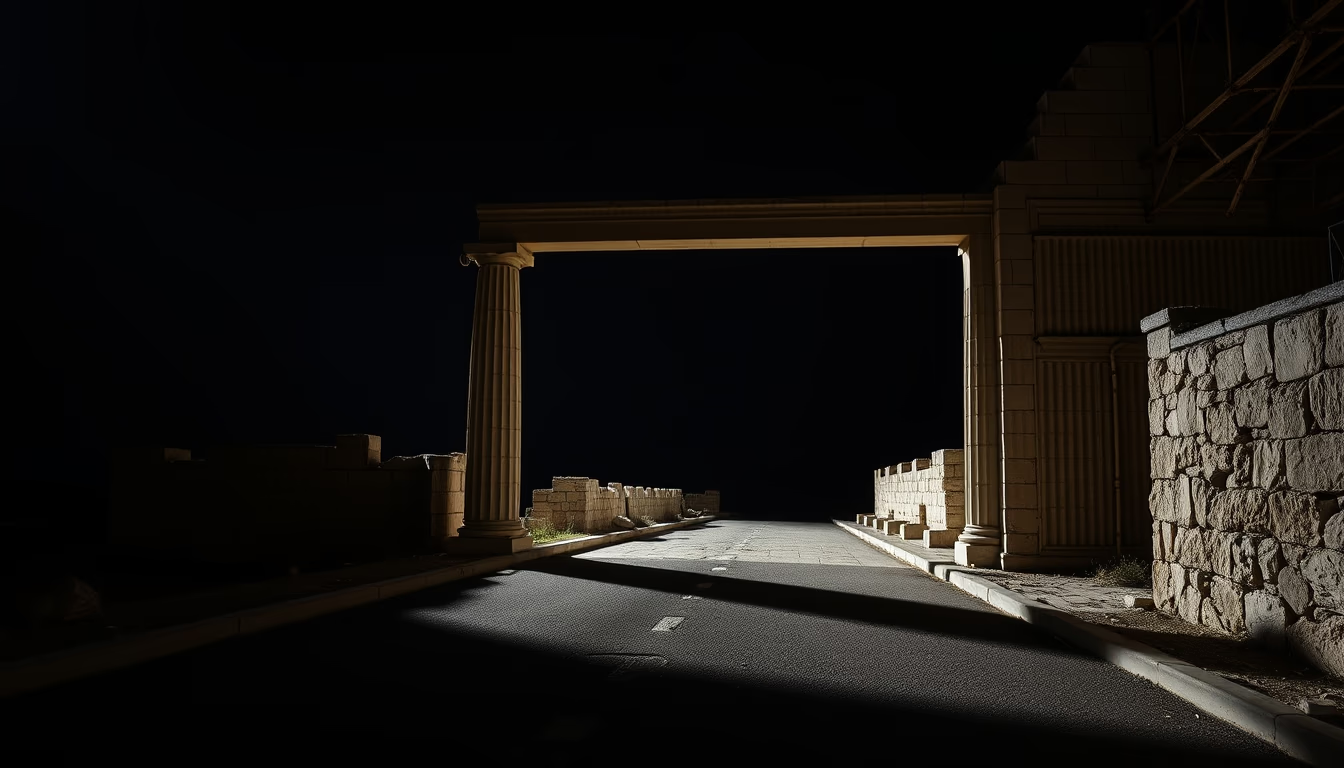
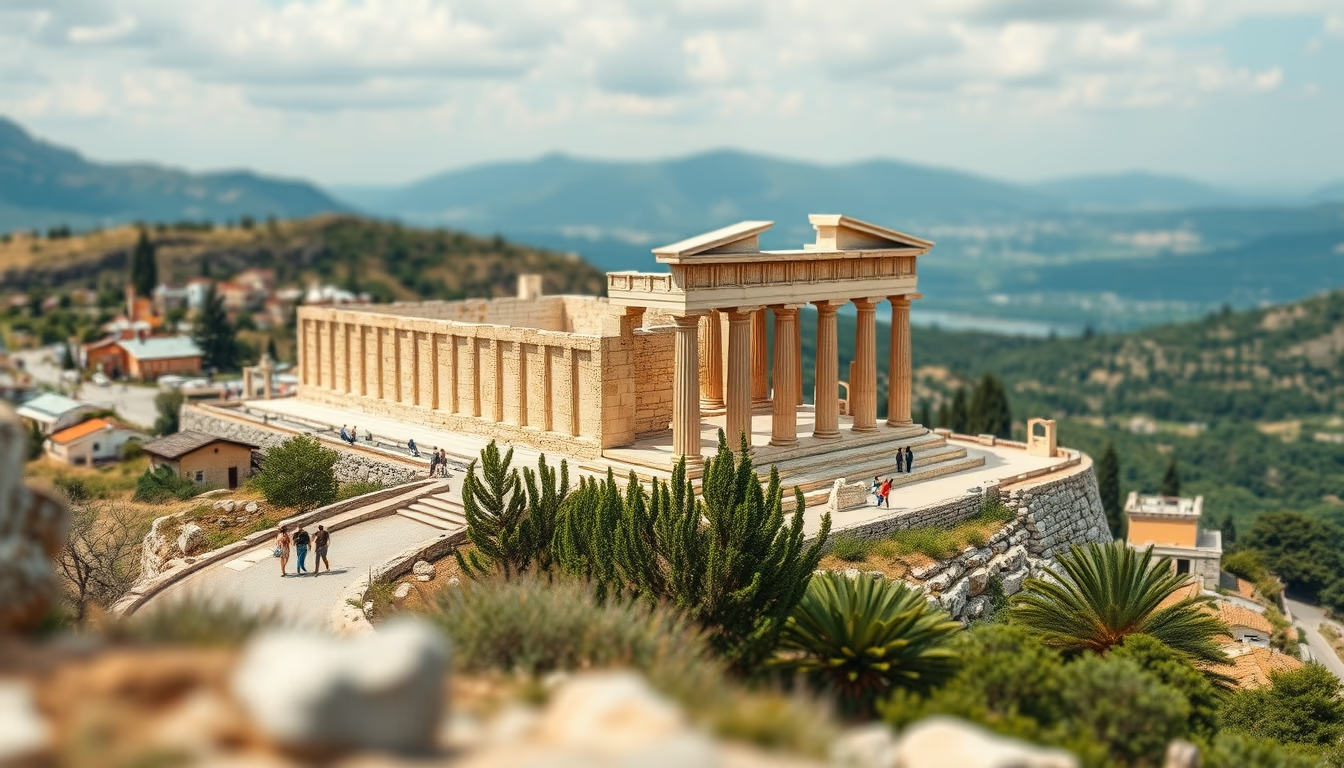
The Agincourt field in England evokes the memorable 1415 battle, a landmark of the Hundred Years' War and a symbol of English heroism under Henry V.
About this subject
The Agincourt field in England directly refers to the Battle of Agincourt, fought on October 25, 1415, during the Hundred Years' War. The clash pitted the English army led by King Henry V against numerically superior French forces. The English victory was overwhelming, thanks to the strategic use of the longbow by Welsh and English archers, who decimated the heavy French cavalry amid the muddy terrain. Although the actual battlefield lies near the commune of Azincourt in northern France, the name Agincourt was adopted in various places in England to celebrate this achievement.
The battle became a cornerstone of English national identity, immortalized by William Shakespeare in his play "Henry V", which features the famous St. Crispin's Day speech where the king refers to his soldiers as a “band of brothers”. This speech helped cement the image of Agincourt as a moment of unity and bravery against the odds. In England, streets, squares, and fields were named Agincourt to honor the combatants and keep the memory of the feat alive.
Today, fields like the one depicted may be used for historical reenactments, medieval fairs, or simply as part of the English rural landscape that preserves historical names. Although there is no single official Agincourt field in England, the designation appears on farmlands and parks, especially in counties that served as the birthplace of the archers who fought in the battle. These spaces act as markers of collective memory and connection to the country's medieval past.
For history enthusiasts, visiting an English field called Agincourt offers an opportunity to reflect on the events that shaped Europe and British culture. The battle not only altered the course of the Hundred Years' War but also influenced military tactics and how England viewed itself as a nation. The name Agincourt continues to resonate as a synonym for courage and determination.
Frequently Asked Questions
Why is there a field called Agincourt in England if the battle was in France?
The name Agincourt was adopted to honor the English victory, as a way to celebrate the historical achievement and pay tribute to the soldiers who fought. Many places in England were named after famous battles to keep national memory alive.
What was the role of the archers at the Battle of Agincourt?
The English and Welsh archers, armed with longbows, were decisive. They fired arrows in arcs that fell upon the French knights, causing massive casualties. The muddy field also hindered the French advance, favoring the English infantry.
Is the Agincourt field in England used for historical reenactments?
Yes, many fields with this name are venues for battle reenactments, organized by groups passionate about medieval history. These events include combat demonstrations, archers, and period encampments.
Direct URL
https://pub-c7d6a6ea828543ac903a74a341ccb2e1.r2.dev/imagens/agincourt-field-england-fish-eye-wide-angle-fresh14.avifHow to credit
Include a visible link back to UtilizAí. Copy one of the snippets below:
<a href="https://xn--utiliza-eza.com/en/midia/imagens/agincourt-field-england-fish-eye-wide-angle-fresh14">Agincourt field england</a> by <a href="https://xn--utiliza-eza.com">UtilizAí</a>, licensed under <a href="https://creativecommons.org/licenses/by/4.0/">CC BY 4.0</a>.
[Agincourt field england](https://xn--utiliza-eza.com/en/midia/imagens/agincourt-field-england-fish-eye-wide-angle-fresh14) by [UtilizAí](https://xn--utiliza-eza.com), CC BY 4.0
License: CC-BY-4.0