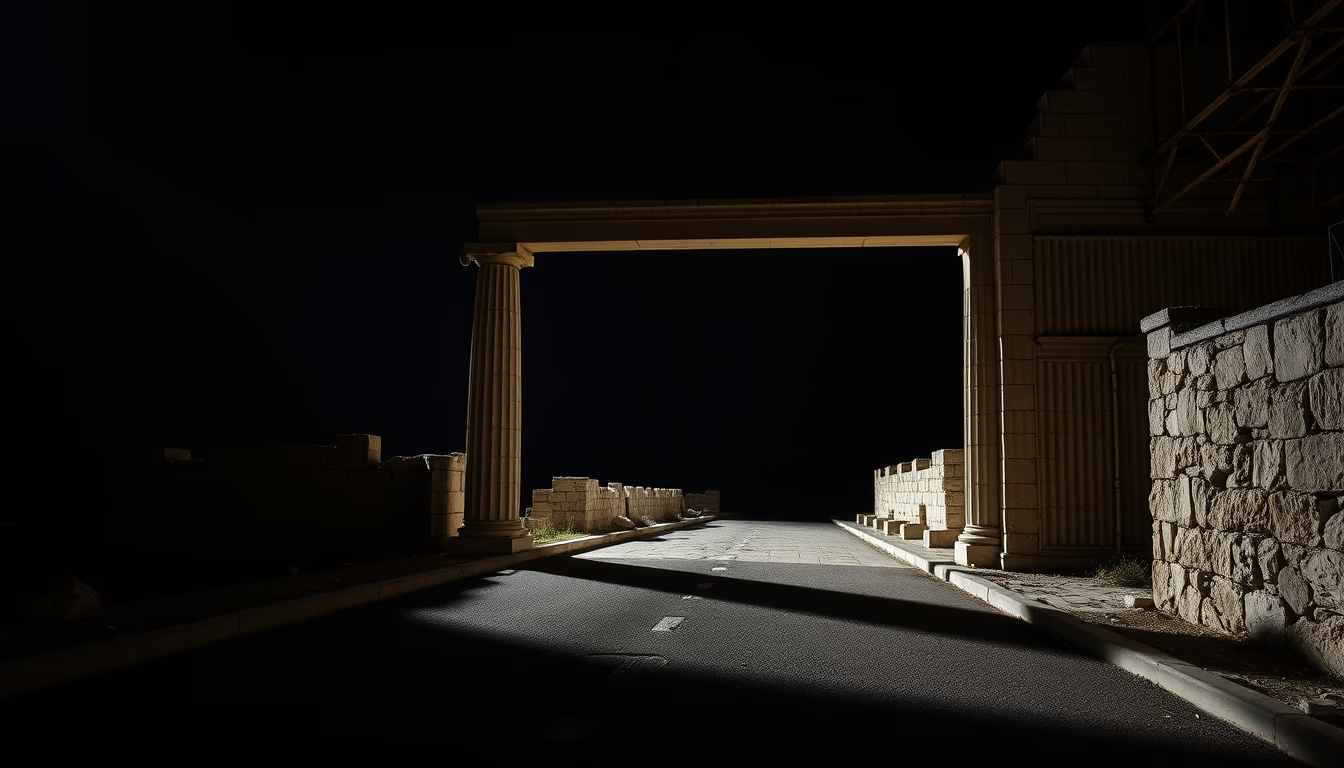
Agincourt field england
1344×768 · AVIF · CC BY 4.0

The field of Agincourt in northern France was the site of the famous 1415 battle between the English and French during the Hundred Years' War.
About this subject
The field of Agincourt, located in the Pas-de-Calais department in northern France, entered history as the setting for one of the most emblematic battles of the Hundred Years' War. On October 25, 1415, the English army led by King Henry V faced numerically superior French forces. The battle became famous for the overwhelming English victory, which used longbow archers to decimate the French cavalry and infantry as they advanced through muddy and narrow terrain. French losses were estimated between 5,000 and 10,000 men, including many nobles, while the English lost about 400 soldiers.
The battle site, an open agricultural area between the woods of Agincourt and Tramecourt, remains relatively preserved. Today, visitors can tour a memorial and a museum dedicated to the event. The field is marked by an obelisk and information panels describing the troop dispositions and the unfolding of the battle. The flat landscape and cultivated fields contrast with the past violence, offering a reflective historical experience.
The Battle of Agincourt was immortalized by William Shakespeare in his play "Henry V," especially in the St. Crispin's Day speech, which exalts the camaraderie and bravery of English soldiers. The event also influenced tactical military development, showing the effectiveness of the longbow against heavy cavalry. Moreover, Agincourt was a milestone in the assertion of English power during the Hundred Years' War, even though the war continued for several more decades.
Interestingly, the word "Agincourt" has Germanic origins, meaning "court of Agano." The field is not only a place of historical memory but also the site of annual reenactments and academic studies on medieval warfare. The battle also spawned legends, such as the two-finger gesture (V sign) used by English archers, although historians question this story.
Frequently Asked Questions
Where exactly is the Agincourt field located?
The field of Agincourt is located in the municipality of Azincourt, in the Pas-de-Calais department of northern France, about 40 km northwest of Arras.
How many soldiers participated in the Battle of Agincourt?
It is estimated that the English army had between 6,000 and 9,000 men, while the French had between 12,000 and 36,000 soldiers, according to various historical sources.
What was the tactical importance of the longbow in the battle?
The English longbow, with an effective range of up to 200 meters, allowed archers to shoot at the advancing French army in muddy terrain, causing massive casualties and disrupting enemy formations.
Direct URL
https://pub-c7d6a6ea828543ac903a74a341ccb2e1.r2.dev/imagens/agincourt-field-england-fine-art-photography-fresh3.avifHow to credit
Include a visible link back to UtilizAí. Copy one of the snippets below:
<a href="https://xn--utiliza-eza.com/en/midia/imagens/agincourt-field-england-fine-art-photography-fresh3">Agincourt field england</a> by <a href="https://xn--utiliza-eza.com">UtilizAí</a>, licensed under <a href="https://creativecommons.org/licenses/by/4.0/">CC BY 4.0</a>.
[Agincourt field england](https://xn--utiliza-eza.com/en/midia/imagens/agincourt-field-england-fine-art-photography-fresh3) by [UtilizAí](https://xn--utiliza-eza.com), CC BY 4.0
License: CC-BY-4.0