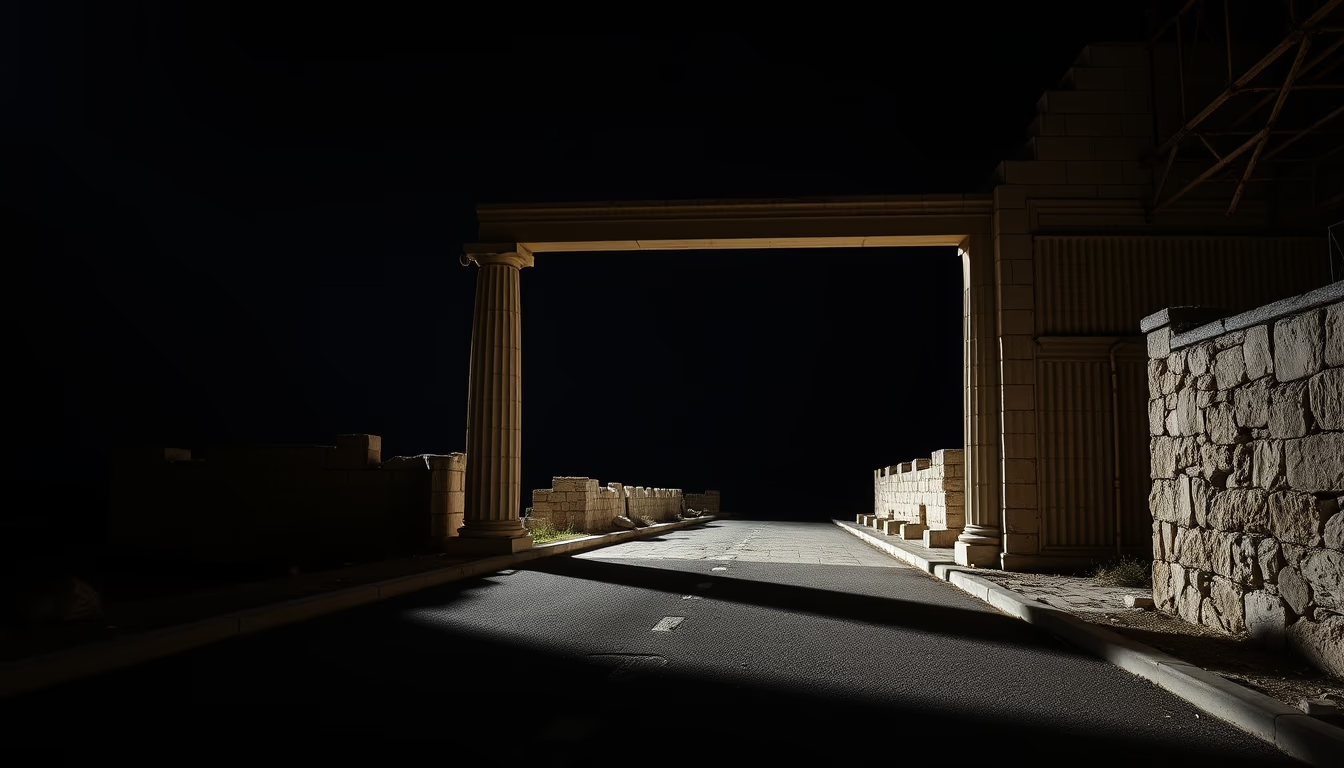
Agincourt field england
1344×768 · AVIF · CC BY 4.0

The field of Agincourt, site of the famous 1415 battle, is a historical landmark in Pas-de-Calais, France, where Henry V's English army defeated the French forces.
About this subject
The Battle of Agincourt, fought on October 25, 1415, was one of the most emblematic clashes of the Hundred Years' War. The battlefield, located in northern France near the village of Azincourt, became synonymous with English tactical superiority during the Middle Ages. Under King Henry V, about 6,000 English soldiers faced a French army estimated between 20,000 and 30,000 men. The English victory was largely attributed to the strategic use of longbow archers, who decimated French ranks on a muddy and narrow terrain.
The ground at Agincourt was a decisive factor. Heavy rain in the preceding days turned the arable land into a quagmire, hindering the French cavalry and heavily armored infantry. As the French advanced through the mud, English archers positioned on the flanks loosed arrows with deadly precision. French disorganization resulted in thousands of casualties, including many nobles, while the English lost only a few hundred men.
The battle had lasting consequences for both France and England. It strengthened Henry V's position, leading to the Treaty of Troyes in 1420, which made him heir to the French throne. However, the war continued for decades, and Agincourt became a symbol of English courage and resilience, immortalized by William Shakespeare in his play "Henry V." The field retains its rural character, with markers and memorials that attract history enthusiasts.
Today, the Azincourt historical site features an interpretation center detailing the battle events. The field is open to the public, with informative plaques guiding visitors through key combat areas. Recent archaeological studies have identified arrowhead and equipment fragments, confirming the exact location of the fighting. Preservation of the site allows understanding of the topography that influenced the outcome, with its waterlogged areas and narrow passages between woods.
Frequently Asked Questions
Where exactly is the Battle of Agincourt field located?
The battlefield is in northern France, in the Pas-de-Calais region, near the village of Azincourt. Despite the English name Agincourt, the site is on French soil, about 40 km from Calais.
How many soldiers fought at the Battle of Agincourt?
The English army is estimated to have between 6,000 and 9,000 men, while French forces numbered 20,000 to 30,000 soldiers. The numerical disadvantage was offset by the tactical use of English longbowmen.
Why was the muddy terrain crucial to the battle's outcome?
The mud hindered the advance of French cavalry and heavy infantry, making them slow targets for English archers. The French became trapped in the waterlogged ground, while the lighter English remained on firmer terrain and could shoot effectively.
Direct URL
https://pub-c7d6a6ea828543ac903a74a341ccb2e1.r2.dev/imagens/agincourt-field-england-film-grain-authentic-fresh9.avifHow to credit
Include a visible link back to UtilizAí. Copy one of the snippets below:
<a href="https://xn--utiliza-eza.com/en/midia/imagens/agincourt-field-england-film-grain-authentic-fresh9">Agincourt field england</a> by <a href="https://xn--utiliza-eza.com">UtilizAí</a>, licensed under <a href="https://creativecommons.org/licenses/by/4.0/">CC BY 4.0</a>.
[Agincourt field england](https://xn--utiliza-eza.com/en/midia/imagens/agincourt-field-england-film-grain-authentic-fresh9) by [UtilizAí](https://xn--utiliza-eza.com), CC BY 4.0
License: CC-BY-4.0