African lion in savanna
1344×768 · AVIF · CC BY 4.0
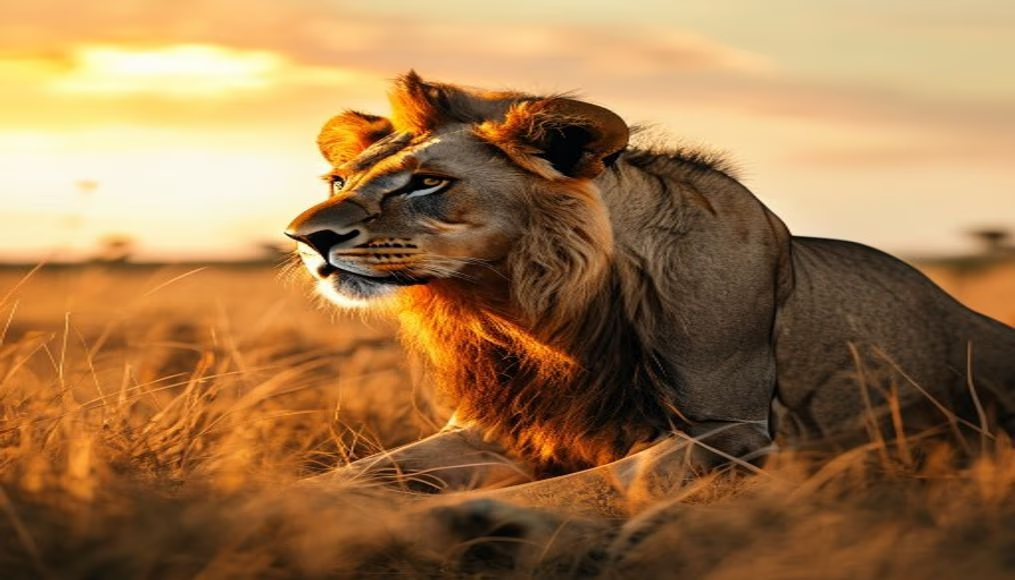
The African lion (Panthera leo) rules the savanna as one of the world’s most iconic predators, a symbol of strength and wildlife in Africa.
About this subject
The African lion (Panthera leo) is the largest cat in Africa and one of the most iconic predators on Earth. Its current distribution is concentrated in sub-Saharan Africa, with significant populations in countries such as Tanzania, Kenya, South Africa, and Botswana. An estimated 20,000 to 25,000 individuals remain in the wild, leading the International Union for Conservation of Nature (IUCN) to list the species as vulnerable. The savanna is the lion's quintessential habitat, an ecosystem of open plains with grasses and scattered trees like acacias, which provide shade and vantage points. This environment features two distinct seasons: dry and wet, which drive the migration of large herbivores that form the lion's diet.
Social behavior is one of the most fascinating aspects of lions. They live in groups called prides, typically comprising 3 to 30 individuals. The structure is matriarchal: females are related and stay in the group for life, while males may be expelled upon reaching maturity. Females are the primary hunters, working as a team to bring down prey such as wildebeest, zebras, and buffalo. Males, in turn, defend the territory from intruders. A striking fact is that a lion's roar can be heard up to 8 kilometers away, used to mark territory and maintain contact with the pride.
The savanna hosts extraordinary biodiversity, and lions sit at the top of the food chain. However, they face serious threats: habitat loss due to agricultural expansion, conflicts with livestock herders, and illegal hunting for trophies or body parts. Protected areas such as Serengeti National Park (Tanzania), the Maasai Mara National Reserve (Kenya), and Kruger National Park (South Africa) are essential refuges for the species. Lions sleep about 20 hours a day to conserve energy, as hunting requires great effort. They are the only truly social cats, distinguishing them from other large predators.
Frequently Asked Questions
How many lions still exist in the wild?
It is estimated that between 20,000 and 25,000 African lions remain in the wild, mostly concentrated in protected areas of sub-Saharan Africa. The species is classified as vulnerable by the IUCN.
Why do lions roar?
A lion's roar serves to mark territory, communicate the pride's location, and intimidate intruders. It can be heard up to 8 kilometers away.
What is the main diet of lions?
Lions primarily feed on large herbivores such as wildebeest, zebras, buffaloes, and occasionally giraffes or young elephants. Females do most of the hunting in groups.
Direct URL
https://pub-c7d6a6ea828543ac903a74a341ccb2e1.r2.dev/imagens/african-lion-in-savanna-travel-photography-v10.avifHow to credit
Include a visible link back to UtilizAí. Copy one of the snippets below:
<a href="https://xn--utiliza-eza.com/en/midia/imagens/african-lion-in-savanna-travel-photography-v10">African lion in savanna</a> by <a href="https://xn--utiliza-eza.com">UtilizAí</a>, licensed under <a href="https://creativecommons.org/licenses/by/4.0/">CC BY 4.0</a>.
[African lion in savanna](https://xn--utiliza-eza.com/en/midia/imagens/african-lion-in-savanna-travel-photography-v10) by [UtilizAí](https://xn--utiliza-eza.com), CC BY 4.0
License: CC-BY-4.0