African lion in savanna
1344×768 · AVIF · CC BY 4.0
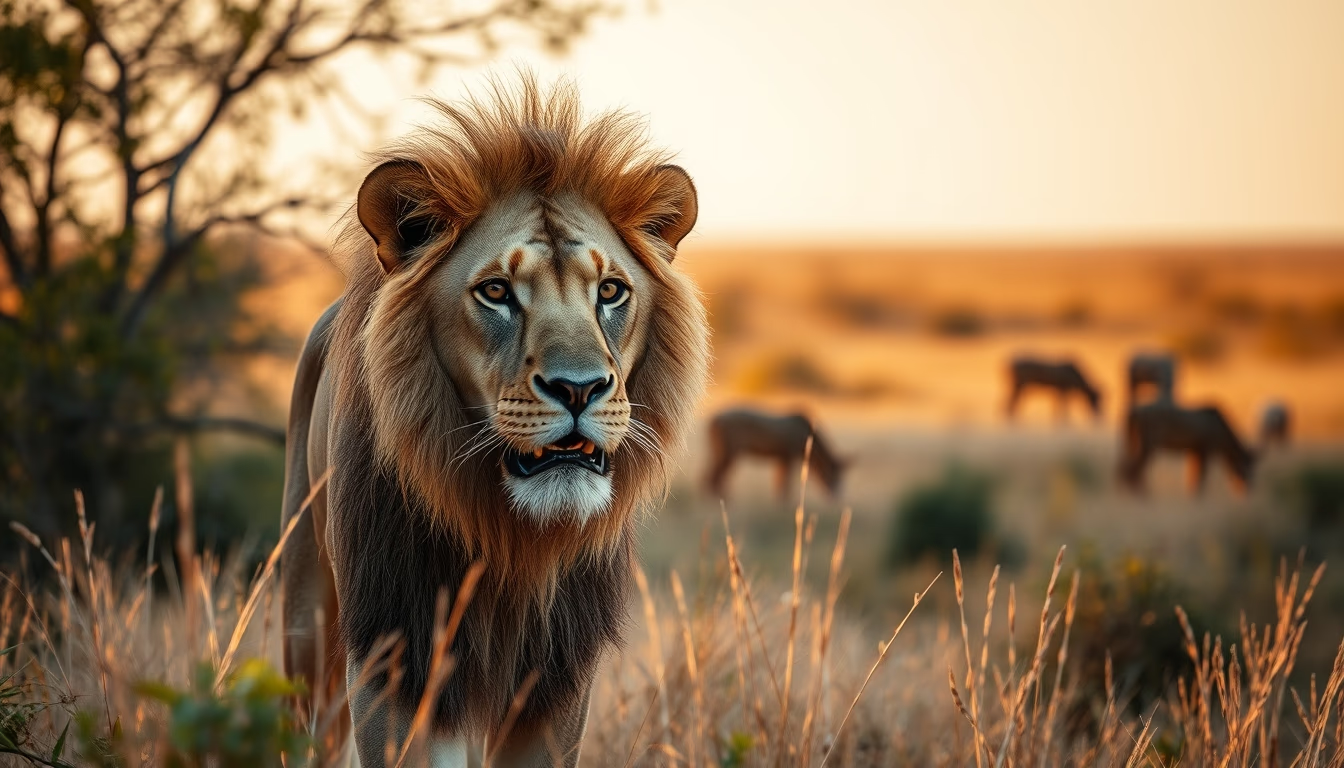
The African lion, king of the savanna, is one of the continent's most iconic predators, with populations concentrated in protected areas.
About this subject
The African lion (Panthera leo) is the largest feline in Africa and sits atop the food chain in savanna ecosystems. Its historical range covered much of the continent, but today it is restricted to about 20% of its original extent, mainly in national parks and reserves. An estimated 20,000 to 25,000 wild lions remain, with a population decline of approximately 43% over the past two decades. The species is classified as Vulnerable by the IUCN, threatened by habitat loss, human-wildlife conflict, and poaching.
Lions are the only truly social cats, living in groups called prides, consisting of related females, their cubs, and one or two adult males. Females are the primary hunters, working cooperatively to take down prey such as zebras, wildebeests, and buffaloes. Males defend the territory, which can span up to 400 km². The African savanna, with its vast grasslands and scattered trees, provides ideal habitat for these predators, offering camouflage and wide visibility.
Culturally, the lion symbolizes strength and royalty in many African societies, appearing on coats of arms, coins, and logos. In the wild, its roar can be heard up to 8 km away, used for communication and territorial marking. Despite their fierce reputation, lions sleep about 20 hours a day, conserving energy for short, explosive hunts. Wildlife tourism, especially in countries like Kenya, Tanzania, and South Africa, is a major revenue source for conservation but requires careful management to avoid disturbing the animals.
Interestingly, lions have a lifespan of 10 to 14 years in the wild but can live over 20 years in captivity. Cubs are born with spots that fade with age, and male manes vary in color and size based on genetics and health, with darker manes indicating higher testosterone levels. Climate change and habitat fragmentation are growing threats, prompting initiatives such as ecological corridors and captive breeding programs in zoos.
Frequently Asked Questions
How many African lions exist in the wild today?
There are an estimated 20,000 to 25,000 wild African lions, with a population decline of about 43% over the past two decades. The species is listed as Vulnerable by the IUCN.
What is the biggest threat to African lions?
Major threats include habitat loss due to agricultural expansion, conflict with livestock farmers (who kill lions in retaliation for attacks on cattle), and poaching. Habitat fragmentation also isolates populations.
Why do lions sleep so much?
Lions sleep about 20 hours a day to conserve energy, as their hunts are short and require quick bursts of effort. Extended rest also helps regulate body temperature in the hot savanna.
Direct URL
https://pub-c7d6a6ea828543ac903a74a341ccb2e1.r2.dev/imagens/african-lion-in-savanna-travel-photography.avifHow to credit
Include a visible link back to UtilizAí. Copy one of the snippets below:
<a href="https://xn--utiliza-eza.com/en/midia/imagens/african-lion-in-savanna-travel-photography">African lion in savanna</a> by <a href="https://xn--utiliza-eza.com">UtilizAí</a>, licensed under <a href="https://creativecommons.org/licenses/by/4.0/">CC BY 4.0</a>.
[African lion in savanna](https://xn--utiliza-eza.com/en/midia/imagens/african-lion-in-savanna-travel-photography) by [UtilizAí](https://xn--utiliza-eza.com), CC BY 4.0
License: CC-BY-4.0