Accordion bellows old
1344×768 · AVIF · CC BY 4.0

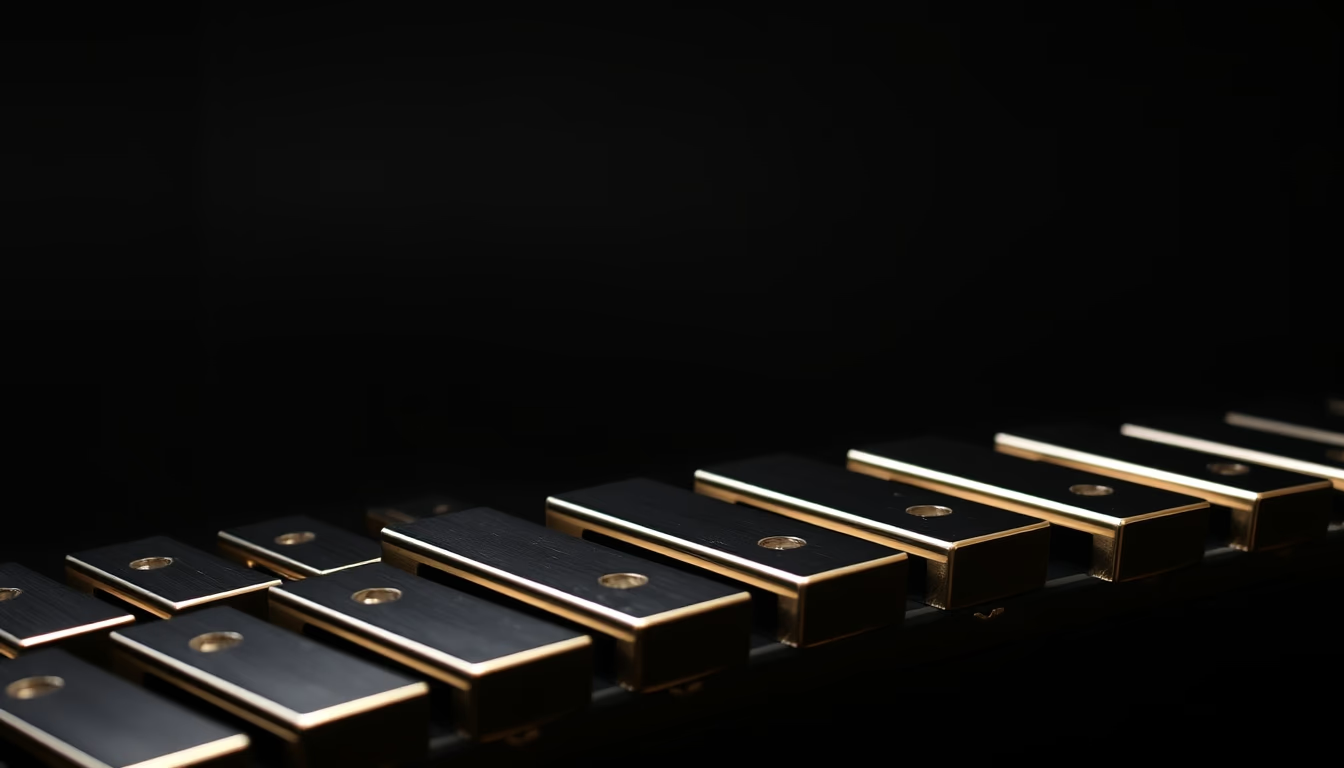
Accordion bellows produce sound through airflow, with a design that has evolved since the 19th century.
About this subject
The bellows are the heart of the accordion, responsible for generating the airflow that vibrates the internal metal reeds. A typical accordion has 12 to 120 bass buttons and a bellow set that can expand up to 40 centimeters. Artisan construction uses reinforced cardboard, leather, and metal, sealed with casein glue to ensure airtightness and durability. Vintage models, such as those made by Hohner in Germany or Italian brands Scandalli and Paolo Soprani, had bellows reinforced with aluminum corners and leather edges, features still prized by professional musicians.
Historically, the modern accordion was patented in 1829 by Cyrill Demian in Vienna, but folding bellows had already been used in instruments like the Chinese sheng (c. 3000 BCE) and the 18th-century harmonium. In Brazil, the accordion arrived with European immigrants in the 19th century and became a symbol of Northeastern music, especially forró and baião. Master Luiz Gonzaga popularized the instrument, and its bellows gained extra resistance to withstand the dry climate of the sertão.
Bellow maintenance is crucial: tears or leaks compromise air pressure, reducing volume and tuning. Restoration techniques include replacing cardboard, reapplying glue, and adjusting metal hinges. Experienced accordionists usually air out the bellows after use to prevent mold, especially in humid regions like the Amazon. Interestingly, the sound of a well-sealed bellow is described as "full-bodied" by musicians, while worn bellows produce a more sibilant tone.
Beyond the accordion, instruments like the concertina, bandoneon, and diatonic button accordion share the same bellow principle. The bandoneon, used in Argentine tango, has rectangular bellows and double reeds, while the English concertina features hexagonal bellows. These variations show how bellow design directly influences ergonomics and timbre, making each instrument unique to its musical genre.
Frequently Asked Questions
How do accordion bellows produce sound?
The bellows push or pull air through metal reeds that vibrate at different frequencies, producing musical notes.
What is the difference between accordion and bandoneon bellows?
Accordion bellows are generally rectangular and wider, while bandoneon bellows are narrower and rectangular with double reeds, giving a more pungent timbre.
Why are old accordion bellows more valued?
Vintage models used materials like genuine leather and reinforced cardboard with metal corners, offering greater durability and sound response, preferred by professional musicians.
Direct URL
https://pub-c7d6a6ea828543ac903a74a341ccb2e1.r2.dev/imagens/accordion-bellows-old-cinematic-wide-shot-p10.avifHow to credit
Include a visible link back to UtilizAí. Copy one of the snippets below:
<a href="https://xn--utiliza-eza.com/en/midia/imagens/accordion-bellows-old-cinematic-wide-shot-p10">Accordion bellows old</a> by <a href="https://xn--utiliza-eza.com">UtilizAí</a>, licensed under <a href="https://creativecommons.org/licenses/by/4.0/">CC BY 4.0</a>.
[Accordion bellows old](https://xn--utiliza-eza.com/en/midia/imagens/accordion-bellows-old-cinematic-wide-shot-p10) by [UtilizAí](https://xn--utiliza-eza.com), CC BY 4.0
License: CC-BY-4.0