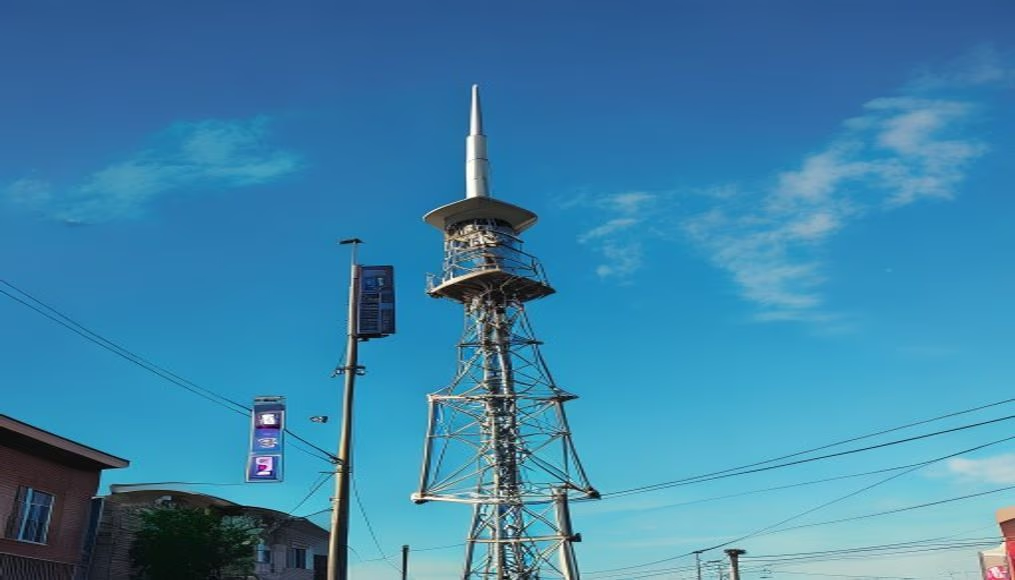
5G tower against blue sky
1344×768 · AVIF · CC BY 4.0
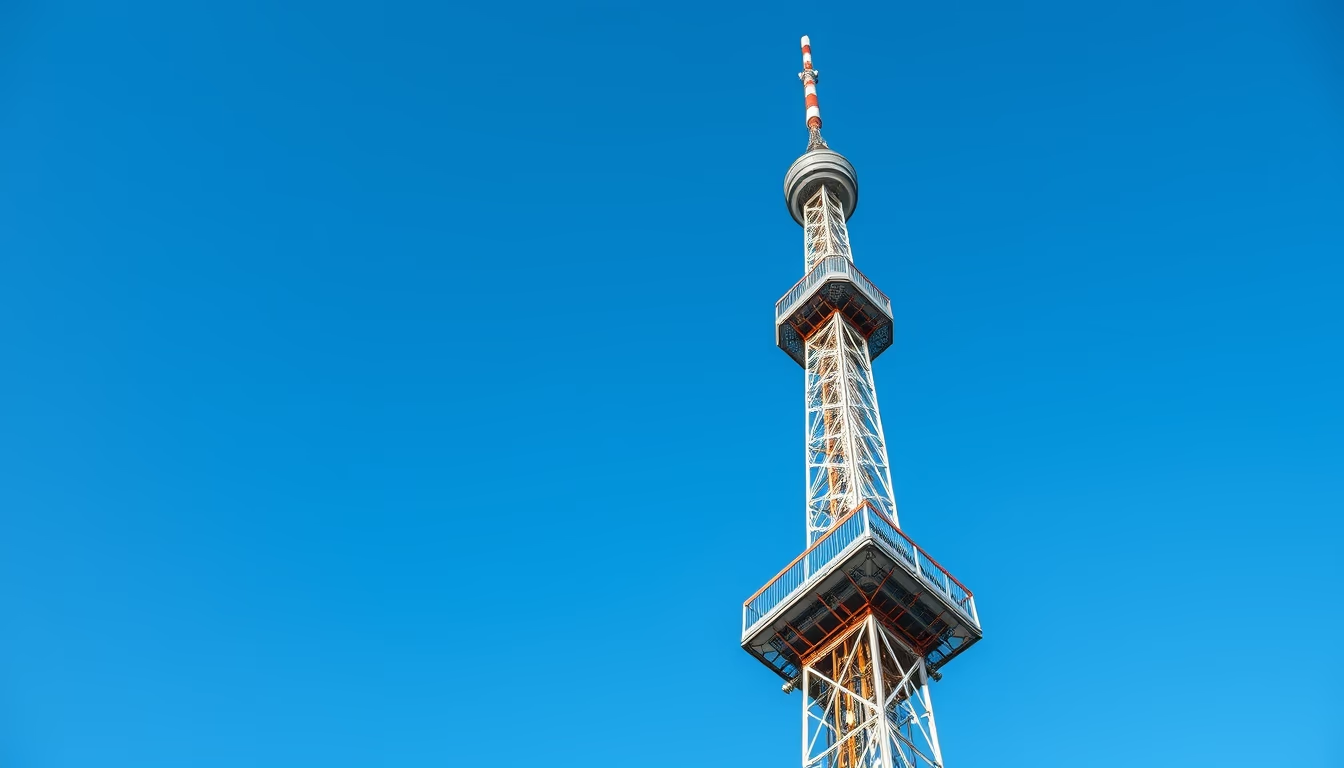
A 5G transmission tower stands out against the blue sky, symbolizing the expansion of high-speed mobile connectivity in Brazil.
About this subject
5G transmission towers are the physical infrastructure enabling the fifth generation of mobile networks, offering download speeds up to 20 times faster than 4G and latency below 1 millisecond. In Brazil, 5G deployment officially began in July 2022, following the frequency band auction conducted by Anatel. 5G antennas use millimeter waves and beamforming, requiring a higher density of towers in urban areas to ensure continuous coverage.
The tower in the image represents a milestone in Brazilian telecommunications modernization. Unlike 4G antennas, 5G stations are more compact and often installed on poles, building facades, or existing towers. In Brazil, the goal is to cover all state capitals by 2029, with estimated investments of R$ 40 billion. 5G technology benefits not only mobile phones but also enables advances in the Internet of Things (IoT), autonomous cars, telemedicine, and smart cities.
Interestingly, the blue sky in the image contrasts with the white tower, highlighting its technological silhouette. 5G operates in three main bands: low (700 MHz), mid (2.3 GHz and 3.5 GHz), and high (26 GHz). The 3.5 GHz band used in Brazil was cleared after the migration of satellite TV, a process involving over 20 million households. The tower may also house fiber optic equipment, essential for the 5G network backhaul.
Despite coverage challenges in rural areas and the need for new equipment, 5G is already a reality in over 200 Brazilian municipalities. The tower against the blue sky symbolizes wireless connectivity linking people, machines, and data, driving the country's digital economy.
Frequently Asked Questions
What is the practical difference between 4G and 5G?
5G offers download speeds up to 20 times faster than 4G, latency of 1 ms (vs. 30-50 ms for 4G), and the ability to connect up to 1 million devices per km², enabling applications such as autonomous cars and remote surgery.
Does 5G work in rural areas of Brazil?
Yes, but rural coverage is challenging due to the need for more towers. The 700 MHz band (5G DSS) is used to reach remote areas, while higher bands are urban. Expansion is gradual.
Are 5G towers dangerous to health?
No. The World Health Organization and Anatel state that 5G frequencies are within safe limits of non-ionizing radiation exposure, causing no harm to human health.
Direct URL
https://pub-c7d6a6ea828543ac903a74a341ccb2e1.r2.dev/imagens/5g-tower-against-blue-sky-studio-editorial-portrait-v3.avifHow to credit
Include a visible link back to UtilizAí. Copy one of the snippets below:
<a href="https://xn--utiliza-eza.com/en/midia/imagens/5g-tower-against-blue-sky-studio-editorial-portrait-v3">5G tower against blue sky</a> by <a href="https://xn--utiliza-eza.com">UtilizAí</a>, licensed under <a href="https://creativecommons.org/licenses/by/4.0/">CC BY 4.0</a>.
[5G tower against blue sky](https://xn--utiliza-eza.com/en/midia/imagens/5g-tower-against-blue-sky-studio-editorial-portrait-v3) by [UtilizAí](https://xn--utiliza-eza.com), CC BY 4.0
License: CC-BY-4.0