5G antenna tower silhouette against deep blue twilight sky
1344×768 · AVIF · CC BY 4.0
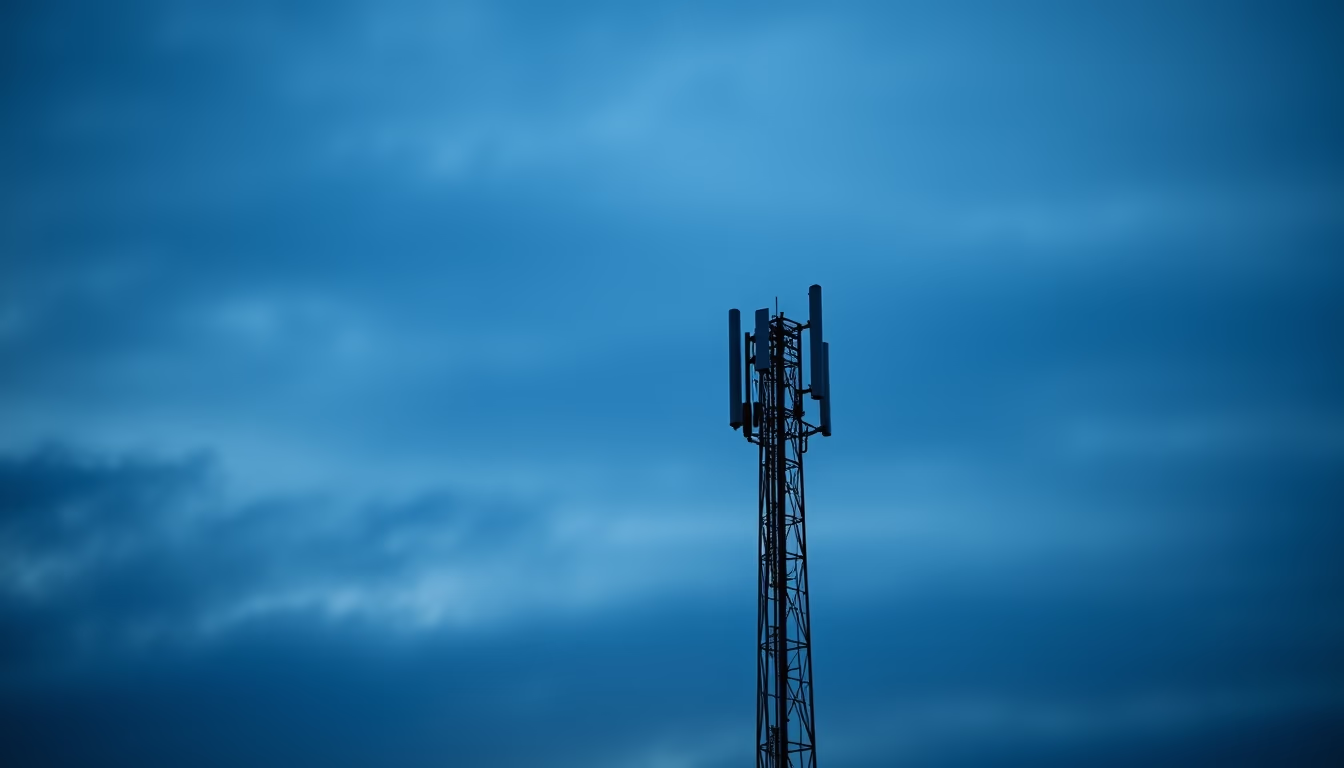
5G antenna tower silhouette against deep blue twilight sky, symbol of the new era of mobile connectivity in Brazil.
About this subject
The 5G antenna tower, with its sleek and modern profile, stands out against the deep blue twilight sky, marking the arrival of the fifth generation of mobile networks in Brazil. 5G represents a significant technological leap over 4G, offering download speeds up to 20 times faster, latency reduced to less than 1 millisecond, and the ability to connect up to 1 million devices per square kilometer. In Brazil, the implementation of 5G officially began in July 2022, following the frequency band auction held by Anatel in November 2021. Operators Claro, Vivo, and TIM were the main winners, committing to cover all state capitals by July 2022 and later expanding to cities with over 30,000 inhabitants. 5G technology uses millimeter waves, sub-6 GHz waves, and low-frequency waves, each with specific range and penetration characteristics. 5G antennas are smaller and more numerous than 4G ones, often installed on poles, building facades, and existing towers like the one shown in the image. This infrastructure is essential to enable applications such as autonomous vehicles, remote surgery, smart cities, and augmented reality. However, 5G expansion in Brazil faces challenges, including the need for fiber optic backhaul, bureaucratic licensing for antennas, and resistance from part of the population due to myths about the health effects of electromagnetic waves. Despite this, 5G promises to transform Brazil's digital economy, boosting sectors like precision agriculture, Industry 4.0, and telemedicine. The tower's silhouette at dusk evokes both technological progress and the beauty of the Brazilian urban landscape.
Frequently Asked Questions
What is 5G and how does it differ from 4G?
5G is the fifth generation of mobile networks, offering speeds up to 20 times faster than 4G, ultra-low latency (less than 1 ms), and massive device connectivity. While 4G focuses on mobile broadband, 5G is designed to support IoT, autonomous vehicles, and real-time critical applications.
When did 5G arrive in Brazil and which operators are involved?
5G was commercially launched in Brazil in July 2022, following Anatel's auction in November 2021. The main operators are Claro, Vivo, and TIM, which committed to covering all state capitals and expanding to cities with over 30,000 inhabitants.
What are the main challenges for 5G expansion in Brazil?
Challenges include the need for fiber optic backhaul, bureaucratic antenna licensing, infrastructure costs, and combating fake news about health risks. Additionally, coverage in rural and remote areas remains limited.
Direct URL
https://pub-c7d6a6ea828543ac903a74a341ccb2e1.r2.dev/imagens/5g-antenna-tower-silhouette-against-deep-blue-twilight-sky-editorial-overcast-daytime-2.avifHow to credit
Include a visible link back to UtilizAí. Copy one of the snippets below:
<a href="https://xn--utiliza-eza.com/en/midia/imagens/5g-antenna-tower-silhouette-against-deep-blue-twilight-sky-editorial-overcast-daytime-2">5G antenna tower silhouette against deep blue twilight sky</a> by <a href="https://xn--utiliza-eza.com">UtilizAí</a>, licensed under <a href="https://creativecommons.org/licenses/by/4.0/">CC BY 4.0</a>.
[5G antenna tower silhouette against deep blue twilight sky](https://xn--utiliza-eza.com/en/midia/imagens/5g-antenna-tower-silhouette-against-deep-blue-twilight-sky-editorial-overcast-daytime-2) by [UtilizAí](https://xn--utiliza-eza.com), CC BY 4.0
License: CC-BY-4.0