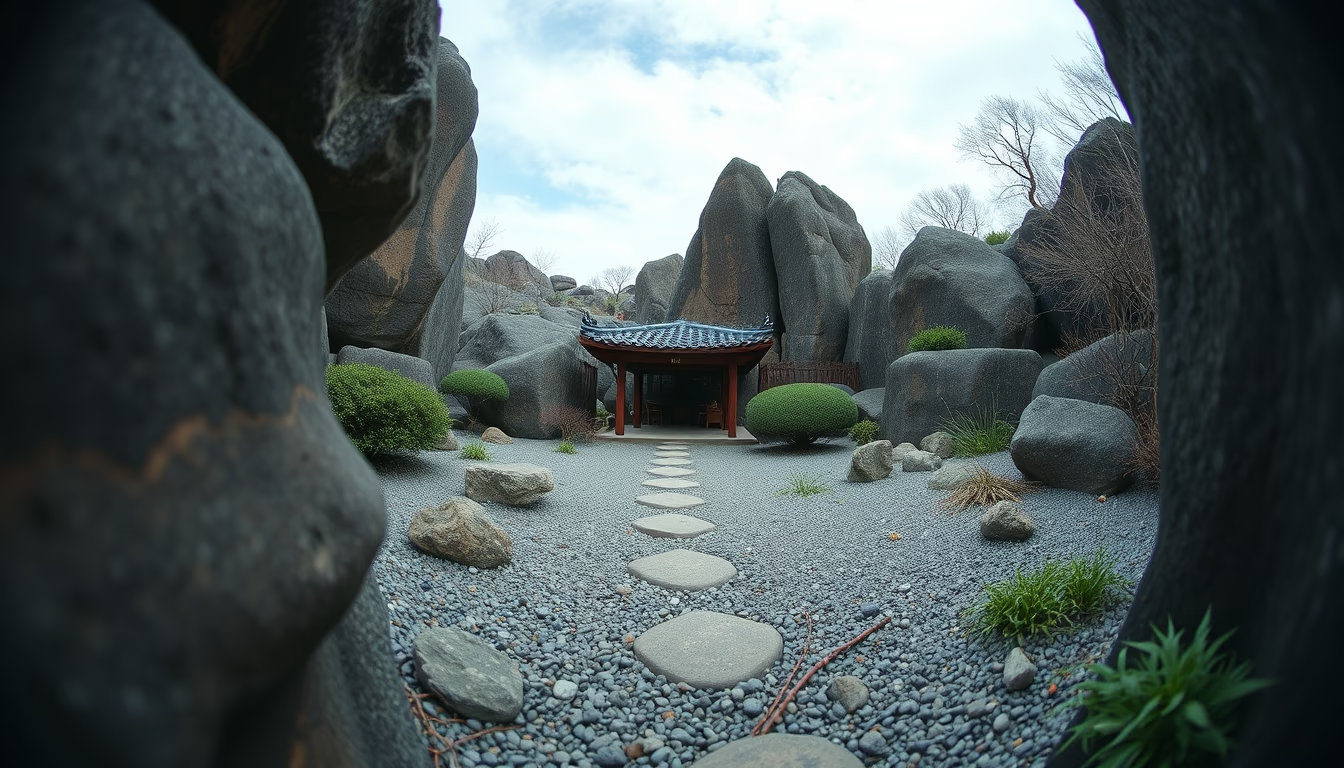
Zen rock garden
1344×768 · AVIF · CC BY 4.0
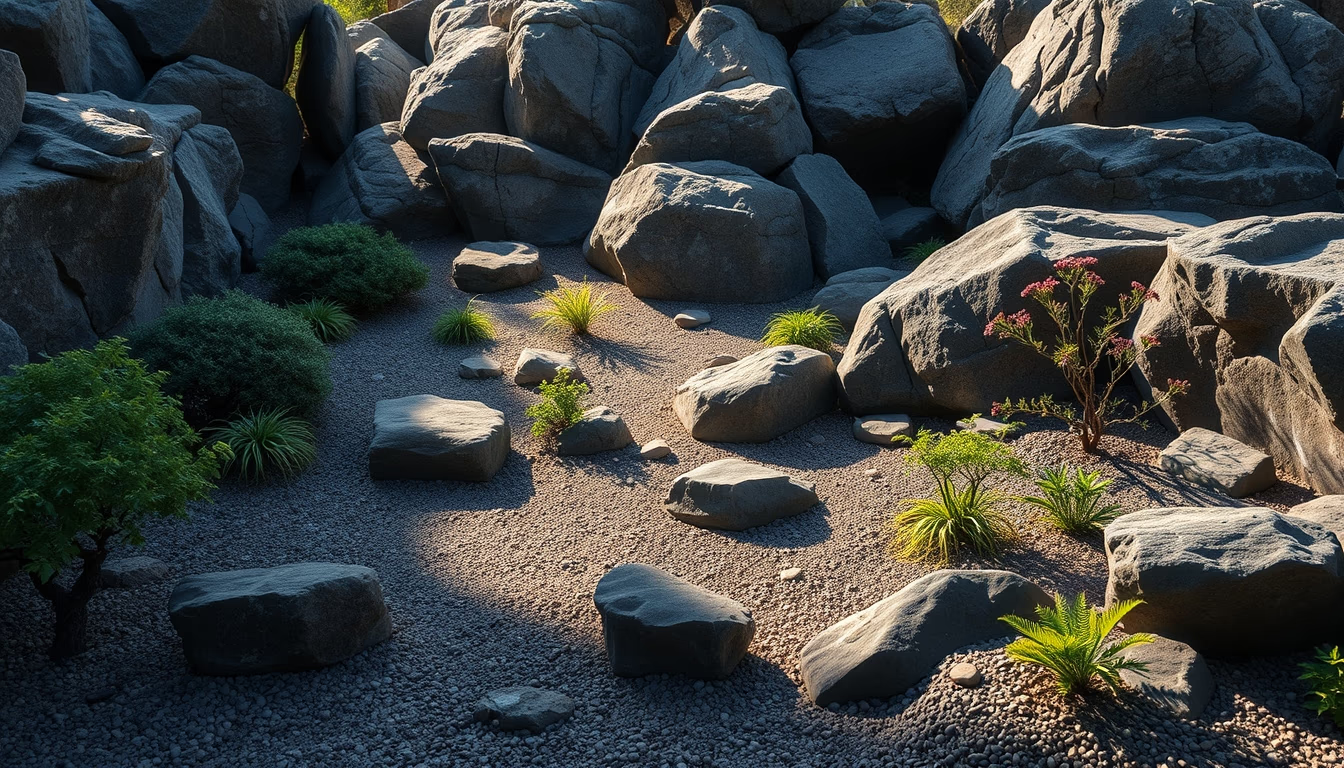
The Zen rock garden, or karesansui, is a minimalist expression of Japanese aesthetics that invites contemplation and inner balance.
About this subject
The Zen rock garden, known in Japanese as karesansui, is a form of dry landscape gardening that emerged during the Muromachi period (1336, 1573), deeply influenced by Zen Buddhism. Unlike traditional gardens with ponds and plants, karesansui uses sand, gravel, rocks, and moss to symbolically represent natural landscapes such as islands, mountains, and watercourses. The most famous example is the garden at Ryōan-ji Temple in Kyoto, built in the late 15th century. It features 15 rocks of varying sizes arranged on a bed of white gravel meticulously raked into wave-like patterns that suggest flowing water or currents.
The symbolism of the Zen garden invites meditation. The raked sand represents water, and the rocks symbolize islands or mountains. The absence of flowers or seasonal elements emphasizes impermanence and the unchanging essence of nature, core concepts in Zen. Observing the garden is a contemplative act: monks and visitors sit on the temple veranda, allowing their minds to calm with the simplicity of the composition. A fascinating curiosity is that in Ryōan-ji's garden, no single vantage point allows a viewer to see all 15 rocks at once, one rock always hides behind another, representing the limits of human perception.
Today, Zen gardens inspired by karesansui can be found worldwide, from public parks to corporate spaces and private homes. Their minimalist aesthetic and sense of serenity have become popular in interior design and relaxation therapies. Although not directly part of the tea ceremony, both rituals share roots in Zen culture and the concept of wabi-sabi, the beauty of imperfection and transience. Creating a home Zen garden is an accessible practice: a shallow container, fine sand, a few rocks, and a rake to draw patterns allow anyone to experience a moment of peace and focus.
Frequently Asked Questions
What is the meaning of the rocks in Zen gardens?
Rocks in Zen gardens represent islands, mountains, or animals depending on their arrangement. They are fixed elements symbolizing stability and permanence, while the surrounding sand represents moving water, creating a balance between the static and the fluid.
Where is the most famous Zen garden in the world located?
The most famous Zen garden is at Ryōan-ji Temple in Kyoto, Japan. Built in the 15th century, it is a UNESCO World Heritage site and attracts visitors worldwide who come to contemplate its 15 rocks arranged on white gravel.
Can I create a Zen garden at home?
Yes, you can create a home Zen garden with simple materials: a shallow container (like a tray), fine sand or gravel, a few rocks, and a miniature rake. Simply arrange the rocks and draw patterns in the sand to recreate the calming effect of traditional gardens.
Direct URL
https://pub-c7d6a6ea828543ac903a74a341ccb2e1.r2.dev/imagens/zen-rock-garden-rembrandt-lighting-dramatic-shadows-fresh0.avifHow to credit
Include a visible link back to UtilizAí. Copy one of the snippets below:
<a href="https://xn--utiliza-eza.com/en/midia/imagens/zen-rock-garden-rembrandt-lighting-dramatic-shadows-fresh0">Zen rock garden</a> by <a href="https://xn--utiliza-eza.com">UtilizAí</a>, licensed under <a href="https://creativecommons.org/licenses/by/4.0/">CC BY 4.0</a>.
[Zen rock garden](https://xn--utiliza-eza.com/en/midia/imagens/zen-rock-garden-rembrandt-lighting-dramatic-shadows-fresh0) by [UtilizAí](https://xn--utiliza-eza.com), CC BY 4.0
License: CC-BY-4.0