Zen rock garden
1344×768 · AVIF · CC BY 4.0
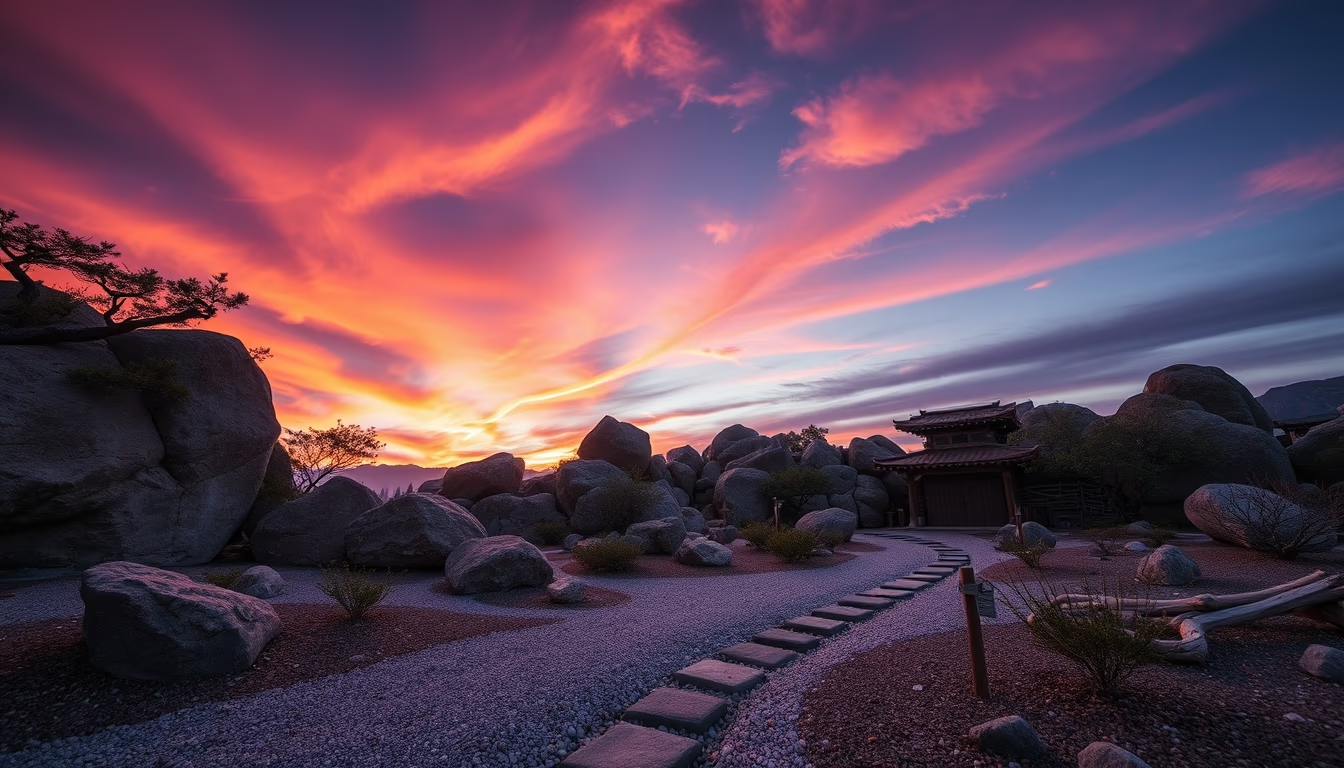
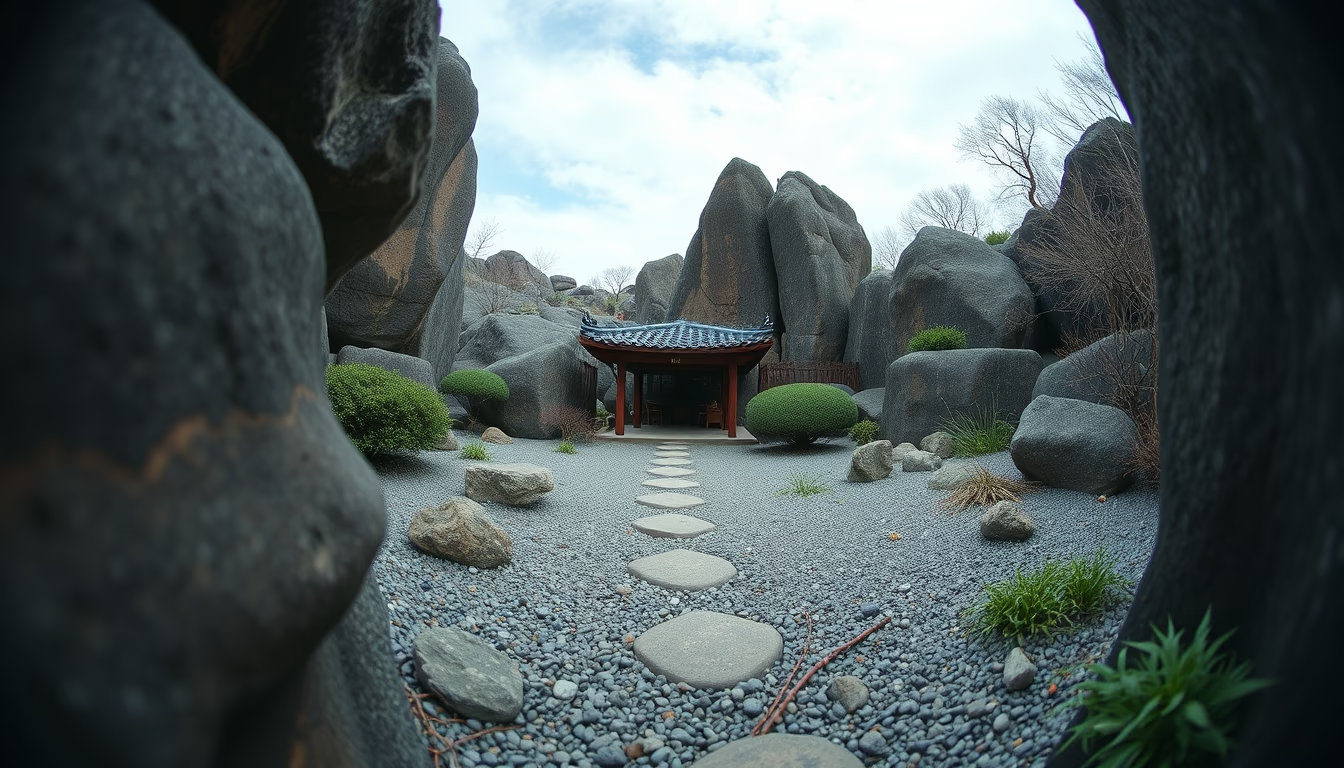
Zen rock gardens, or karesansui, are minimalist dry landscapes designed for meditation, with raked sand symbolizing water and rocks representing islands or mountains.
About this subject
Zen rock gardens, also called karesansui (dry landscape), are a Japanese art form dating back to the Muromachi period (14th, 16th centuries). Unlike Western gardens, they do not use real water; instead, they employ fine gravel or sand raked to represent rivers, seas, or clouds. Rocks are arranged asymmetrically, often in odd numbers, symbolizing islands, mountains, or animals. The act of raking the sand into circular or straight patterns is itself a meditative practice performed by Zen monks to cultivate mindfulness.
The most famous example is the garden at Ryoan-ji Temple in Kyoto, built in the late 15th century. It features 15 stones placed in five groups on a bed of white moss, surrounded by raked gravel. Only 14 stones are visible from any single viewpoint, symbolizing life's incompleteness. Another notable garden is at Daitoku-ji, also in Kyoto, which incorporates stone lanterns and moss paths.
These gardens serve not only aesthetic purposes but also as tools for Zen training, helping practitioners focus the mind and achieve clarity. Their apparent simplicity hides a complex philosophy: emptiness (ku) is as important as material elements. Today, many Zen gardens have been adapted worldwide, but original temple gardens in Japan are protected as cultural heritage.
Interestingly, maintaining the garden is considered a form of moving meditation called samu. The patterns in the sand can be redone daily, with the design chosen by the attending monk. Though they appear unchanging, these gardens are in constant transformation, reflecting the Buddhist concept of impermanence (mujo).
Frequently Asked Questions
What does the wave pattern in a Zen garden's sand mean?
The waves represent water, such as rivers, seas, or clouds. The raking action creates a visual flow and movement, symbolizing impermanence and the continuity of life.
Can I visit famous Zen rock gardens in Japan?
Yes. The most famous are in Kyoto, like Ryoan-ji and Daitoku-ji. Many temples allow visits, but it is important to follow rules of silence and not touch the sand.
Is there a rule for the number of stones in a Zen garden?
No fixed rule, but stones are often placed in odd numbers (3, 5, 7), following Japanese aesthetic principles of asymmetry and dynamic balance.
Direct URL
https://pub-c7d6a6ea828543ac903a74a341ccb2e1.r2.dev/imagens/zen-rock-garden-long-exposure-fresh16.avifHow to credit
Include a visible link back to UtilizAí. Copy one of the snippets below:
<a href="https://xn--utiliza-eza.com/en/midia/imagens/zen-rock-garden-long-exposure-fresh16">Zen rock garden</a> by <a href="https://xn--utiliza-eza.com">UtilizAí</a>, licensed under <a href="https://creativecommons.org/licenses/by/4.0/">CC BY 4.0</a>.
[Zen rock garden](https://xn--utiliza-eza.com/en/midia/imagens/zen-rock-garden-long-exposure-fresh16) by [UtilizAí](https://xn--utiliza-eza.com), CC BY 4.0
License: CC-BY-4.0