Zen rock garden
1344×768 · AVIF · CC BY 4.0

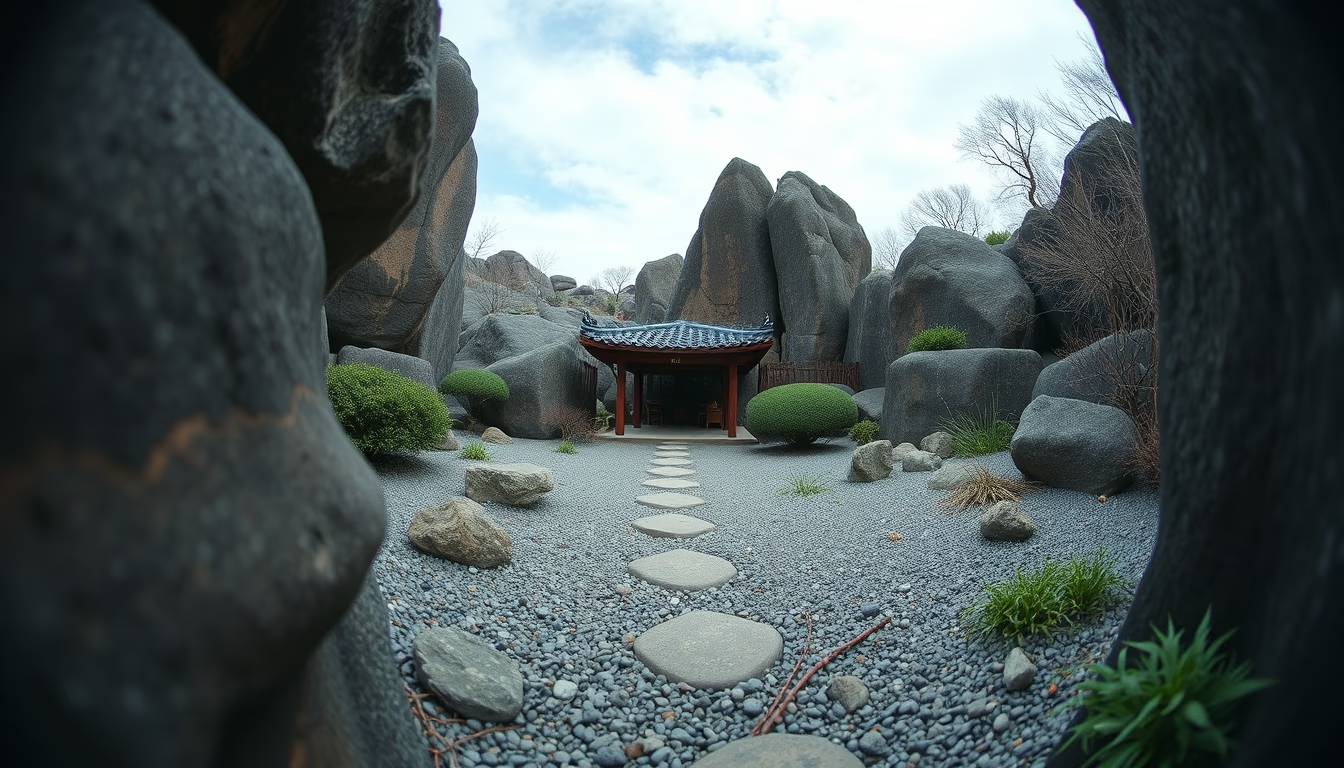
A Zen rock garden, or karesansui, is a minimalist contemplative space composed of sand, rocks, and moss, originating in Japan's Muromachi period.
About this subject
Zen rock gardens, known as karesansui (dry landscape), are a Japanese art form that flourished from the 14th century onward, deeply influenced by Zen Buddhism. Unlike gardens that use real water, they employ sand or fine gravel to represent rivers and oceans, while rocks symbolize mountains and islands. The most famous example is the garden at Ryoan-ji temple in Kyoto, created around 1500, where 15 rocks arranged in five groups on white gravel are meticulously placed so that only 14 are visible from any angle. This arrangement invites meditation and reflection on impermanence.
Maintaining a karesansui is a Zen practice in itself: the wavy patterns in the gravel are drawn daily with wooden rakes, symbolizing the waves of the sea or the flow of life. The gardens are designed to be viewed from a single vantage point, usually from inside a temple, encouraging the observer to immerse in silence and simplicity. Every element, rock, moss, gravel, is chosen to represent natural concepts, and the absence of superfluous items reflects the Japanese aesthetic of minimalism.
Originally created for monks' meditation practice, Zen rock gardens have spread worldwide as symbols of tranquility and balance. Notable temples such as Daisen-in and Tofuku-ji feature remarkable versions that incorporate pruned trees and stone lanterns. In contemporary culture, these spaces inspire interior design and urban landscaping, often used in corporate and residential settings to promote mental peace. Their connection to the tea ceremony is also strong: dry gardens frequently form part of the roji, the garden path that prepares guests for the tea experience.
Frequently Asked Questions
What is the purpose of a Zen rock garden?
The Zen rock garden (karesansui) is designed for meditation and contemplation. Its minimalist composition encourages mental focus and simplicity, helping to calm the mind and reflect on the impermanent nature of life.
How are the wavy patterns in the gravel maintained?
The patterns are drawn daily by monks or gardeners using special wooden rakes. The rhythmic motion of tracing lines is considered a form of active meditation, and each pattern (waves, straight lines) carries symbolic meaning.
What do the rocks represent in Zen gardens?
Rocks symbolize mountains, islands, or even animals and mythological figures. In some gardens, the arrangement follows Feng Shui or Japanese aesthetic principles such as asymmetry and dynamic balance, creating an abstract landscape of nature.
Direct URL
https://pub-c7d6a6ea828543ac903a74a341ccb2e1.r2.dev/imagens/zen-rock-garden-high-fashion-editorial-fresh11.avifHow to credit
Include a visible link back to UtilizAí. Copy one of the snippets below:
<a href="https://xn--utiliza-eza.com/en/midia/imagens/zen-rock-garden-high-fashion-editorial-fresh11">Zen rock garden</a> by <a href="https://xn--utiliza-eza.com">UtilizAí</a>, licensed under <a href="https://creativecommons.org/licenses/by/4.0/">CC BY 4.0</a>.
[Zen rock garden](https://xn--utiliza-eza.com/en/midia/imagens/zen-rock-garden-high-fashion-editorial-fresh11) by [UtilizAí](https://xn--utiliza-eza.com), CC BY 4.0
License: CC-BY-4.0