Zen rock garden
1344×768 · AVIF · CC BY 4.0
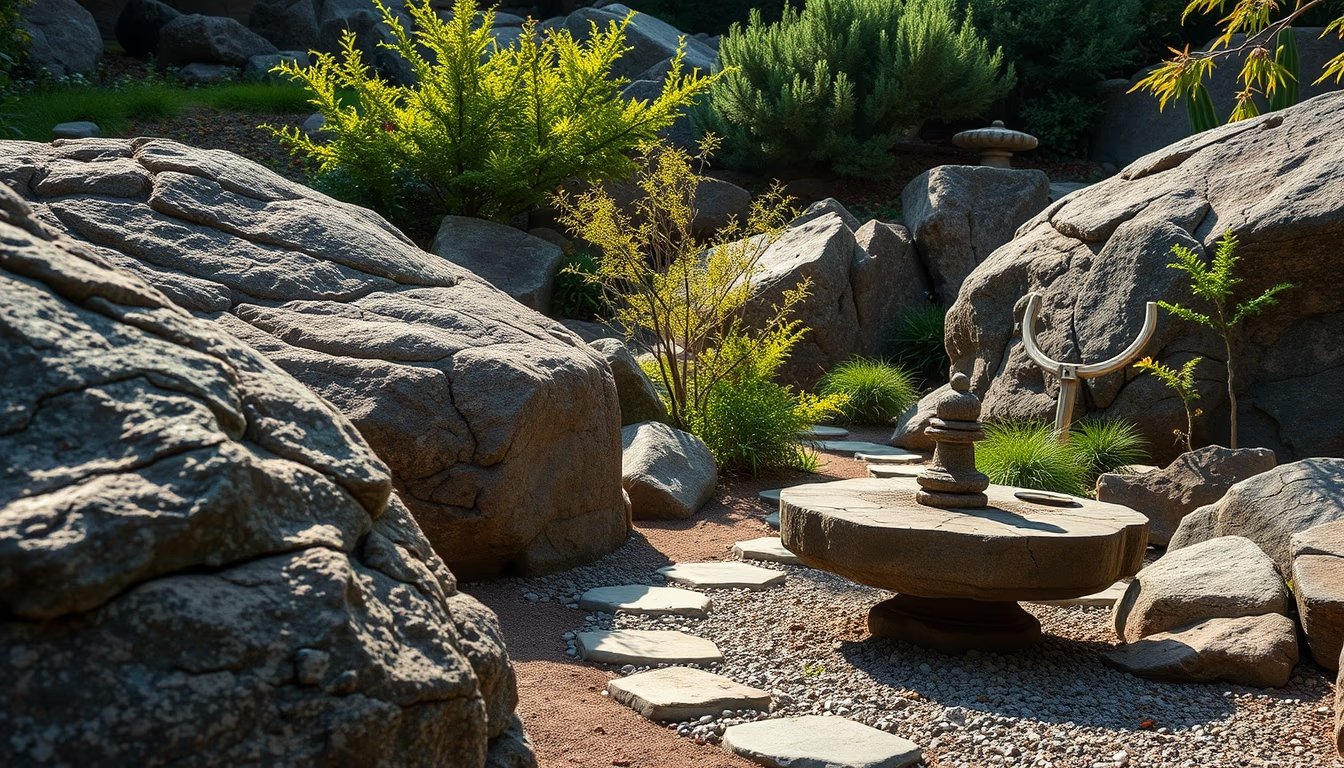
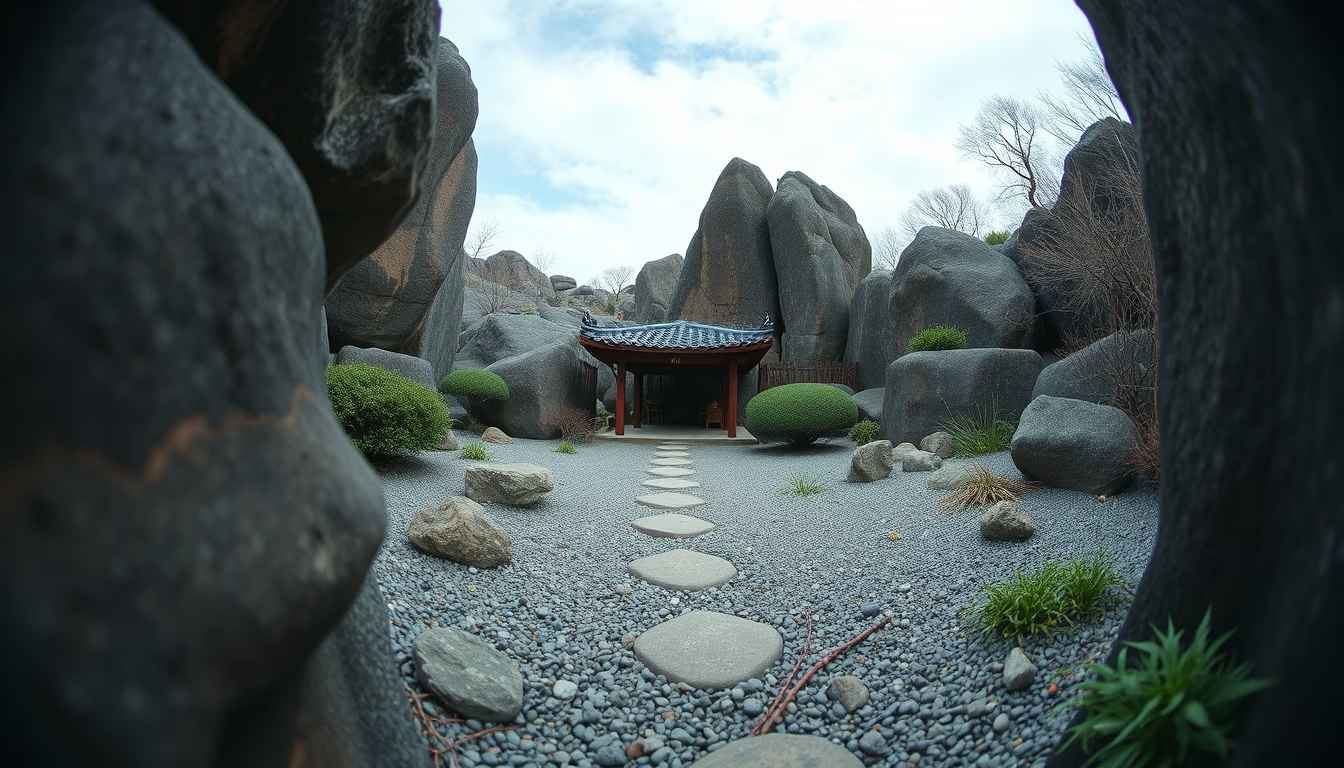
Experience the serenity of a Zen rock garden, a meditation space inspired by Japanese minimalism and aesthetics.
About this subject
The Zen rock garden, known as karesansui (dry landscape), is a Japanese art form that dates back to the Muromachi period (1336, 1573). Unlike Western gardens, it does not use water but instead employs rocks, gravel, and moss to represent natural elements such as islands, mountains, and rivers. The rake patterns in the gravel symbolize waves or currents, and their daily maintenance is a meditative practice for monks.
The most famous example is the garden at Ryoan-ji temple in Kyoto, a UNESCO World Heritage site. There, 15 stones are arranged on a rectangular bed of white gravel, such that only 14 are visible from any angle. This design encourages reflection on impermanence and incompleteness, core concepts in Zen Buddhism.
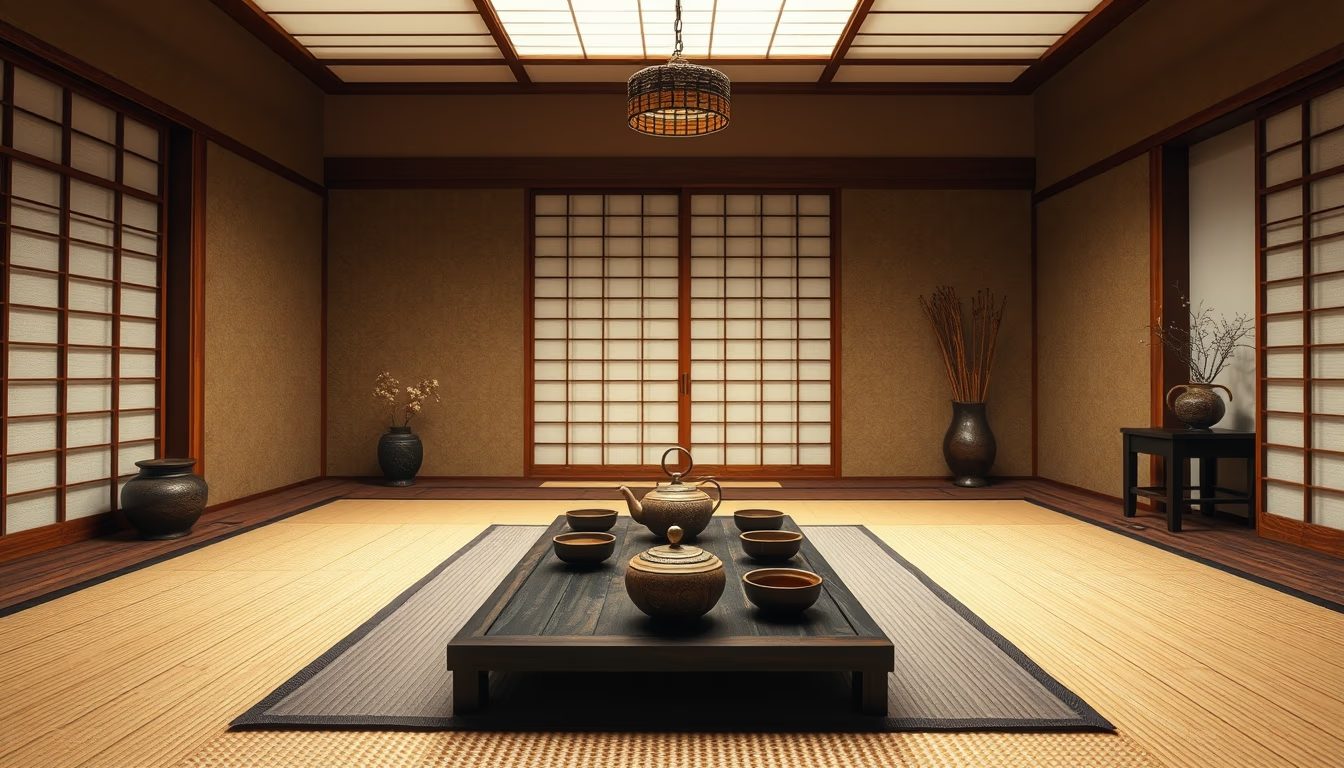
The relationship between the Zen garden and the tea ceremony (chanoyu) is close. Tea rooms (chashitsu) often overlook a small garden called roji, which prepares guests for the ritual. The garden's aesthetic, with its simplicity and roughness, reflects wabi-sabi, the appreciation of imperfect and transient beauty. Fine art photographs of this subject capture the timeless stillness of the space, inviting contemplation even in urban environments.
Interestingly, the creation of these gardens follows no rigid rules but principles such as asymmetry, simplicity, and naturalness. Each element is carefully chosen to evoke an idealized landscape, like the Chinese mountains that inspired early Japanese gardens. Today, they are admired globally as symbols of peace and inner balance.
Frequently Asked Questions
What does a Zen rock garden symbolize?
A Zen garden symbolizes nature in miniature: stones represent islands or mountains, gravel represents water, and moss symbolizes time. It invites meditation and contemplation of impermanence.
Which is the most famous Zen rock garden in Japan?
The garden at Ryoan-ji temple in Kyoto is the most famous. It features 15 stones arranged so that not all are visible at once, encouraging reflection.
How is the Zen garden related to the tea ceremony?
Tea rooms often overlook a small Zen garden (roji), which prepares guests for the ritual. The garden's simplicity reflects the wabi-sabi aesthetic valued in the ceremony.
Direct URL
https://pub-c7d6a6ea828543ac903a74a341ccb2e1.r2.dev/imagens/zen-rock-garden-fine-art-photography-fresh7.avifHow to credit
Include a visible link back to UtilizAí. Copy one of the snippets below:
<a href="https://xn--utiliza-eza.com/en/midia/imagens/zen-rock-garden-fine-art-photography-fresh7">Zen rock garden</a> by <a href="https://xn--utiliza-eza.com">UtilizAí</a>, licensed under <a href="https://creativecommons.org/licenses/by/4.0/">CC BY 4.0</a>.
[Zen rock garden](https://xn--utiliza-eza.com/en/midia/imagens/zen-rock-garden-fine-art-photography-fresh7) by [UtilizAí](https://xn--utiliza-eza.com), CC BY 4.0
License: CC-BY-4.0