Zen rock garden
1344×768 · AVIF · CC BY 4.0
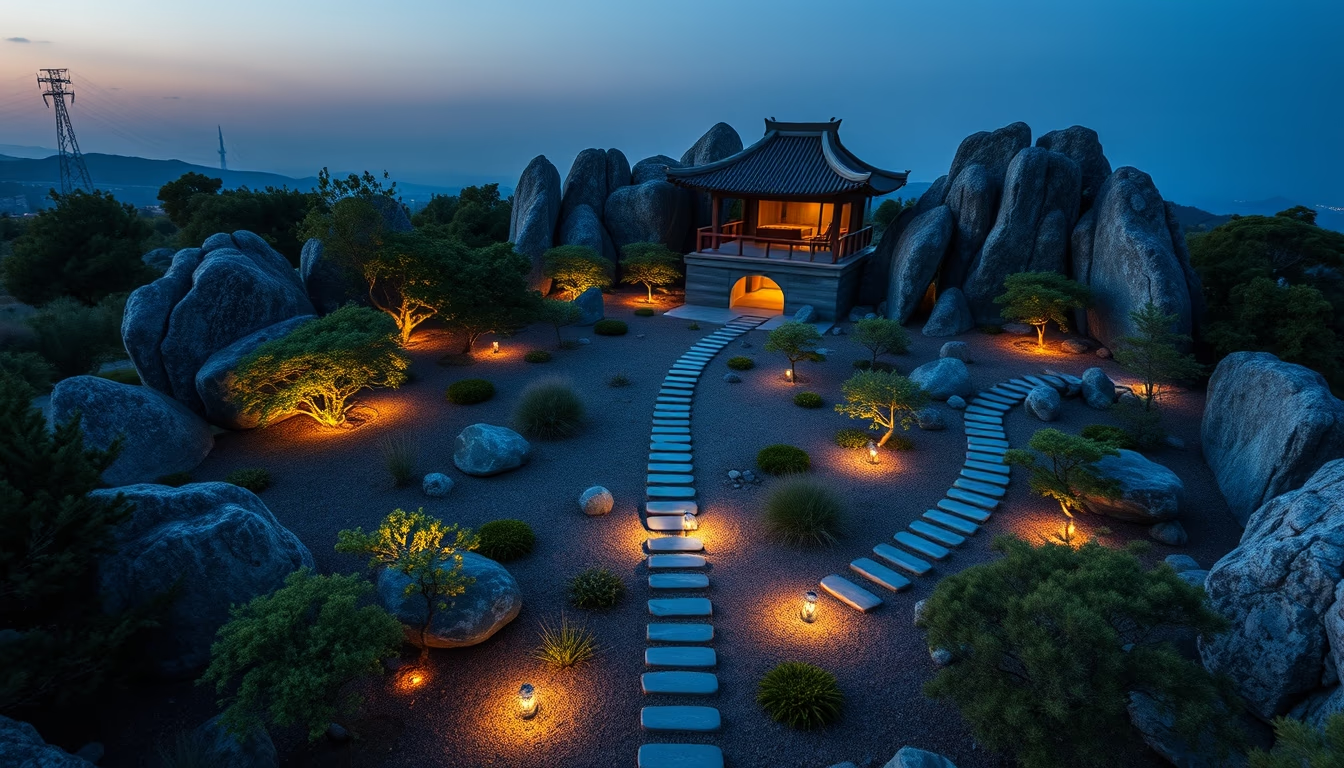
Aerial view of a Zen rock garden (karesansui): sand, stones and moss create a minimalist composition inviting meditation and contemplation.
About this subject
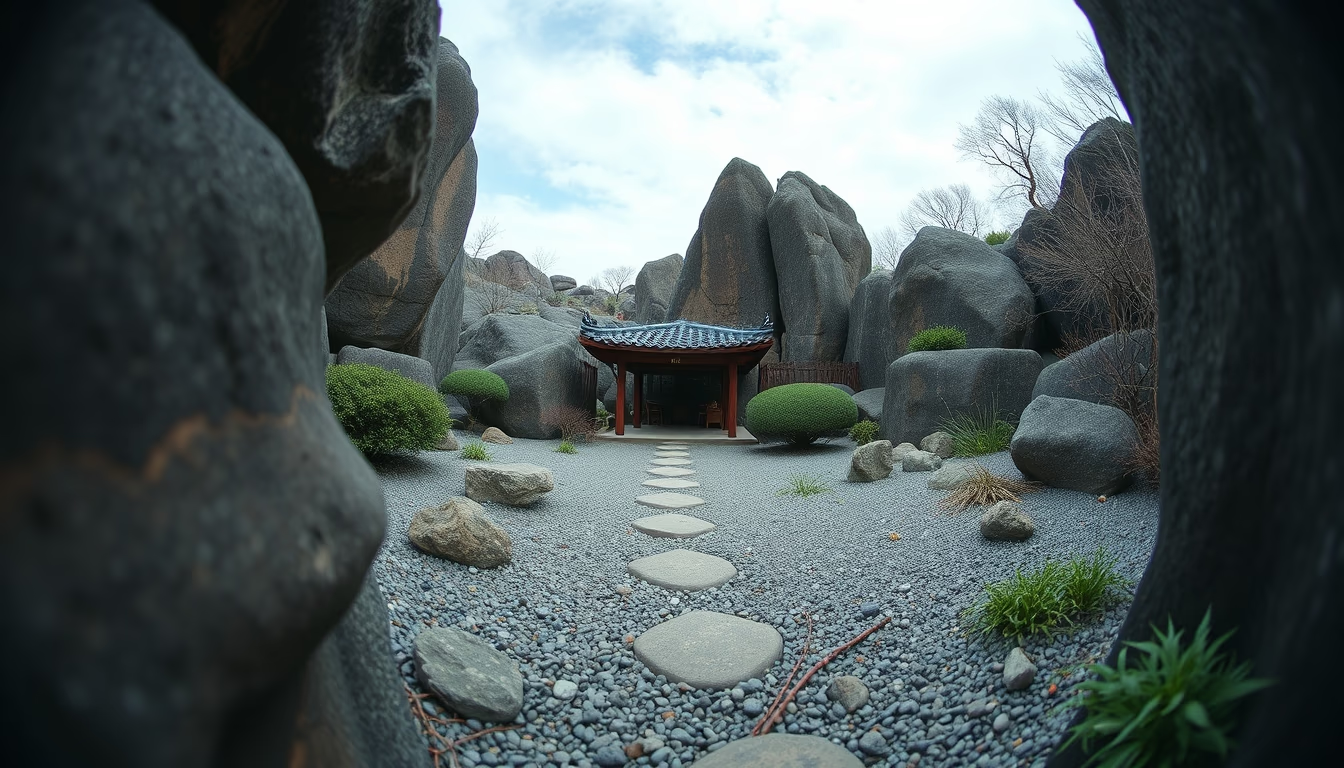
The Japanese Zen rock garden, known as karesansui (dry landscape), is an ancient art form that uses elements like sand, gravel, stones and occasionally moss to represent miniature mountains, rivers and islands. Originating in the Muromachi period (1336-1573) and heavily influenced by Zen Buddhism and Chinese landscape painting, these gardens were created at Buddhist temples as aids for monks' meditation. The most famous example is the garden of Ryoan-ji Temple in Kyoto, where 15 stones are arranged on a bed of fine white gravel so that only 14 are visible from any single viewpoint, symbolizing impermanence and the incompleteness of life.
The white sand or gravel is raked daily into wavelike patterns that evoke ocean waves or water currents. The curves and straight lines are not merely decorative: monks draw them as part of meditative practice, and each pattern can represent a state of mind or an illusion to be overcome. The stones, arranged in asymmetrical groups, often resemble islands or animals such as tigers carrying cubs across a river (a legend associated with the Ryoan-ji garden). Moss adds texture and aging, connecting the garden to the natural cycle of seasons.
Although the Zen garden originated in temples, it is also closely linked to the tea ceremony (chanoyu). Many tea houses are preceded by a roji (dewy path), a stone and vegetation path that prepares the guest for an atmosphere of simplicity and mindfulness. While the roji is a moist garden, the dry karesansui influences its design through the use of stones and the idea that every element should invite stillness. Today, Zen gardens can be found worldwide, from the Portland Art Museum to Kyoto's Saiho-ji Temple, always inspiring a state of serenity and focus.
Interestingly, the art of raking is so important that specialized schools teach sand patterns, and some contemporary Zen gardens incorporate modern elements like LED lighting or synthetic grass while maintaining the principle of abstracting nature. Despite its apparent simplicity, each Zen garden is designed with precise rules of balance, asymmetry, and the use of empty space (ma) to create a space where the observer can project their own thoughts.
Frequently Asked Questions
What is the meaning of the stones and sand in a Zen garden?
The stones represent mountains, islands or living beings (such as tigers), while the raked sand or gravel symbolizes flowing water, ocean waves or clouds. Together they form an abstract landscape that invites contemplation and meditation.
How does a Zen garden relate to the tea ceremony?
Although the dry garden (karesansui) is not a mandatory element, it influences the design of entrance gardens for tea houses (roji). Both share principles of simplicity, asymmetry, and the use of empty space to prepare the mind for the tea experience.
What is the most famous Zen garden in the world?
The garden of Ryoan-ji Temple in Kyoto, Japan, is the most iconic. Created in the 15th century, it features 15 stones arranged on white gravel, surrounded by low walls. The layout is designed so that only 14 stones are visible from any single viewpoint, an invitation to contemplate impermanence.
Direct URL
https://pub-c7d6a6ea828543ac903a74a341ccb2e1.r2.dev/imagens/zen-rock-garden-aerial-drone-shot-fresh4.avifHow to credit
Include a visible link back to UtilizAí. Copy one of the snippets below:
<a href="https://xn--utiliza-eza.com/en/midia/imagens/zen-rock-garden-aerial-drone-shot-fresh4">Zen rock garden</a> by <a href="https://xn--utiliza-eza.com">UtilizAí</a>, licensed under <a href="https://creativecommons.org/licenses/by/4.0/">CC BY 4.0</a>.
[Zen rock garden](https://xn--utiliza-eza.com/en/midia/imagens/zen-rock-garden-aerial-drone-shot-fresh4) by [UtilizAí](https://xn--utiliza-eza.com), CC BY 4.0
License: CC-BY-4.0