Wolf in snowy forest
1344×768 · AVIF · CC BY 4.0
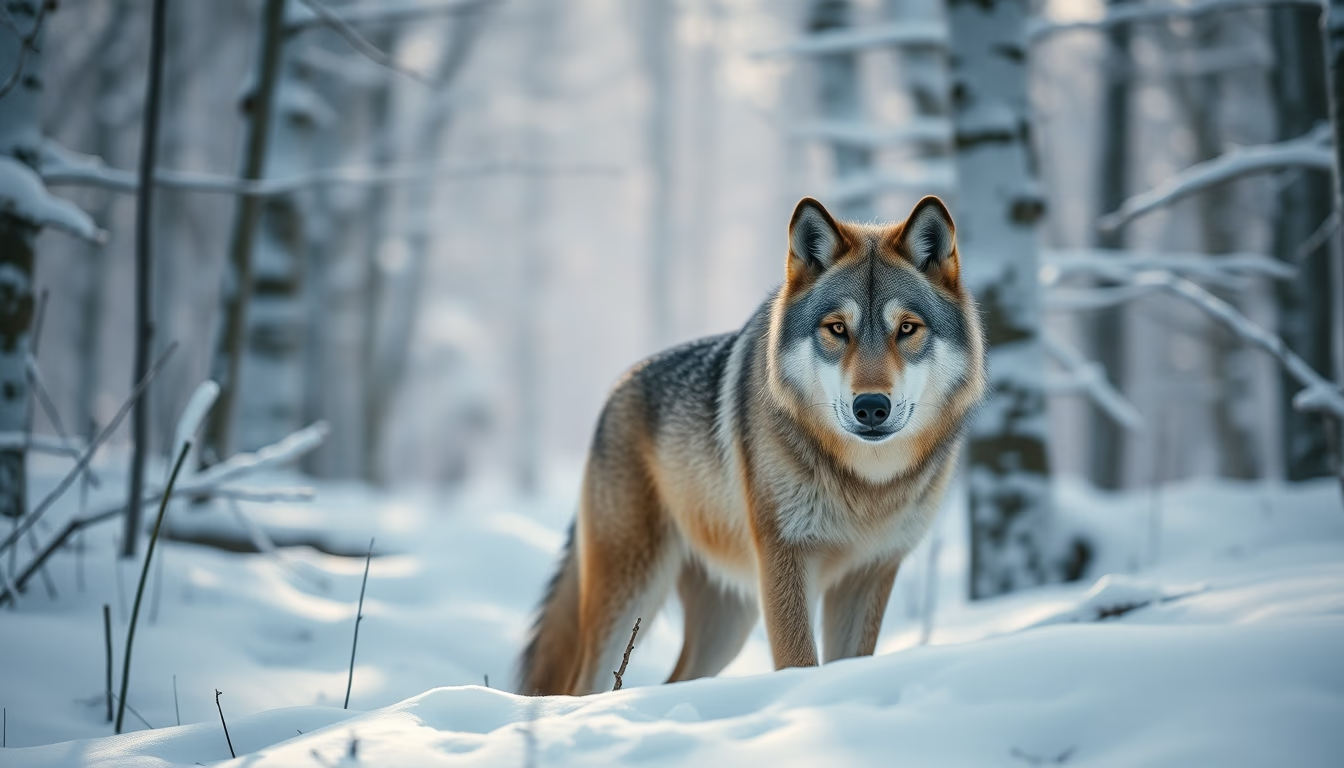
A wolf traverses a snowy forest, embodying the beauty and power of wild fauna.
About this subject
Wolves inhabit cold regions like boreal forests in Eurasia and North America, where their dense fur and snow-adapted paws enable survival in extreme climates. In snowy forests, they use white camouflage to stalk prey such as moose and deer. These animals form complex social structures, with family groups maintaining territories up to 1,500 km². Human-wolf coexistence is tense: while protected in Swiss Alps national parks, in other areas they face persecution by shepherds. Interestingly, wolf howls can be heard up to 10 km away, serving as communication during hunts.
Snowy forests are critical habitats, offering shelter and resources like fallen trees for hunting. Siberian wolves have longer fur to withstand temperatures of -50°C. Culturally, they symbolize cunning and strength: Romani myths associate them with hunting gods, while Norse mythology features Fenrir, a giant wolf tied to the apocalypse. Modern rewilding projects, like the Alps wolf population, showcase their resilience when safeguarded.
Conservation efforts face challenges like habitat fragmentation and poaching. Yellowstone’s wolf reintroduction in the 1990s reversed ecological imbalances caused by overpopulated elk, proving their role as "ecological engineers." Breeding occurs once a year, with females gestating 45 days and giving birth to 4-6 cubs. However, climate change threatens these cycles by reducing snow periods vital for hunting and territory formation.
Frequently Asked Questions
Where are wolves commonly found in snowy forests?
Wolves inhabit boreal forests in Eurasia and North America, such as the Swiss Alps and Siberia, where snow supports their hunting strategies.
What role do wolves play in the food chain?
As apex predators, wolves regulate herbivore populations, restoring ecological balance. Their reintroduction in Yellowstone reversed elk overpopulation.
Why are wolves considered social animals?
Wolves live in family packs with clear hierarchies, collaborate during hunts, and collectively care for cubs, communicating through howls and scent markers.
Direct URL
https://pub-c7d6a6ea828543ac903a74a341ccb2e1.r2.dev/imagens/wolf-in-snowy-forest-magazine-editorial-v8.avifHow to credit
Include a visible link back to UtilizAí. Copy one of the snippets below:
<a href="https://xn--utiliza-eza.com/en/midia/imagens/wolf-in-snowy-forest-magazine-editorial-v8">Wolf in snowy forest</a> by <a href="https://xn--utiliza-eza.com">UtilizAí</a>, licensed under <a href="https://creativecommons.org/licenses/by/4.0/">CC BY 4.0</a>.
[Wolf in snowy forest](https://xn--utiliza-eza.com/en/midia/imagens/wolf-in-snowy-forest-magazine-editorial-v8) by [UtilizAí](https://xn--utiliza-eza.com), CC BY 4.0
License: CC-BY-4.0