Whale tail above ocean
1344×768 · AVIF · CC BY 4.0
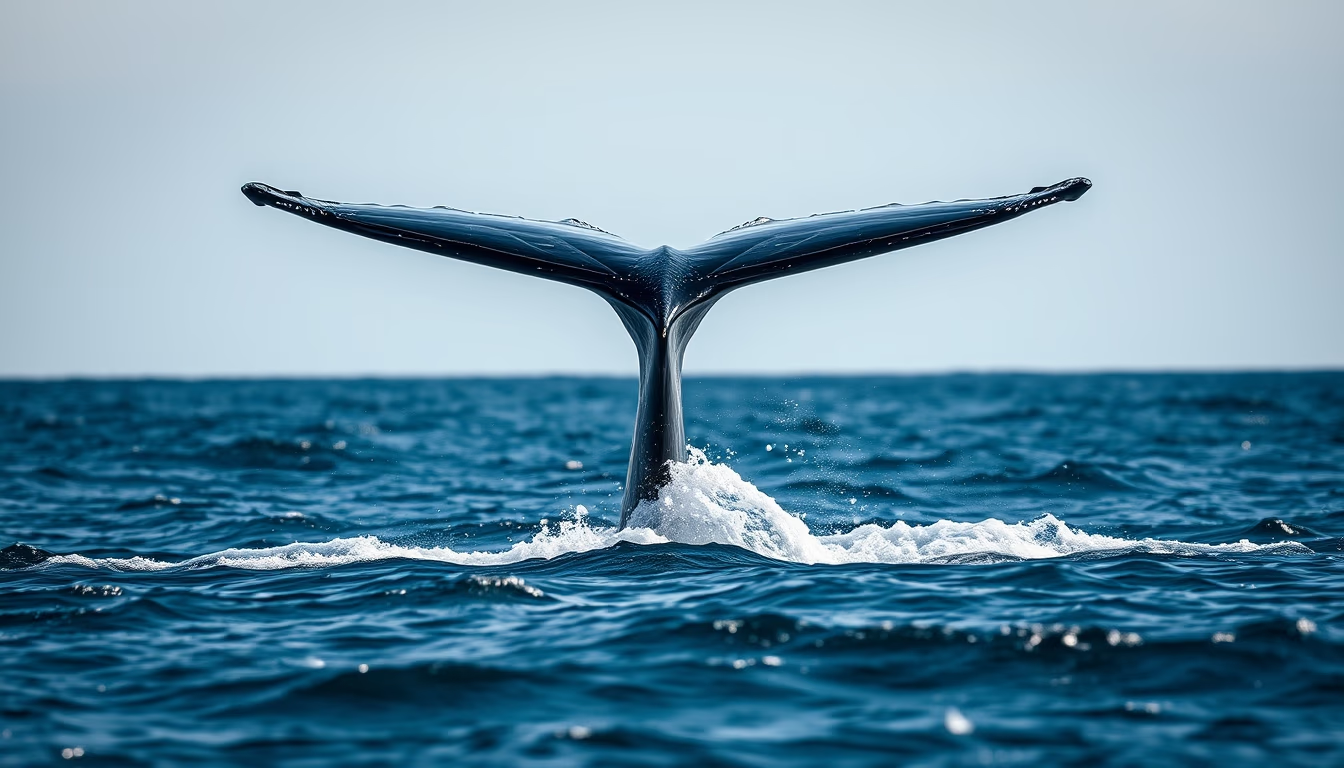
A whale tail emerges from the ocean, a natural spectacle that fascinates scientists and tourists alike.
About this subject
A whale tail, also known as the fluke, is one of the most iconic features of these marine mammals. Composed of two lobes, the tail can reach up to one-third of the animal's total length, which in species like the blue whale can be up to 30 meters. The shape and pigmentation patterns of the tail are unique to each individual, functioning as a fingerprint that allows identification in photo-identification studies.
Sighting a whale tail above the surface, usually before a deep dive, is a moment awaited by whale watchers worldwide. This behavior, called a "tail dive," occurs when the whale prepares to descend to great depths in search of food. During the dive, the tail may be exposed for a few seconds, offering an impressive view.
Whales are found in all oceans, but regions such as the Brazilian coast, especially the shores of Santa Catarina and Bahia, are known for seasonal concentrations of species like the humpback whale. These animals migrate thousands of kilometers from feeding areas in the cold Antarctic waters to warmer tropical waters, where they reproduce and give birth. The presence of whales is an indicator of the health of marine ecosystems and attracts ecotourism.
Interestingly, the whale tail is composed of dense connective tissue and lacks bones, unlike the forelimbs which are flippers with a bony structure. The tail musculature is extremely powerful, allowing the whale to reach speeds of up to 50 km/h over short distances. Additionally, the vertical movement of the tail is characteristic of cetaceans, differing from fish, whose caudal fin moves horizontally.
Frequently Asked Questions
Why do whales show their tails before diving?
This behavior, called a tail dive, helps the whale propel its body downward into deeper waters where it feeds. The tail raised vertically allows the animal to gain momentum and dive efficiently.
How do scientists identify individual whales by their tails?
The photo-identification technique uses natural marks, scars, and pigmentation patterns on the tail, which are unique to each whale. Photographs of tails are compared in catalogs to track individual movements and behaviors over time.
What is the difference between a whale's tail and a fish's tail?
A whale's tail moves vertically (up and down), while a fish's tail moves horizontally (side to side). Additionally, a whale's tail lacks bones, being made of connective tissue, unlike fish fins which have bony rays.
Direct URL
https://pub-c7d6a6ea828543ac903a74a341ccb2e1.r2.dev/imagens/whale-tail-above-ocean-fine-art-photography.avifHow to credit
Include a visible link back to UtilizAí. Copy one of the snippets below:
<a href="https://xn--utiliza-eza.com/en/midia/imagens/whale-tail-above-ocean-fine-art-photography">Whale tail above ocean</a> by <a href="https://xn--utiliza-eza.com">UtilizAí</a>, licensed under <a href="https://creativecommons.org/licenses/by/4.0/">CC BY 4.0</a>.
[Whale tail above ocean](https://xn--utiliza-eza.com/en/midia/imagens/whale-tail-above-ocean-fine-art-photography) by [UtilizAí](https://xn--utiliza-eza.com), CC BY 4.0
License: CC-BY-4.0