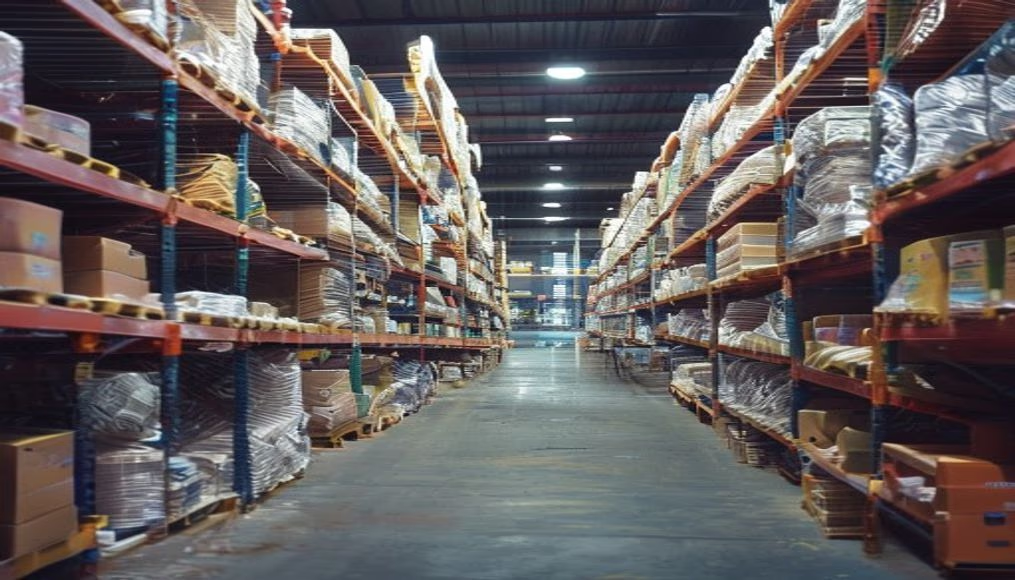
Warehouse shelves stocked products
1344×768 · AVIF · CC BY 4.0
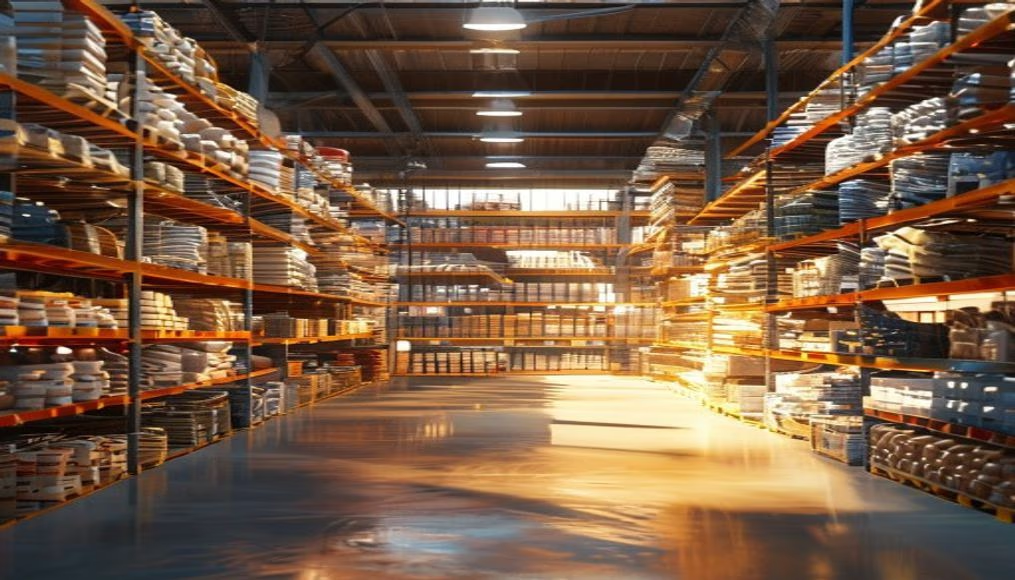
Warehouse shelves stocked with products organized by category, essential for logistics and distribution in modern commerce.
About this subject
Warehouses are the heart of the supply chain, housing inventory that ensures the continuous flow of goods from manufacturer to consumer. Metal shelves, known as racking systems, are designed to support heavy loads and allow quick access to items. The arrangement follows slotting techniques that optimize space and reduce order-picking time. In Brazil, the warehousing sector moves billions of reais annually, driven by e-commerce and industry.
Shelving organization reflects inventory management principles such as FIFO (first in, first out) or LIFO (last in, first out), depending on product nature. Modern warehouses employ management systems (WMS) integrating barcode scanners, RFID, and even drones for inventory. Rack heights can exceed 10 meters in large distribution centers, requiring reach trucks and trained operators.
Interestingly, standardized warehousing emerged with the Industrial Revolution, but palletization and stacking methods became widespread during World War II. Today, robotic automation is transforming facilities: autonomous robots like Amazon's Kiva move entire shelves to operators. Despite technology, Brazilian logistics faces challenges such as highway bottlenecks and high tax burdens, which impact storage costs.
The shelves hold everything from perishable food to electronic components. Safety is paramount: regulations like NR 11 govern forklift operation and structural load capacity. In cold storage, racks must withstand low temperatures without compromising stability. Vertical space optimization reduces wasted floor area, a critical factor in metropolitan regions where square footage is expensive.
Frequently Asked Questions
What is the difference between FIFO and LIFO in shelf organization?
FIFO (first in, first out) prioritizes older products to avoid expiration; LIFO (last in, first out) uses the newest items first, common for non-perishable goods.
How does technology improve warehouse management?
WMS systems automate inbound and outbound control, barcode scanners and RFID speed up location, and autonomous robots increase order-picking efficiency.
What are the main types of industrial shelving structures?
The most common are selective systems (direct access to each pallet), drive-in/drive-through (high density), and cantilever (for long materials like pipes and lumber).
Direct URL
https://pub-c7d6a6ea828543ac903a74a341ccb2e1.r2.dev/imagens/warehouse-shelves-stocked-products-travel-photography-v10.avifHow to credit
Include a visible link back to UtilizAí. Copy one of the snippets below:
<a href="https://xn--utiliza-eza.com/en/midia/imagens/warehouse-shelves-stocked-products-travel-photography-v10">Warehouse shelves stocked products</a> by <a href="https://xn--utiliza-eza.com">UtilizAí</a>, licensed under <a href="https://creativecommons.org/licenses/by/4.0/">CC BY 4.0</a>.
[Warehouse shelves stocked products](https://xn--utiliza-eza.com/en/midia/imagens/warehouse-shelves-stocked-products-travel-photography-v10) by [UtilizAí](https://xn--utiliza-eza.com), CC BY 4.0
License: CC-BY-4.0