Warehouse shelves stocked products
1344×768 · AVIF · CC BY 4.0
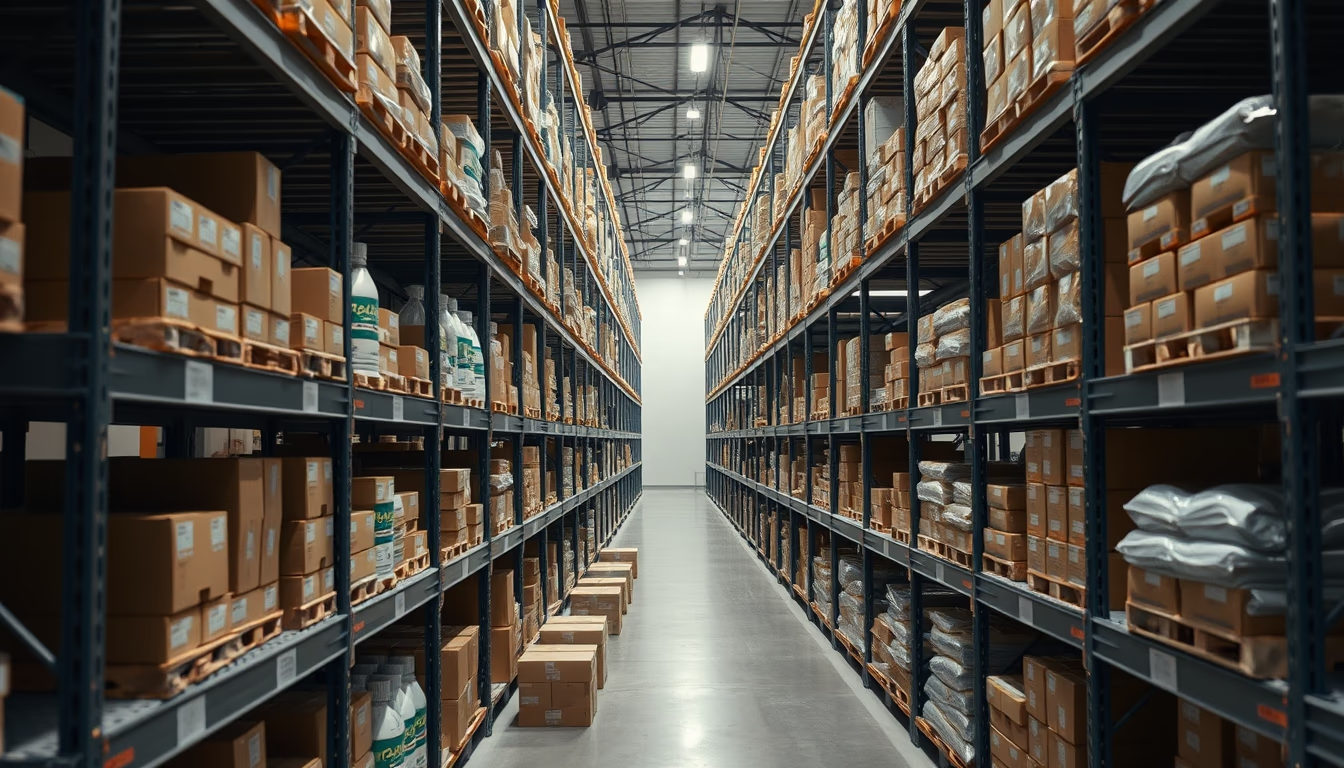
Well-organized warehouse shelves stocked with products are essential for modern logistics, ensuring efficient product handling and reduced operational costs.
About this subject
Warehouses play a critical role in the supply chain, acting as storage hubs between production and consumption. Proper shelf organization and stock replenishment are essential to optimize goods flow, minimize picking errors, and accelerate order fulfillment. In distribution centers, warehouse management systems (WMS) track each item's exact location using technologies like barcodes and RFID for real-time monitoring.
Shelf layout follows principles such as FIFO (First In, First Out) for perishable goods and LIFO (Last In, First Out) for non-perishable items. Rack height and storage density are calculated based on product turnover. Modern warehouses adopt automated systems like stacker cranes and automated guided vehicles (AGVs), boosting productivity and reducing labor requirements.
In Brazil, the logistics sector moves billions of reais annually, with major warehouses concentrated in regions like São Paulo, the country's distribution hub. The COVID-19 pandemic highlighted the importance of well-managed inventory to prevent shortages. Practices such as cross-docking (minimizing storage time) and AI-driven demand forecasting are becoming standard.
Interestingly, the modern warehouse concept emerged in the 19th century with general warehouses, but the real revolution came with pallet and forklift standardization in the 20th century. Today, sustainability is also a priority: green warehouses use LED lighting, solar panels, and recycling systems to reduce environmental impact.
Frequently Asked Questions
Why is shelf organization important in a warehouse?
Organized shelves enable quick product access, reduce order picking time, and minimize errors. Using techniques like logical addressing and WMS systems, any item can be located within seconds.
What technologies are used in modern warehouses?
Common technologies include barcodes, RFID, warehouse management systems (WMS), automated guided vehicles (AGVs), and picking robots. Artificial intelligence also aids demand forecasting and route optimization.
What is cross-docking and how does it benefit logistics?
Cross-docking is a practice where products are unloaded from one truck and loaded directly onto another, with minimal or no storage in between. This reduces inventory costs and speeds up delivery.
Direct URL
https://pub-c7d6a6ea828543ac903a74a341ccb2e1.r2.dev/imagens/warehouse-shelves-stocked-products-commercial-product-photography-v9.avifHow to credit
Include a visible link back to UtilizAí. Copy one of the snippets below:
<a href="https://xn--utiliza-eza.com/en/midia/imagens/warehouse-shelves-stocked-products-commercial-product-photography-v9">Warehouse shelves stocked products</a> by <a href="https://xn--utiliza-eza.com">UtilizAí</a>, licensed under <a href="https://creativecommons.org/licenses/by/4.0/">CC BY 4.0</a>.
[Warehouse shelves stocked products](https://xn--utiliza-eza.com/en/midia/imagens/warehouse-shelves-stocked-products-commercial-product-photography-v9) by [UtilizAí](https://xn--utiliza-eza.com), CC BY 4.0
License: CC-BY-4.0