Wailing wall jerusalem
1344×768 · AVIF · CC BY 4.0
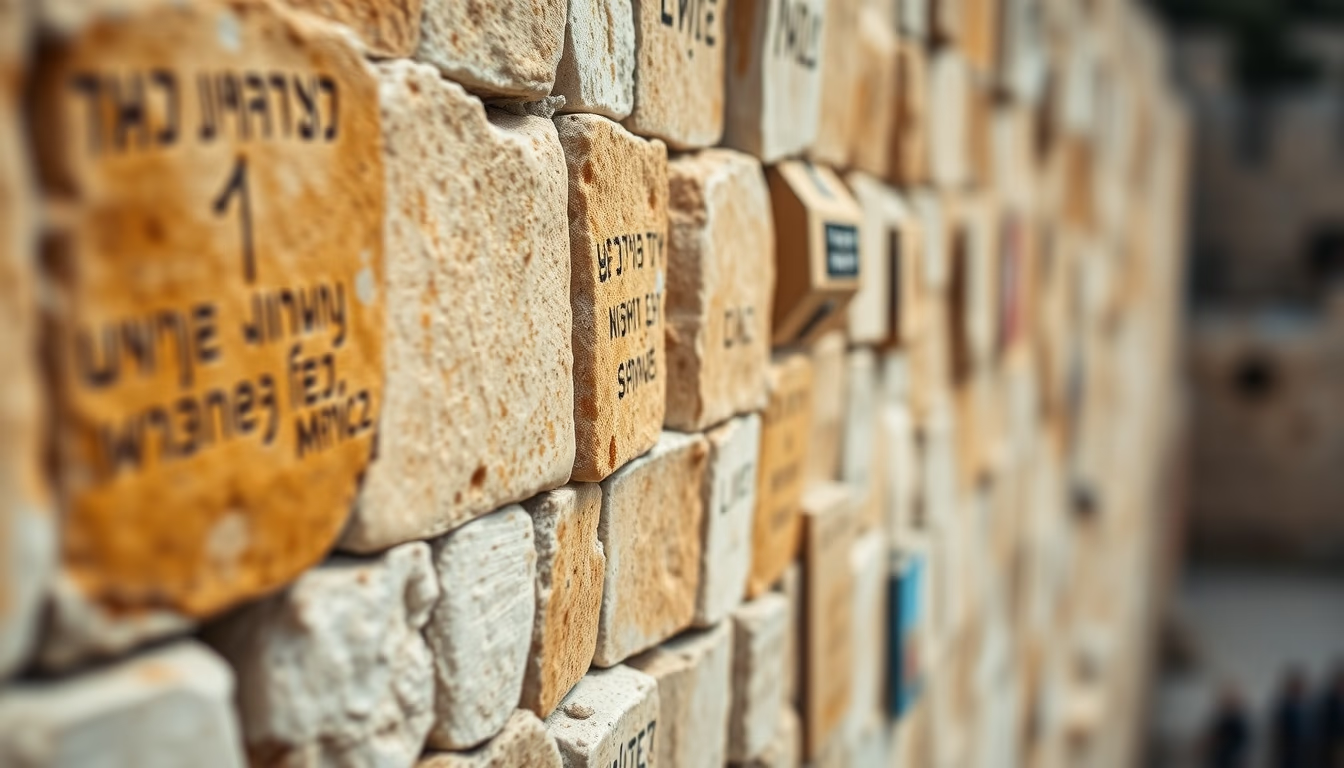
Macro close-up of the Western Wall in Jerusalem, revealing the texture of ancient stones at Judaism's holiest site.
About this subject
The Western Wall, also known as the Wailing Wall, is the holiest site where Jews are permitted to pray in Jerusalem. It is a remnant of the retaining wall that surrounded the Second Temple, built by Herod the Great around 19 BCE. The Romans destroyed the Temple in 70 CE, and the wall became a symbol of Jewish resilience and longing for redemption. The massive stones, some weighing up to 100 tons, are fitted together without mortar, a hallmark of Herodian masonry.
The name "Wailing Wall" comes from the tradition of Jews mourning the Temple's destruction and praying for its restoration at this spot. The plaza in front of the wall functions as an open-air synagogue, separated into men's and women's sections. The custom of inserting written prayers into the cracks between the stones began in the 16th century but gained global popularity in the 20th century. Over a million notes are placed annually; they are later collected and buried on the Mount of Olives.
One of the most visited landmarks in Israel, the Western Wall attracts about 10 million people each year. It lies within the Temple Mount complex, which includes the Dome of the Rock and Al-Aqsa Mosque, making the area a focal point of religious conflict in the Middle East. In 1967, during the Six-Day War, Israel captured Jerusalem's Old City and secured free access to the wall, which had been under Jordanian control. Since then, it has served as a national and spiritual symbol, hosting Bar Mitzvahs and religious festivals.
Frequently Asked Questions
Why is the Western Wall sacred to Jews?
It is the last remaining structure of the Second Temple, the holiest site in Judaism. Jews believe the Divine Presence (Shekhinah) never departed from the wall, making it a focal point for prayer and spiritual connection.
What is the tradition of placing notes in the wall?
Visitors write prayers or wishes on small pieces of paper and insert them into the cracks between the stones. It is believed that prayers placed there are more likely to be answered. The notes are periodically collected and buried in a sacred location.
Is the Western Wall located in Jerusalem's Old City?
Yes, it is situated in the Jewish Quarter of the Old City, adjacent to the Temple Mount. The area has been under Israeli control since 1967, but access to other holy sites like the Dome of the Rock is managed by Muslim authorities.
Direct URL
https://pub-c7d6a6ea828543ac903a74a341ccb2e1.r2.dev/imagens/wailing-wall-jerusalem-macro-closeup-p5.avifHow to credit
Include a visible link back to UtilizAí. Copy one of the snippets below:
<a href="https://xn--utiliza-eza.com/en/midia/imagens/wailing-wall-jerusalem-macro-closeup-p5">Wailing wall jerusalem</a> by <a href="https://xn--utiliza-eza.com">UtilizAí</a>, licensed under <a href="https://creativecommons.org/licenses/by/4.0/">CC BY 4.0</a>.
[Wailing wall jerusalem](https://xn--utiliza-eza.com/en/midia/imagens/wailing-wall-jerusalem-macro-closeup-p5) by [UtilizAí](https://xn--utiliza-eza.com), CC BY 4.0
License: CC-BY-4.0