Wailing wall jerusalem
1344×768 · AVIF · CC BY 4.0
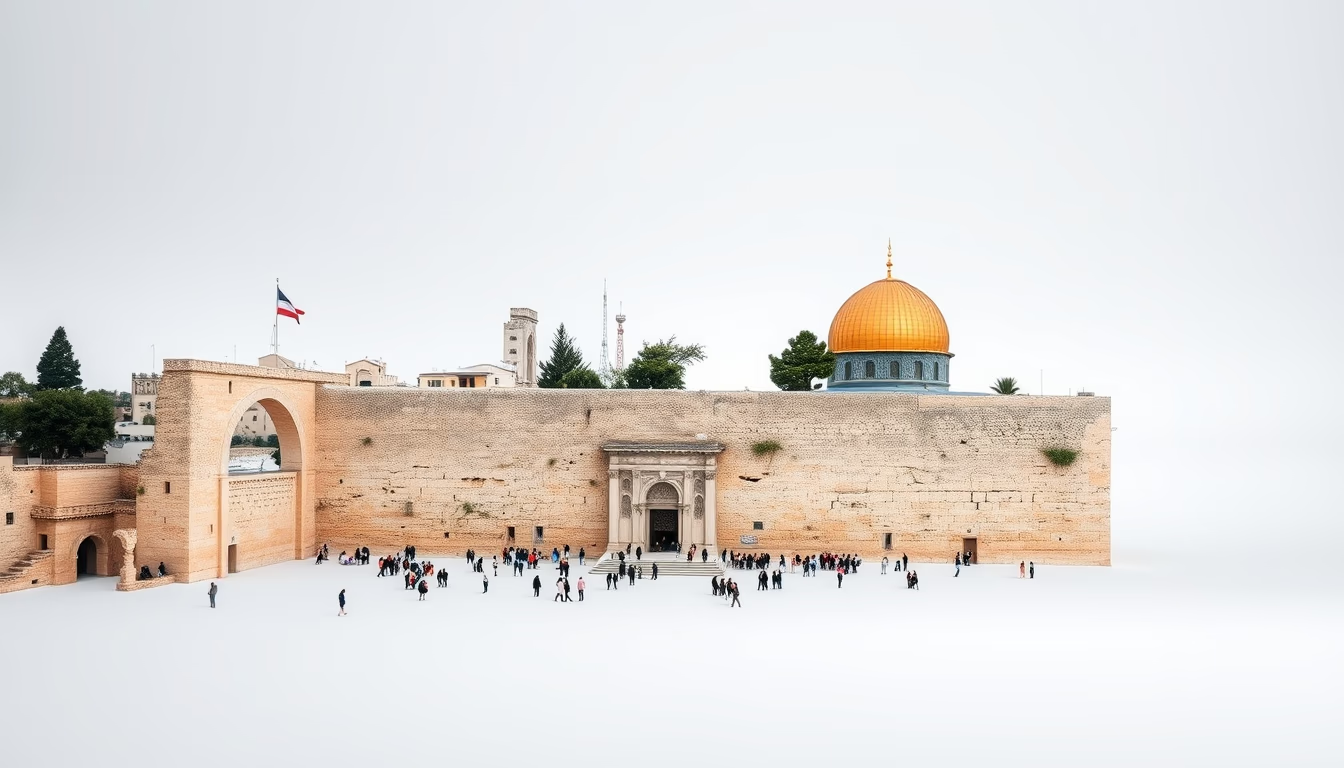
The Wailing Wall, also known as the Western Wall or Kotel, is the holiest site in Judaism, located in the Old City of Jerusalem.
About this subject
The Wailing Wall, formally known as the Western Wall or Kotel HaMa'aravi in Hebrew, is the last remaining structure of the Second Temple of Jerusalem, destroyed by the Romans in 70 CE. This limestone wall, originally about 488 meters long but with an exposed section of approximately 57 meters, became the primary Jewish pilgrimage site after the temple's destruction. For centuries, Jews from around the world have come to pray and place written petitions (kvittelach) in the wall's crevices, a tradition dating back to the 16th century.
Located in the Jewish Quarter of Jerusalem's Old City, near the Temple Mount (Haram al-Sharif), which is also sacred to Islam, the site underwent expansion after the Six-Day War in 1967, when Israel took control of the Old City. Before that, Jews were banned from accessing the wall under Jordanian rule. Today, the plaza is divided into male and female sections and hosts important celebrations such as Bar Mitzvahs and the fast of Tisha B'Av.
The wall is not only a religious symbol but also a cultural and historical icon. Archaeologists have discovered tunnels extending along its entire length, revealing construction layers from the Herodian period to the 19th century. The massive stones, some weighing up to 100 tons, were fitted without mortar, showcasing advanced engineering. Visitors of all faiths are welcome, with a requirement to wear a kippah (head covering) and maintain decorum.
The term "Wailing Wall" was coined by European travelers in the 19th century, who witnessed Jews mourning the Temple's destruction. Although the name is widely used, many Jews prefer "Western Wall" for its less derogatory connotation. The site is administered by the Chief Rabbinate of Israel and attracts millions of visitors annually, making it one of the most iconic destinations in the Middle East.
Frequently Asked Questions
Why is the Wailing Wall considered sacred to Jews?
The Wailing Wall is the last visible remnant of the Second Temple of Jerusalem, the center of Jewish religious life until its destruction in 70 CE. For Jews, it represents a direct connection to God and Jewish history, making it the most revered prayer site.
What is the tradition of placing notes in the wall?
The tradition of inserting paper slips with prayers and requests into the wall's crevices began in the 16th century. The notes are written in any language and cover topics from health to world peace. They are periodically collected and buried on the Mount of Olives to maintain sanctity.
Is it allowed to visit the Wailing Wall? How to prepare?
Yes, the site is open to visitors of all faiths, 24 hours a day, every day. Modest dress is required, and men must wear a kippah (available at the entrance). There are separate sections for men and women. Security is strict, with bag checks at the entrance.
Direct URL
https://pub-c7d6a6ea828543ac903a74a341ccb2e1.r2.dev/imagens/wailing-wall-jerusalem-commercial-product-photography-p9.avifHow to credit
Include a visible link back to UtilizAí. Copy one of the snippets below:
<a href="https://xn--utiliza-eza.com/en/midia/imagens/wailing-wall-jerusalem-commercial-product-photography-p9">Wailing wall jerusalem</a> by <a href="https://xn--utiliza-eza.com">UtilizAí</a>, licensed under <a href="https://creativecommons.org/licenses/by/4.0/">CC BY 4.0</a>.
[Wailing wall jerusalem](https://xn--utiliza-eza.com/en/midia/imagens/wailing-wall-jerusalem-commercial-product-photography-p9) by [UtilizAí](https://xn--utiliza-eza.com), CC BY 4.0
License: CC-BY-4.0