Virus 3d render covid
1344×768 · AVIF · CC BY 4.0
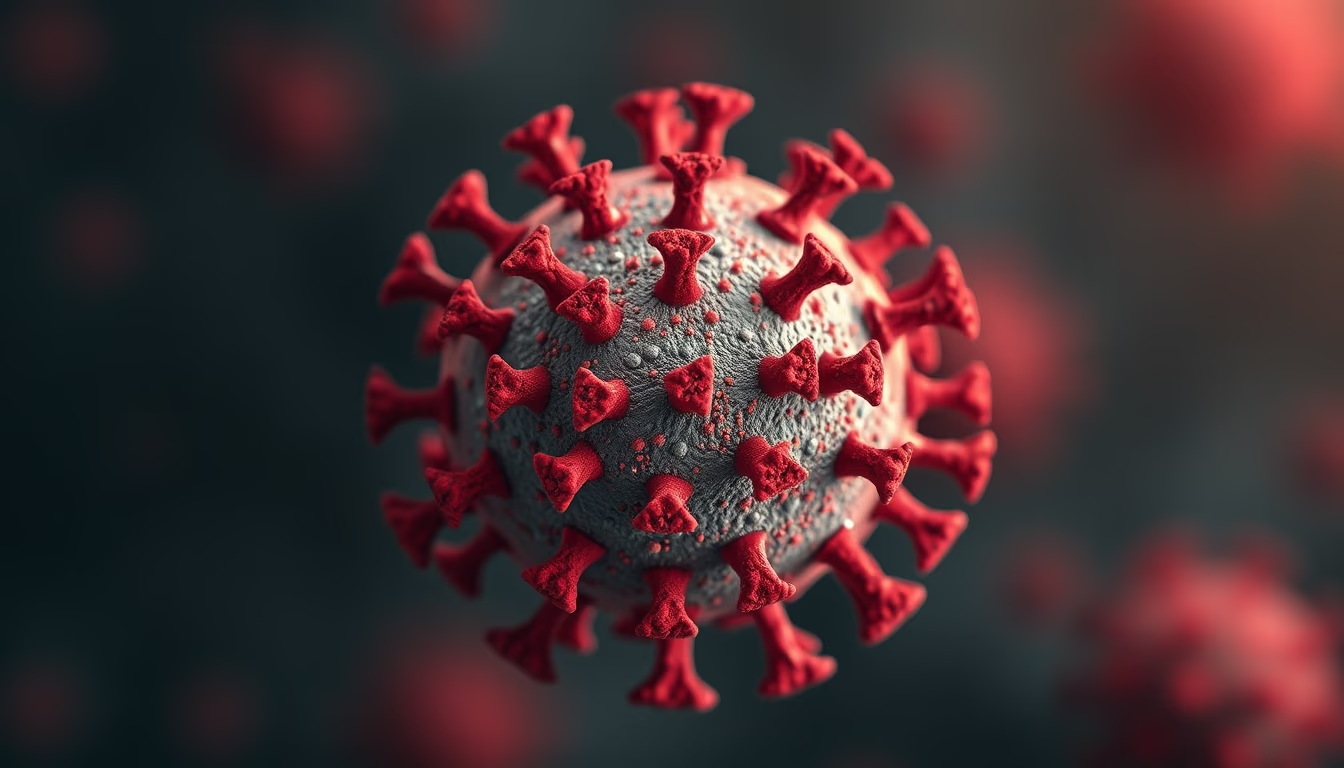
SARS-CoV-2 virus, responsible for the COVID-19 pandemic, in a three-dimensional representation highlighting its spike proteins.
About this subject
SARS-CoV-2 is an enveloped coronavirus with a positive-sense single-stranded RNA genome. Its name derives from the spike proteins that form a crown-like structure on the viral surface. First identified in Wuhan, China, in December 2019, the virus spread rapidly worldwide, leading the World Health Organization to declare a pandemic in March 2020. Since then, it has infected hundreds of millions of people and caused millions of deaths, along with deep economic and social impacts.
The spike proteins are crucial for infectivity, as they bind to the ACE2 receptor on human cells, triggering membrane fusion and release of viral genetic material. This interaction became the main target of vaccines and antibody therapies. Detailed three-dimensional structures of these proteins, obtained through cryo-electron microscopy, enabled the rapid development of mRNA and viral vector vaccines.
SARS-CoV-2 has undergone continuous mutations, giving rise to variants of concern such as Alpha, Beta, Gamma, Delta, and Omicron. These variants carry changes in the spike protein that may increase transmissibility, disease severity, or ability to evade immune responses induced by vaccines or prior infection. Ongoing genomic surveillance is essential to track the virus's evolution and adjust public health strategies.
Three-dimensional representations of the virus, like the one in this image, are powerful educational tools. They help visualize the complex morphology of the pathogen, including the lipid envelope, spike proteins, membrane protein, and nucleocapsid. These models are used in educational materials, scientific presentations, and risk communication, facilitating understanding of how the virus works and how medical interventions act.
Frequently Asked Questions
How does SARS-CoV-2 infect human cells?
The virus uses its spike protein to bind to the ACE2 receptor on the surface of cells, mainly in the respiratory tract. After binding, the viral membrane fuses with the cell membrane, releasing viral RNA into the cytoplasm.
What are the main variants of SARS-CoV-2 and their differences?
The Alpha, Beta, Gamma, Delta, and Omicron variants have been classified as variants of concern. They carry mutations in the spike protein that can increase transmissibility, as in Delta, or evade neutralizing antibodies, as in Omicron.
Do COVID-19 vaccines still work against new variants?
Yes, vaccines continue to protect against severe disease and hospitalization even with variants like Omicron. However, effectiveness against mild infection may decrease, and booster doses are recommended to maintain protection.
Direct URL
https://pub-c7d6a6ea828543ac903a74a341ccb2e1.r2.dev/imagens/virus-3d-render-covid-macro-closeup-p4.avifHow to credit
Include a visible link back to UtilizAí. Copy one of the snippets below:
<a href="https://xn--utiliza-eza.com/en/midia/imagens/virus-3d-render-covid-macro-closeup-p4">Virus 3d render covid</a> by <a href="https://xn--utiliza-eza.com">UtilizAí</a>, licensed under <a href="https://creativecommons.org/licenses/by/4.0/">CC BY 4.0</a>.
[Virus 3d render covid](https://xn--utiliza-eza.com/en/midia/imagens/virus-3d-render-covid-macro-closeup-p4) by [UtilizAí](https://xn--utiliza-eza.com), CC BY 4.0
License: CC-BY-4.0