Virus 3d render covid
1344×768 · AVIF · CC BY 4.0
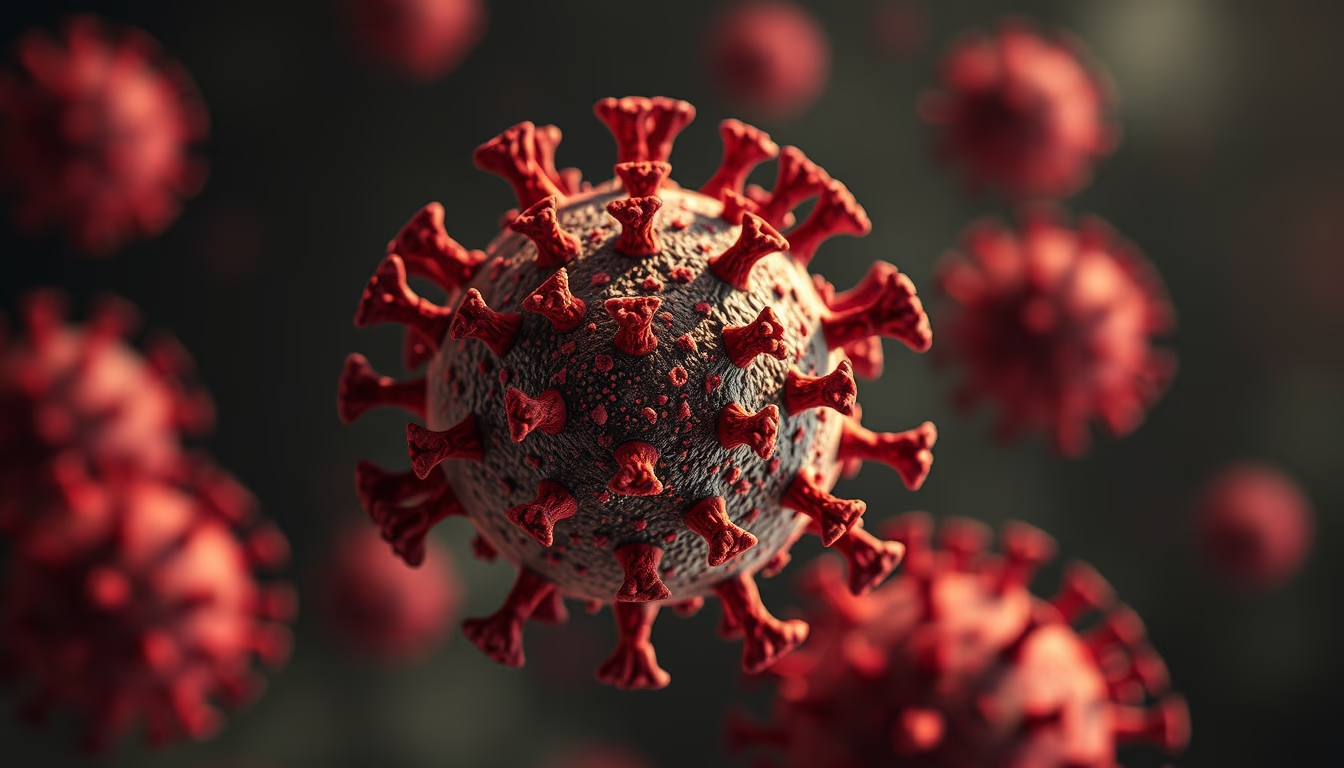
SARS-CoV-2, the coronavirus responsible for the COVID-19 pandemic, features a lipid envelope with spike proteins that give it the characteristic crown-like appearance.
About this subject
SARS-CoV-2 is a positive-sense single-stranded RNA virus belonging to the Coronaviridae family. Its structure consists of a lipid envelope with protruding spike (S) proteins, which bind to ACE2 receptors on human cells to initiate infection. Other key proteins include envelope (E), membrane (M), and nucleocapsid (N). The viral genome, about 30,000 bases, is among the largest for RNA viruses.
Transmitted mainly through respiratory droplets and aerosols, SARS-CoV-2 triggered a global pandemic starting in 2020, causing millions of deaths and profound economic and social disruptions. The disease, COVID-19, ranges from asymptomatic infections to severe acute respiratory syndrome. Age, comorbidities, and immune response influence disease severity.
The virus undergoes constant mutations, leading to variants such as Alpha, Delta, and Omicron, which alter transmissibility, virulence, and immune evasion. Omicron, for instance, harbors dozens of spike protein mutations, enabling reinfections even in vaccinated individuals. Genomic surveillance is crucial for tracking viral evolution.
In response, vaccines were developed at unprecedented speed, using technologies like mRNA (Pfizer-BioNTech, Moderna) and viral vectors (AstraZeneca, Janssen). These vaccines induce immunity against the spike protein, reducing hospitalizations and deaths. Antivirals such as Paxlovid and remdesivir were also approved. The pandemic highlighted the importance of epidemiological surveillance and global scientific cooperation.
Frequently Asked Questions
How does the coronavirus replicate?
SARS-CoV-2 uses its spike protein to enter human cells and release its RNA. The viral RNA is translated into polyproteins, which are cleaved by viral proteases to form essential proteins. The virus then replicates its genome and assembles new particles, which are released to infect other cells.
What are the main variants of SARS-CoV-2?
Major variants classified by WHO include Alpha (B.1.1.7), Beta (B.1.351), Gamma (P.1), Delta (B.1.617.2), and Omicron (B.1.1.529). Each has mutations affecting transmissibility, virulence, and immune escape.
How do vaccines work against the virus?
COVID-19 vaccines induce neutralizing antibodies, primarily against the spike protein. They prevent symptomatic infection and significantly reduce the risk of severe disease, hospitalization, and death. Booster doses are recommended to maintain protection against new variants.
Direct URL
https://pub-c7d6a6ea828543ac903a74a341ccb2e1.r2.dev/imagens/virus-3d-render-covid-fine-art-photography-p6.avifHow to credit
Include a visible link back to UtilizAí. Copy one of the snippets below:
<a href="https://xn--utiliza-eza.com/en/midia/imagens/virus-3d-render-covid-fine-art-photography-p6">Virus 3d render covid</a> by <a href="https://xn--utiliza-eza.com">UtilizAí</a>, licensed under <a href="https://creativecommons.org/licenses/by/4.0/">CC BY 4.0</a>.
[Virus 3d render covid](https://xn--utiliza-eza.com/en/midia/imagens/virus-3d-render-covid-fine-art-photography-p6) by [UtilizAí](https://xn--utiliza-eza.com), CC BY 4.0
License: CC-BY-4.0