Virus 3d render covid
1344×768 · AVIF · CC BY 4.0
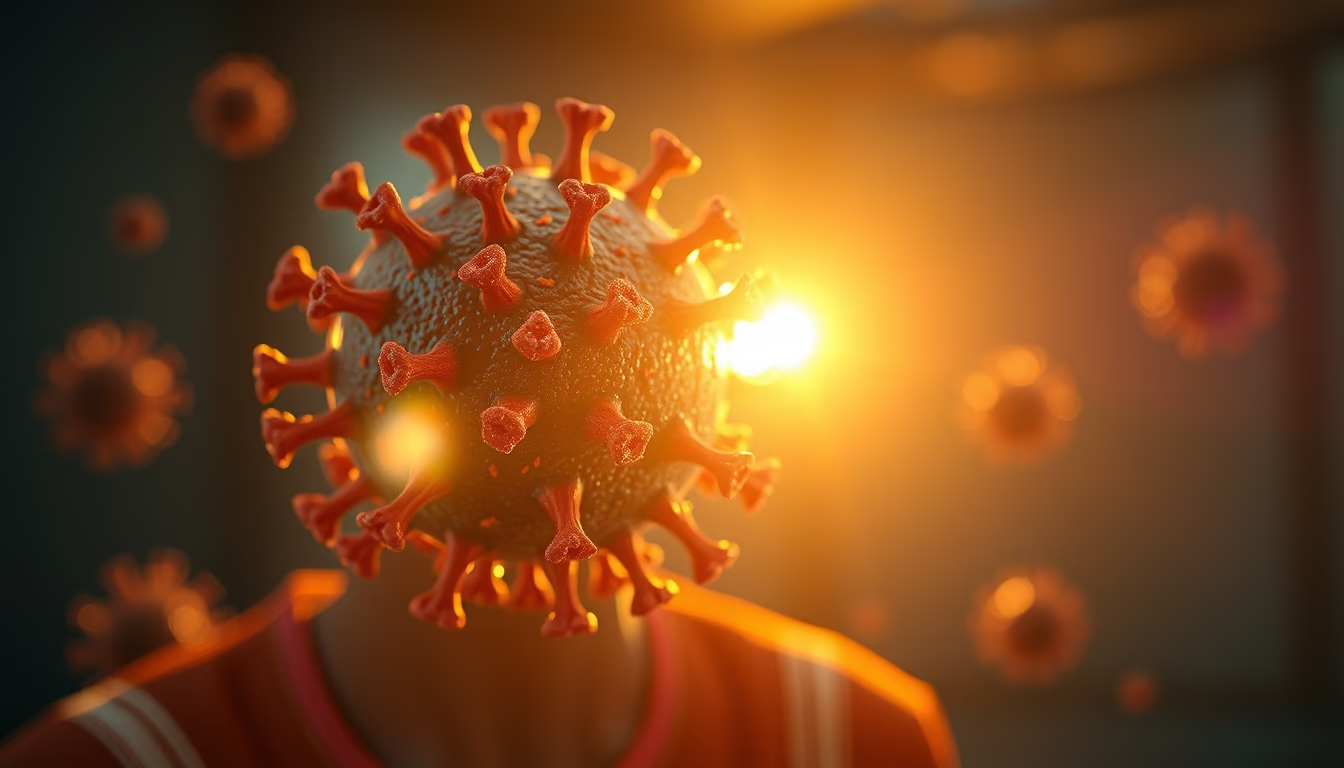
SARS-CoV-2, the virus causing COVID-19, is a coronavirus with spike proteins that bind to human cells, triggering a global pandemic that reshaped the world.
About this subject
SARS-CoV-2 is an enveloped, positive-sense single-stranded RNA betacoronavirus. Its surface is covered with spike proteins that bind to the ACE2 receptor on human cells, initiating infection. First identified in Wuhan, China in December 2019, the virus rapidly spread worldwide, leading the World Health Organization to declare a pandemic in March 2020. To date, it has caused millions of deaths and profoundly impacted the global economy, healthcare systems, and daily life.
Throughout the pandemic, several variants emerged due to mutations in the viral genome. The most concerning were classified as variants of concern, including Alpha (B.1.1.7), Beta (B.1.351), Gamma (P.1), Delta (B.1.617.2), and Omicron (B.1.1.529). These variants exhibited increased transmissibility, partial immune escape, or greater severity, requiring continuous adjustments in public health strategies and vaccine development.
The development of vaccines in record time was a scientific milestone. mRNA, viral vector, and recombinant protein vaccines were authorized for emergency use. Mass vaccination dramatically reduced hospitalizations and deaths, although global vaccine coverage remains unequal. Non-pharmacological measures, such as mask-wearing, social distancing, and hand hygiene, remain relevant for controlling transmission.
The COVID-19 pandemic left lasting lessons on the need for global pathogen surveillance, investment in basic research, and public health infrastructure. SARS-CoV-2 continues to circulate, but hybrid immunity (vaccination plus natural infection) has reduced disease severity. Monitoring the virus's evolution and adapting vaccines is essential for the future.
Frequently Asked Questions
What are the spike proteins of the coronavirus?
Spike proteins are glycoproteins on the surface of SARS-CoV-2 that bind to the ACE2 receptor on human cells, enabling viral entry and serving as the main target of vaccines.
How many variants of SARS-CoV-2 are there?
Many variants exist, but the most notable classified as variants of concern were Alpha, Beta, Gamma, Delta, and Omicron, each with distinct transmissibility and immune escape characteristics.
How does SARS-CoV-2 spread?
The virus spreads mainly through respiratory droplets expelled when coughing, sneezing, or talking, as well as close contact and contaminated surfaces. Airborne transmission is also possible in indoor settings.
Direct URL
https://pub-c7d6a6ea828543ac903a74a341ccb2e1.r2.dev/imagens/virus-3d-render-covid-cinematic-wide-shot-p1.avifHow to credit
Include a visible link back to UtilizAí. Copy one of the snippets below:
<a href="https://xn--utiliza-eza.com/en/midia/imagens/virus-3d-render-covid-cinematic-wide-shot-p1">Virus 3d render covid</a> by <a href="https://xn--utiliza-eza.com">UtilizAí</a>, licensed under <a href="https://creativecommons.org/licenses/by/4.0/">CC BY 4.0</a>.
[Virus 3d render covid](https://xn--utiliza-eza.com/en/midia/imagens/virus-3d-render-covid-cinematic-wide-shot-p1) by [UtilizAí](https://xn--utiliza-eza.com), CC BY 4.0
License: CC-BY-4.0