Violin on red velvet
1344×768 · AVIF · CC BY 4.0
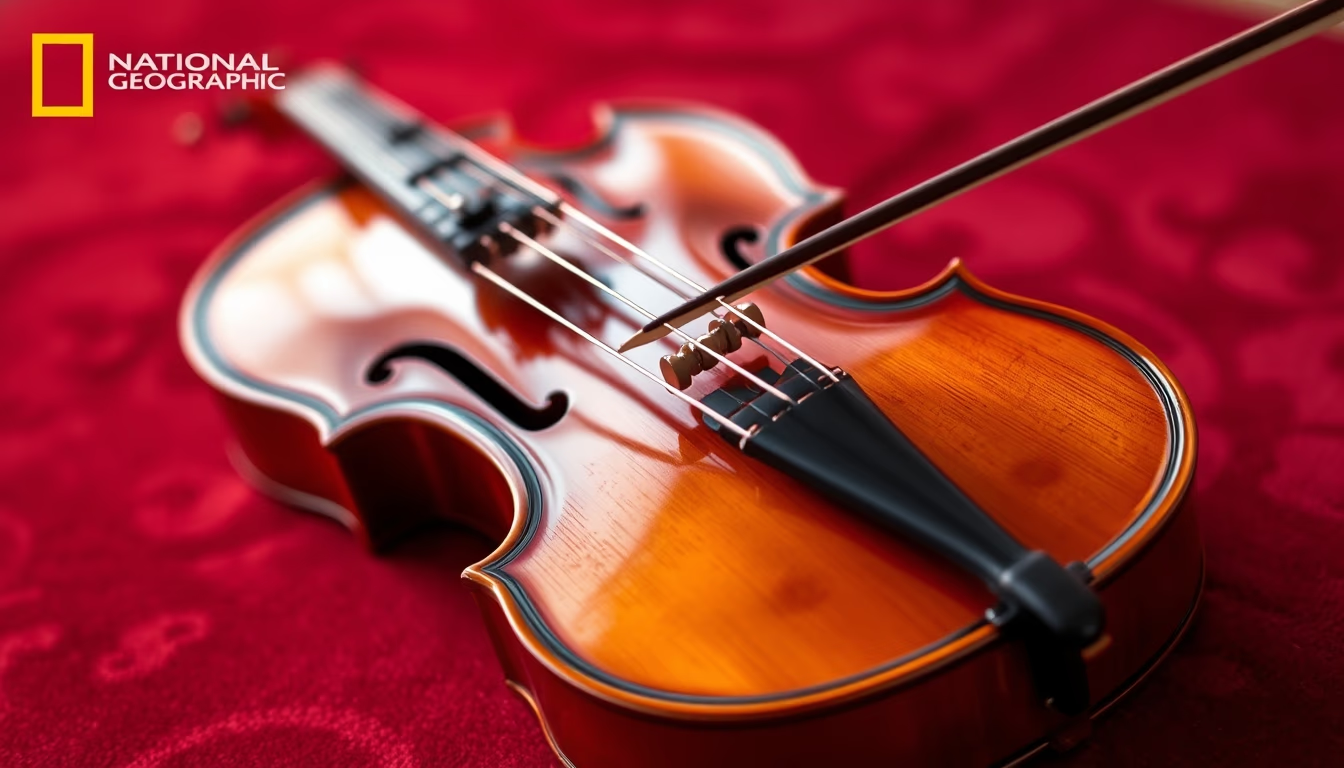
The violin, a bowed string instrument with unparalleled timbre, is a cornerstone of classical and folk music worldwide. Its handcrafted construction and rich history have captivated musicians and listeners for centuries.
About this subject
The violin is a bowed string instrument with four strings tuned in fifths (G, D, A, E). Its origins trace back to early 16th-century Italy, with craftsmen like Andrea Amati of the Cremona family establishing construction standards. The instrument evolved during the Baroque period, with luthiers such as Stradivari and Guarneri del Gesù perfecting its shape and acoustics, creating masterpieces valued at millions of dollars today.
The resonance box, made of woods like spruce and maple, is precisely carved to project sound. The bow, traditionally made of pernambuco wood and horsehair, is essential for producing its characteristic timbre. The violin is fundamental in symphony orchestras, chamber music, and also in popular genres like Celtic folk, Romani music, and jazz. Techniques such as pizzicato, vibrato, and harmonics expand its expressive possibilities.
Interestingly, the modern violin differs little from 18th-century models, and many musicians prefer antique instruments for their superior sound. Handcrafting a violin can take months, involving over 70 carefully selected and aged wood pieces. The choice of varnish, wood thickness, and even the shape of the f-holes directly influence the final sound.
Beyond its musical importance, the violin holds strong cultural symbolism: from the figure of the Romani fiddler to the works of Vivaldi and Paganini, it represents virtuosity and passion. In many countries, the violin is taught from childhood as part of music education, and its repertoire ranges from classical sonatas to moving folk melodies.
Frequently Asked Questions
What is the difference between a Baroque violin and a modern one?
The Baroque violin has gut strings, a more curved bow, and a different neck angle, resulting in a softer sound and less volume. The modern violin uses steel or synthetic strings, a straight bow, and higher tension, producing a more powerful and brilliant sound.
Why are Stradivarius violins so expensive?
Stradivarius violins are rare, made by Antonio Stradivari between 1666 and 1737, using high-quality wood and a secret varnish. Their exceptional acoustics and historical value drive prices to millions of dollars at auction.
What are the main types of wood used in violin making?
The top (table) is usually spruce, for its lightness and resonance. The back, ribs, and neck are made of maple, for its hardness and beauty. The fingerboard and pegs may be ebony, a dark, durable wood.
Direct URL
https://pub-c7d6a6ea828543ac903a74a341ccb2e1.r2.dev/imagens/violin-on-red-velvet-national-geographic-style-p3.avifHow to credit
Include a visible link back to UtilizAí. Copy one of the snippets below:
<a href="https://xn--utiliza-eza.com/en/midia/imagens/violin-on-red-velvet-national-geographic-style-p3">Violin on red velvet</a> by <a href="https://xn--utiliza-eza.com">UtilizAí</a>, licensed under <a href="https://creativecommons.org/licenses/by/4.0/">CC BY 4.0</a>.
[Violin on red velvet](https://xn--utiliza-eza.com/en/midia/imagens/violin-on-red-velvet-national-geographic-style-p3) by [UtilizAí](https://xn--utiliza-eza.com), CC BY 4.0
License: CC-BY-4.0