View camera bellows
1344×768 · AVIF · CC BY 4.0
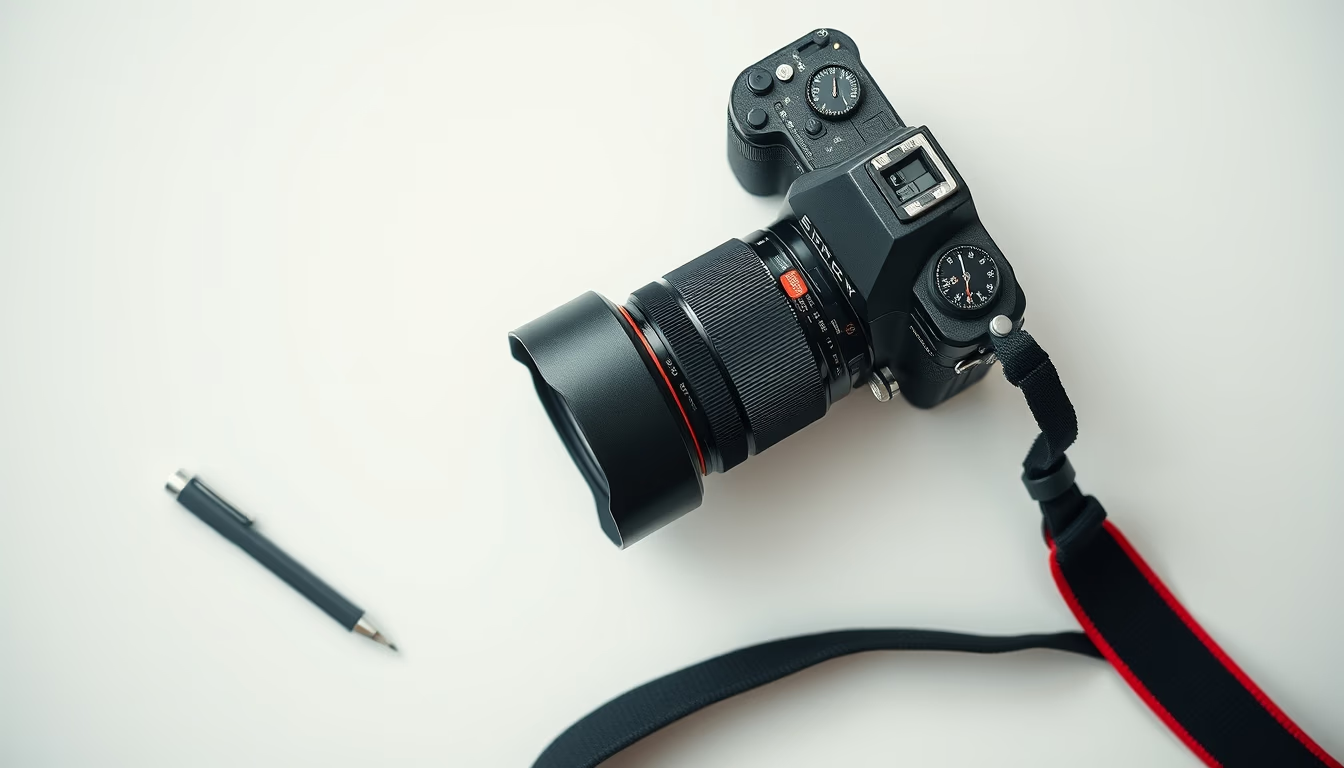
The view camera bellows is an articulated component of large format cameras, enabling precise perspective and focus adjustments used in architectural and fine art photography.
About this subject
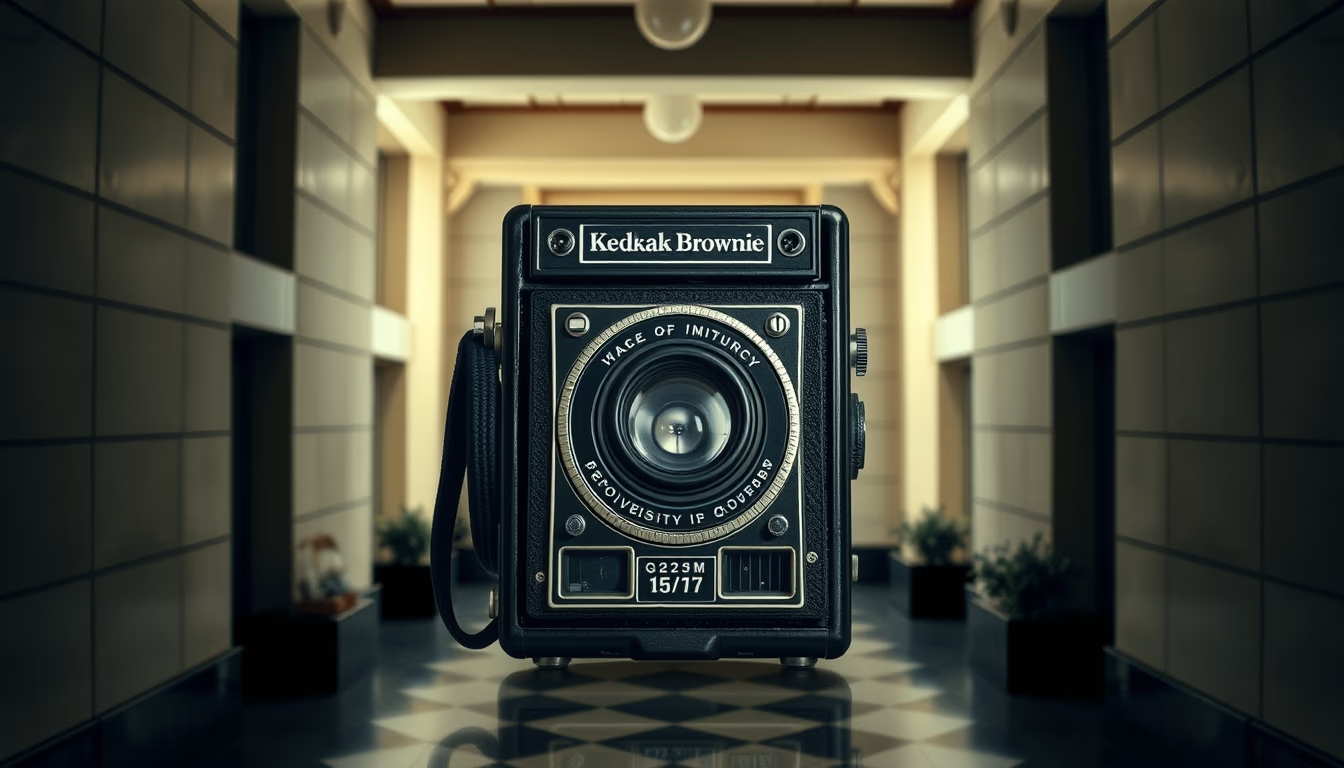
The view camera bellows, also known as large format camera bellows, is a crucial component that connects the rear standard (film holder) to the front standard (lens board) in cameras such as 4x5 and 8x10 inch formats. Traditionally made of leather or synthetic materials like polyester and nylon, the bellows features accordion-like folds that allow movements, tilt, shift, swing, and rise/fall, essential for controlling perspective and focus plane. This movement system, inherited from 19th-century bellows cameras, enables correcting architectural distortions or creating selective blur effects in portraits.
Historically, bellows evolved from early wooden cameras used by pioneers like William Henry Fox Talbot and Ansel Adams. From 1850 to 1950, bellows cameras dominated professional photography, especially in studios and scientific expeditions. Today, although digital cameras have replaced most formats, bellows are still handcrafted by specialized manufacturers like Toyo and Shen Hao, serving photographers who seek maximum optical quality and full image control.
Bellows are classified into two main types: accordion bellows with wide folds offering greater flexibility, and bag bellows with shorter folds ideal for greater extension. Material choice impacts light tightness and durability: leather was standard for decades, but today coated polyester dominates due to its lightness and low cost. A technical curiosity: the maximum bellows extension determines minimum focus distance and the ability to use extreme telephoto or wide-angle lenses.
In photographic culture, the view camera bellows symbolizes precision and tradition. It is often associated with techniques like fine focusing in macro photography and correcting converging lines in buildings. Even in the digital age, adapters allow mounting medium-format digital cameras on large format bellows bodies, reviving this technique for high-quality productions such as art catalogs and fine art reproduction.
Frequently Asked Questions
What is the purpose of bellows in a view camera?
Bellows enable movements like tilt and shift, allowing control over perspective and focus. They are crucial for correcting distortions in architectural photography and for creative effects.
What materials are used to make bellows?
Traditionally leather, but today synthetic materials like polyester and nylon are common, offering lightness, durability, and light-tightness.
Are bellows cameras still used today?
Yes, mainly in large format photography for high resolution, architecture, and art. Adapters allow digital sensors to be used with bellows bodies.
Direct URL
https://pub-c7d6a6ea828543ac903a74a341ccb2e1.r2.dev/imagens/view-camera-bellows-isometric-flat-lay-fresh2.avifHow to credit
Include a visible link back to UtilizAí. Copy one of the snippets below:
<a href="https://xn--utiliza-eza.com/en/midia/imagens/view-camera-bellows-isometric-flat-lay-fresh2">View camera bellows</a> by <a href="https://xn--utiliza-eza.com">UtilizAí</a>, licensed under <a href="https://creativecommons.org/licenses/by/4.0/">CC BY 4.0</a>.
[View camera bellows](https://xn--utiliza-eza.com/en/midia/imagens/view-camera-bellows-isometric-flat-lay-fresh2) by [UtilizAí](https://xn--utiliza-eza.com), CC BY 4.0
License: CC-BY-4.0