Vibraphone metallic bars
1344×768 · AVIF · CC BY 4.0

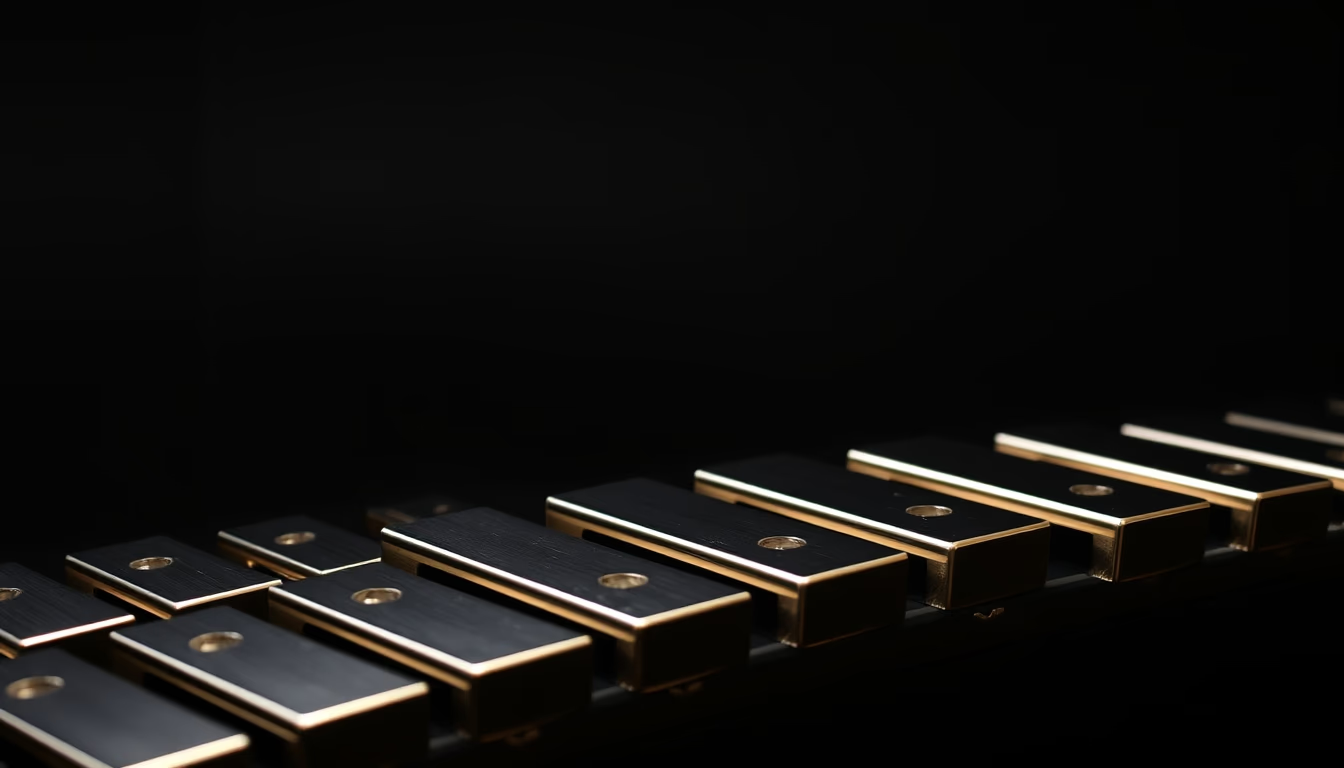
The metallic bars of a vibraphone, a percussion instrument with an ethereal and sustained sound, are tuned and arranged like a keyboard.
About this subject
The vibraphone is a lamellated percussion instrument that produces sound through the vibration of metal bars, usually made of aluminum or steel alloy. Each bar is precisely tuned and struck with mallets. Its distinctive feature is a damping mechanism: a pedal controls note duration, allowing sustain or staccato. Vertical resonator tubes amplify the sound, while a rotating motor in discs inside the tubes creates a characteristic vibrato effect.
Originating in the United States around 1920, the vibraphone was initially called the "vibraharp" by its inventor, Henry Schluter. It quickly gained traction in jazz, notably through musicians like Lionel Hampton and Milt Jackson, who incorporated it into big bands and combos. Unlike the xylophone (wooden bars) or the marimba (lower pitched), the vibraphone's metal bars produce a brighter timbre with longer sustain, ideal for melodic solos in orchestras and chamber groups.
In classical music, the vibraphone appears in works by composers such as Olivier Messiaen and Igor Stravinsky. Playing technique involves using mallets of different hardness and executing glissandos (sliding the mallet across the bars). The instrument is temperature sensitive: cold bars sound lower, hot bars sound higher, requiring frequent tuning adjustments. In terms of construction, bars are cut in a trapezoidal shape to optimize harmonic vibration.
Interestingly, the vibraphone is one of the few percussion instruments that can sustain notes for several seconds, comparable to an electroacoustic piano. Its versatility makes it common in film scores (e.g., "Schindler's List") and popular genres like bossa nova and electronic music. The instrument is often confused with the glockenspiel, but the latter has smaller bars and a higher pitch.
Frequently Asked Questions
What is the difference between a vibraphone and a xylophone?
The vibraphone has metal bars, a sustain pedal, and a vibrato motor. The xylophone has wooden bars and lacks these mechanisms, resulting in a drier, more percussive sound.
Why is the vibraphone used in jazz?
Because of its ethereal sound and sustain capability, the vibraphone allows for long melodic solos. Musicians like Lionel Hampton popularized it in big bands, using its vibrato for expressiveness.
How are vibraphone bars tuned?
Each bar is filed to a specific thickness and length, tuning the harmonics. Ambient temperature affects tuning, requiring periodic adjustments.
Direct URL
https://pub-c7d6a6ea828543ac903a74a341ccb2e1.r2.dev/imagens/vibraphone-metallic-bars-travel-photography-p6.avifHow to credit
Include a visible link back to UtilizAí. Copy one of the snippets below:
<a href="https://xn--utiliza-eza.com/en/midia/imagens/vibraphone-metallic-bars-travel-photography-p6">Vibraphone metallic bars</a> by <a href="https://xn--utiliza-eza.com">UtilizAí</a>, licensed under <a href="https://creativecommons.org/licenses/by/4.0/">CC BY 4.0</a>.
[Vibraphone metallic bars](https://xn--utiliza-eza.com/en/midia/imagens/vibraphone-metallic-bars-travel-photography-p6) by [UtilizAí](https://xn--utiliza-eza.com), CC BY 4.0
License: CC-BY-4.0