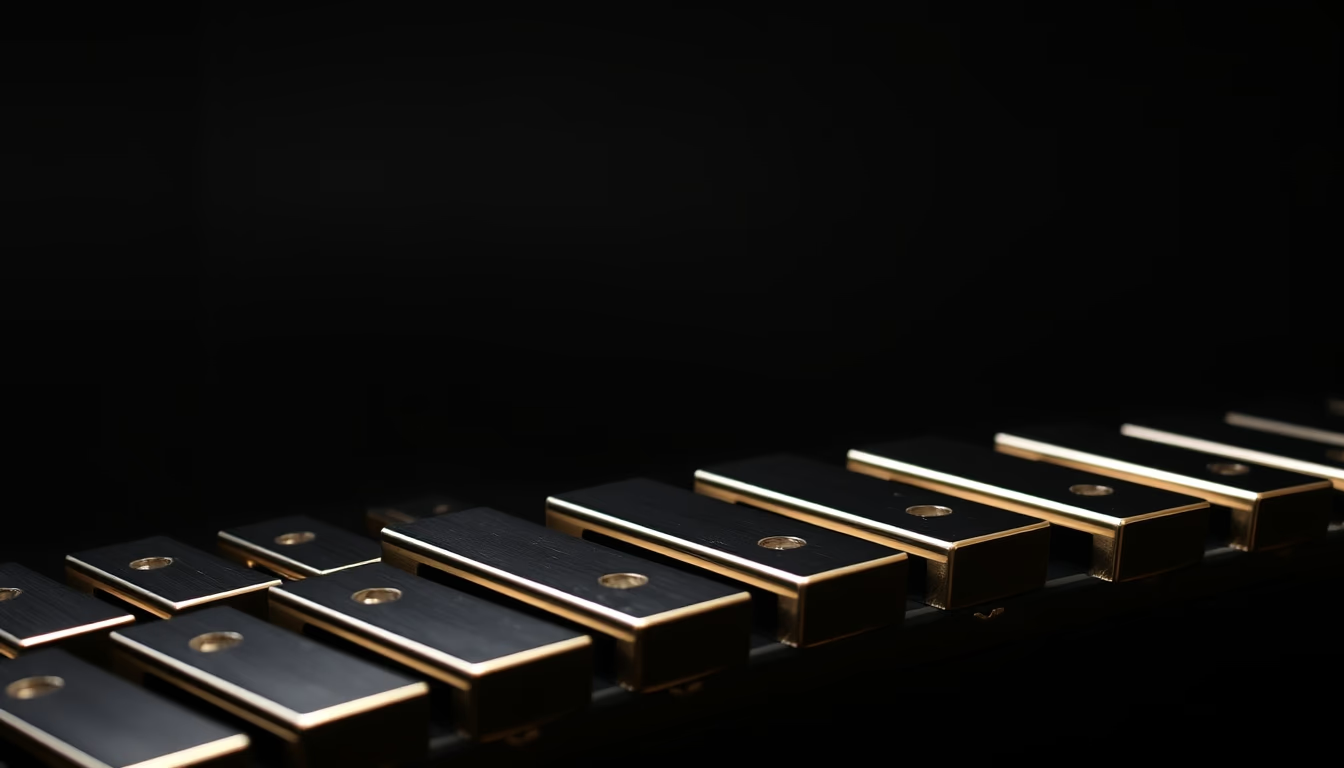
Vibraphone metallic bars
1344×768 · AVIF · CC BY 4.0

Vibraphone metallic bars: learn about the construction, sound, and history of this melodic percussion instrument.
About this subject
The vibraphone is a melodic percussion instrument known for its ethereal, sustained sound. Its metallic bars, typically made of aluminum, are tuned and arranged in a chromatic keyboard spanning three to four octaves. Below each bar, a resonator tube amplifies the sound, and a motor-driven vibrating mechanism, the tremolo, produces the characteristic vibrato that gives the instrument its name. Invented in the early 20th century, the vibraphone found its way into classical, jazz, and pop music, associated with artists such as Lionel Hampton, Milt Jackson, and Gary Burton. In the orchestra, it appears in works by composers like Olivier Messiaen and Alban Berg, while in jazz it became a versatile solo instrument capable of fast lines and harmonic chords. The construction of the bars follows strict standards of metal alloy and tempering to ensure precise tuning and prolonged sustain. The player uses mallets made of different materials, cotton, felt, or rubber, to modulate timbre and intensity. A sustain pedal controls note duration, allowing legato or staccato effects. Technique also includes the use of four mallets (four-mallet technique) for chords and complex passages. The vibraphone is not to be confused with the xylophone (wooden bars) or marimba (wooden bars with larger resonators); its identity lies in the metallic bars and motorized vibrato. In minimalist music, such as that of Steve Reich, the vibraphone is used in repetitive patterns that explore metallic decay and harmonic interaction between bars. These characteristics make the vibraphone a unique instrument, bridging pure percussion and continuous melody.
Frequently Asked Questions
What is the difference between a vibraphone and a marimba?
The main difference lies in the bar material: the vibraphone has metal bars (aluminum) and a vibrato motor, while the marimba has wooden bars and larger resonator tubes. The vibraphone also has a sustain pedal, which the marimba lacks.
How are vibraphone bars tuned?
The bars are cut and filed to specific pitches, and the underside is arched to adjust harmonic tuning. This ensures the fundamental and overtones are in sync, producing a pure, sustained sound.
What is the function of the vibrato motor in a vibraphone?
The motor drives rotating discs inside the resonator tubes, alternately opening and closing the air flow. This creates a periodic oscillation in volume, producing the characteristic vibrato. The speed is adjustable, and the motor can be turned off for non-vibrato sound.
Direct URL
https://pub-c7d6a6ea828543ac903a74a341ccb2e1.r2.dev/imagens/vibraphone-metallic-bars-minimalist-composition-p2.avifHow to credit
Include a visible link back to UtilizAí. Copy one of the snippets below:
<a href="https://xn--utiliza-eza.com/en/midia/imagens/vibraphone-metallic-bars-minimalist-composition-p2">Vibraphone metallic bars</a> by <a href="https://xn--utiliza-eza.com">UtilizAí</a>, licensed under <a href="https://creativecommons.org/licenses/by/4.0/">CC BY 4.0</a>.
[Vibraphone metallic bars](https://xn--utiliza-eza.com/en/midia/imagens/vibraphone-metallic-bars-minimalist-composition-p2) by [UtilizAí](https://xn--utiliza-eza.com), CC BY 4.0
License: CC-BY-4.0