Vibraphone metallic bars
1344×768 · AVIF · CC BY 4.0
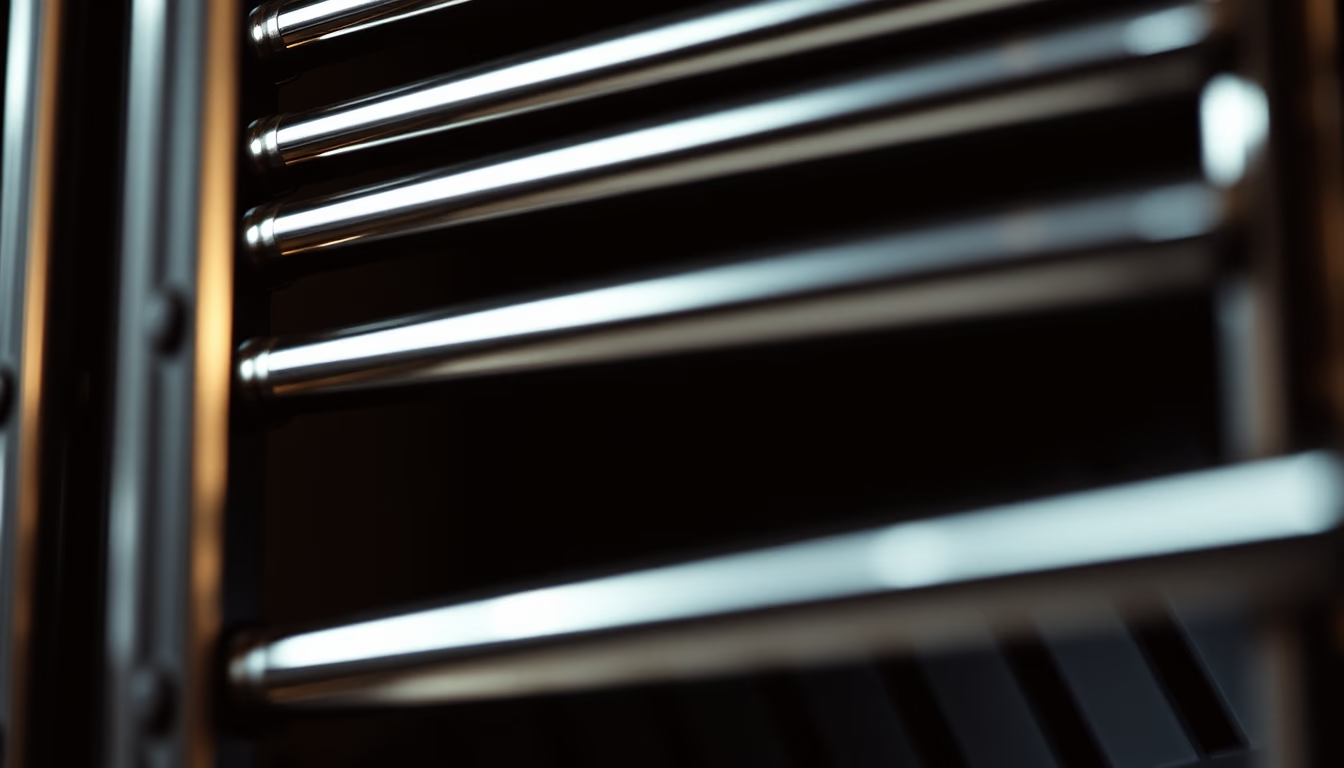
The metallic bars of the vibraphone, made of aluminum, produce crystalline tones when struck, playing a key role in jazz and classical music.
About this subject
The vibraphone is a melodic percussion instrument invented in the United States around 1921 by Hermann Winterhoff and popularized by Henry Schluter in the 1930s. Its metallic bars are typically made of high-strength aluminum, arranged chromatically like a piano keyboard. Each bar is suspended by cords or strings over an individual resonator tube, which amplifies and sustains the sound. A foot pedal controls felt dampers, allowing notes to ring freely or be cut off abruptly.
The bars are precisely tuned, usually by filing the ends or underside to adjust thickness. Higher-pitched bars are shorter and thinner; lower ones are wider and thicker. Aluminum is chosen for its lightweight and bright, penetrating timbre, distinct from the wooden bars of a marimba or the synthetic bars of a xylophone.
Players use mallets wrapped in yarn or cord to produce a soft attack and full tone. The vibraphone is widely used in jazz, from Lionel Hampton to modern artists like Gary Burton and Stefon Harris, as well as in classical works, film scores, and popular music. Maintenance involves cleaning with specialized products to prevent oxidation, as aluminum can corrode when exposed to moisture.
Interesting trivia: the name “vibraphone” comes from the vibrato effect originally produced by an electric motor spinning discs inside the resonators, creating a tremolo sound. Though less common in modern instruments, the term persists. This image captures the detail of the metallic bars, with their polished, reflective surface typical of professional models.
Frequently Asked Questions
What material are vibraphone bars made of?
Vibraphone bars are made of aluminum, typically high-strength, to produce a bright, sustained tone.
What is the difference between a vibraphone and a marimba?
The vibraphone has metal bars (aluminum) and metal resonators, while the marimba uses wooden bars and resonators made of metal or wood. The vibraphone sounds brighter with a longer sustain.
How are vibraphone bars tuned?
Bars are tuned by filing the ends or underside to adjust thickness. The tuning is chromatic, like a piano, and requires precision for correct intonation.
Direct URL
https://pub-c7d6a6ea828543ac903a74a341ccb2e1.r2.dev/imagens/vibraphone-metallic-bars-film-grain-authentic-p10.avifHow to credit
Include a visible link back to UtilizAí. Copy one of the snippets below:
<a href="https://xn--utiliza-eza.com/en/midia/imagens/vibraphone-metallic-bars-film-grain-authentic-p10">Vibraphone metallic bars</a> by <a href="https://xn--utiliza-eza.com">UtilizAí</a>, licensed under <a href="https://creativecommons.org/licenses/by/4.0/">CC BY 4.0</a>.
[Vibraphone metallic bars](https://xn--utiliza-eza.com/en/midia/imagens/vibraphone-metallic-bars-film-grain-authentic-p10) by [UtilizAí](https://xn--utiliza-eza.com), CC BY 4.0
License: CC-BY-4.0