Turntable needle macro
1344×768 · AVIF · CC BY 4.0
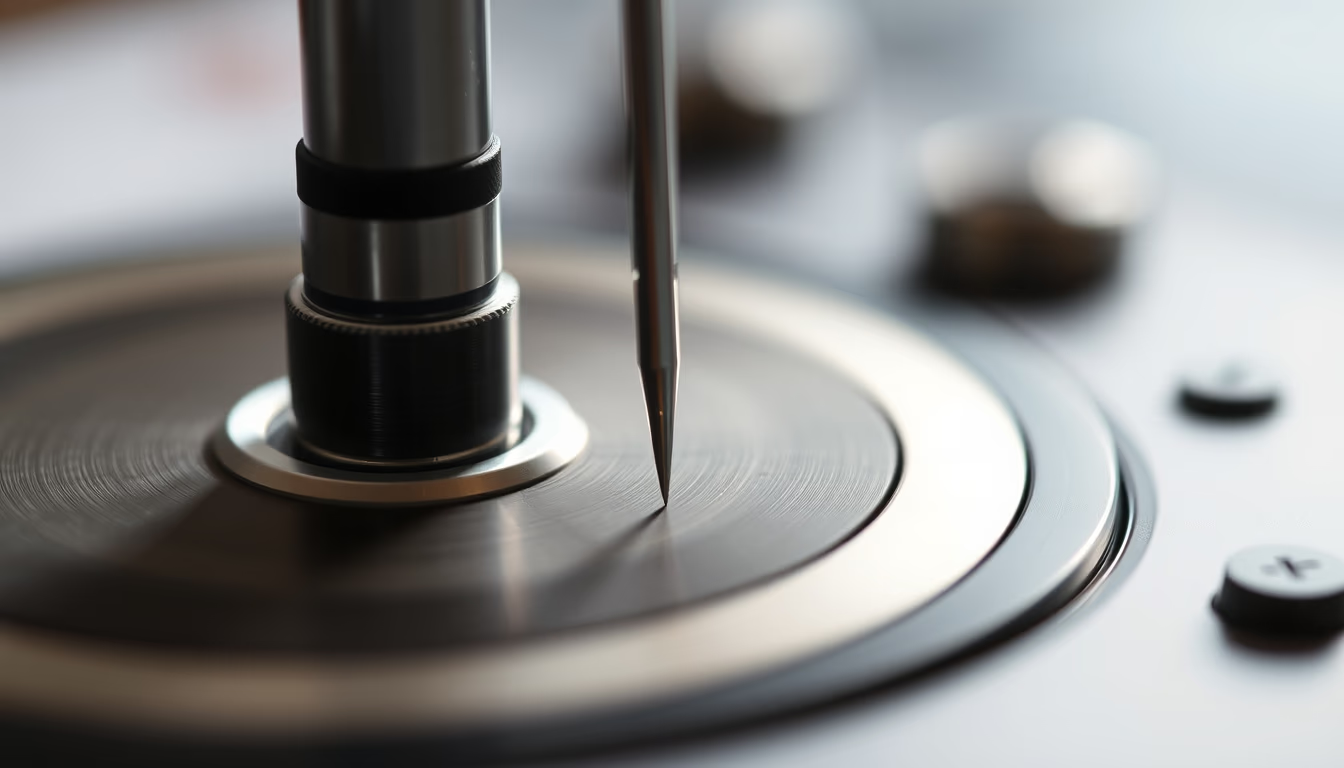
The turntable needle (stylus) is the critical component that converts vinyl grooves into sound, featuring precision diamond tips.
About this subject
The turntable stylus is the component that rides the microscopic grooves of a vinyl record, converting mechanical vibrations into electrical signals. The tip is typically made of diamond or synthetic sapphire, with shapes ranging from conical to elliptical to microlinear, each affecting sound reproduction differently. Diamond is chosen for its extreme hardness, ensuring minimal wear and higher fidelity.
The history of the stylus dates back to early gramophones in the early 20th century, which used steel or plant fiber needles replaced after every few plays. With the advent of electric turntables in the 1950s, magnetic cartridges emerged, requiring lighter and more precise needles. A high-quality modern stylus has a radius of only 0.2 to 0.7 thousandths of an inch and exerts a force of just 1 to 3 grams on the vinyl.
Proper maintenance is essential: dust and residue in the grooves can damage both the stylus and the record. Cleaning with a carbon fiber brush or special gel after each use is recommended, with replacement every 500 to 1000 hours of playback. A worn or damaged stylus causes distortion, surface noise, and loss of detail, especially in high frequencies. On contemporary turntables, precise alignment (azimuth, tracking angle) is adjustable to optimize groove contact.
Interestingly, while diamond is the most common stylus material, some professional needles use ruby or sapphire for the shank. The microgeometry of the tip is so refined that it rivals semiconductor lithography. The microlinear shape, for example, can extract information above 20 kHz, reducing distortion in heavily modulated passages.
Frequently Asked Questions
What is the difference between conical and elliptical stylus?
A conical stylus has a rounded tip and simpler contact, being more forgiving with dust but offering less high-frequency resolution. An elliptical stylus has an oval contact, better tracking the grooves and extracting more detail, especially in treble.
How should I clean the turntable stylus?
Use a carbon fiber brush or a specialized cleaning gel, always brushing from back to front of the stylus (never reverse). Avoid blowing or using liquids that could damage the cartridge.
How often should I replace the stylus?
Every 500 to 1000 hours of playback, depending on type and quality. Signs of wear include distortion at high volumes, excessive surface noise, and loss of definition in high frequencies.
Direct URL
https://pub-c7d6a6ea828543ac903a74a341ccb2e1.r2.dev/imagens/turntable-needle-macro-magazine-editorial-p3.avifHow to credit
Include a visible link back to UtilizAí. Copy one of the snippets below:
<a href="https://xn--utiliza-eza.com/en/midia/imagens/turntable-needle-macro-magazine-editorial-p3">Turntable needle macro</a> by <a href="https://xn--utiliza-eza.com">UtilizAí</a>, licensed under <a href="https://creativecommons.org/licenses/by/4.0/">CC BY 4.0</a>.
[Turntable needle macro](https://xn--utiliza-eza.com/en/midia/imagens/turntable-needle-macro-magazine-editorial-p3) by [UtilizAí](https://xn--utiliza-eza.com), CC BY 4.0
License: CC-BY-4.0