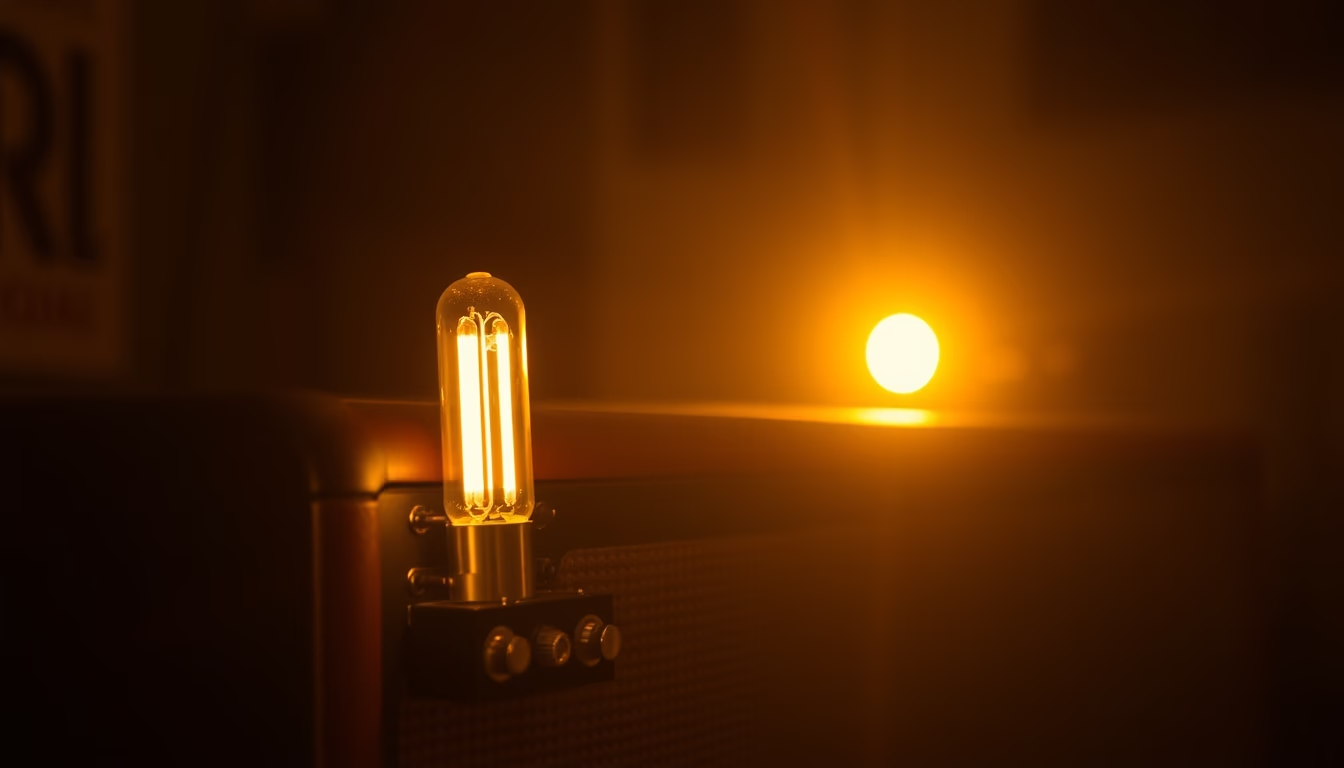
Tube amplifier glowing
1344×768 · AVIF · CC BY 4.0

Tube amplifiers use thermionic valves that emit a characteristic orange glow, prized by audiophiles for their warm sound and smooth harmonic distortion.
About this subject
Tube amplifiers, also known as valve amplifiers, are electronic devices that use thermionic valves (vacuum tubes) to amplify audio signals. Invented in the early 20th century, they were the backbone of electronics until the transistor era began in the 1960s. Despite being considered obsolete, tube amplifiers have a dedicated following of audiophiles who cherish their characteristic sound, often described as “warmer” and more “musical” due to predominantly second-order harmonic distortion, which is perceived as pleasant.
Valves work by heating a cathode that releases electrons in a vacuum, controlled by grids. This process generates heat and causes the tubes to emit an orange or reddish glow, the “glow” referenced in the image. Common audio tubes include the 12AX7 (preamp) and KT88 or EL34 (power). The choice of tubes directly affects the amplifier’s tonal response, and many enthusiasts swap tubes to tailor the sound to their preferences.
Historically, tube amplifiers dominated professional and home audio until the 1970s. Artists like Jimi Hendrix and The Beatles recorded with tube amps, and many studios still use them for guitars and vocals. In high-fidelity audio, brands such as McIntosh, Audio Research, and Marantz produce models costing thousands of dollars. In Brazil, there is a tradition of handcrafted tube amplifiers from manufacturers like OTL Amplificadores and Vono.
Maintaining a tube amplifier requires care: tubes wear out and need replacement every few years depending on usage. The generated heat demands good ventilation. Despite lower energy efficiency and higher total harmonic distortion compared to high-performance solid-state amplifiers, tube amps are valued for their transient response, sense of “soundstage”, and the visual appeal of the glowing tubes.
A fun fact: the term “glowing” is also slang for the subtle background hum some tube amps produce, though good design minimizes this. The image of a lit tube amplifier is iconic in vintage audio and DIY culture.
Frequently Asked Questions
Why do tube amplifiers have an orange glow?
The tubes contain a filament (cathode) that is heated to high temperatures to emit electrons via thermionic emission. This heating causes the filament to glow in shades of orange or red, visible through the glass envelope.
Are tube amplifiers better than solid-state ones?
They are not objectively better but have different sonic characteristics. Tube amps produce even-order harmonic distortion (considered musical) and saturate gradually, whereas solid-state amps produce odd-order distortion (harsher). The choice depends on personal preference and application.
How to maintain a tube amplifier?
Ensure good ventilation to dissipate heat, avoid physical shocks, and replace tubes when they exhibit noise, loss of gain, or microphonics. The average lifespan of a tube is 1,000 to 5,000 hours, depending on type and usage conditions.
Direct URL
https://pub-c7d6a6ea828543ac903a74a341ccb2e1.r2.dev/imagens/tube-amplifier-glowing-magazine-editorial-fresh4.avifHow to credit
Include a visible link back to UtilizAí. Copy one of the snippets below:
<a href="https://xn--utiliza-eza.com/en/midia/imagens/tube-amplifier-glowing-magazine-editorial-fresh4">Tube amplifier glowing</a> by <a href="https://xn--utiliza-eza.com">UtilizAí</a>, licensed under <a href="https://creativecommons.org/licenses/by/4.0/">CC BY 4.0</a>.
[Tube amplifier glowing](https://xn--utiliza-eza.com/en/midia/imagens/tube-amplifier-glowing-magazine-editorial-fresh4) by [UtilizAí](https://xn--utiliza-eza.com), CC BY 4.0
License: CC-BY-4.0