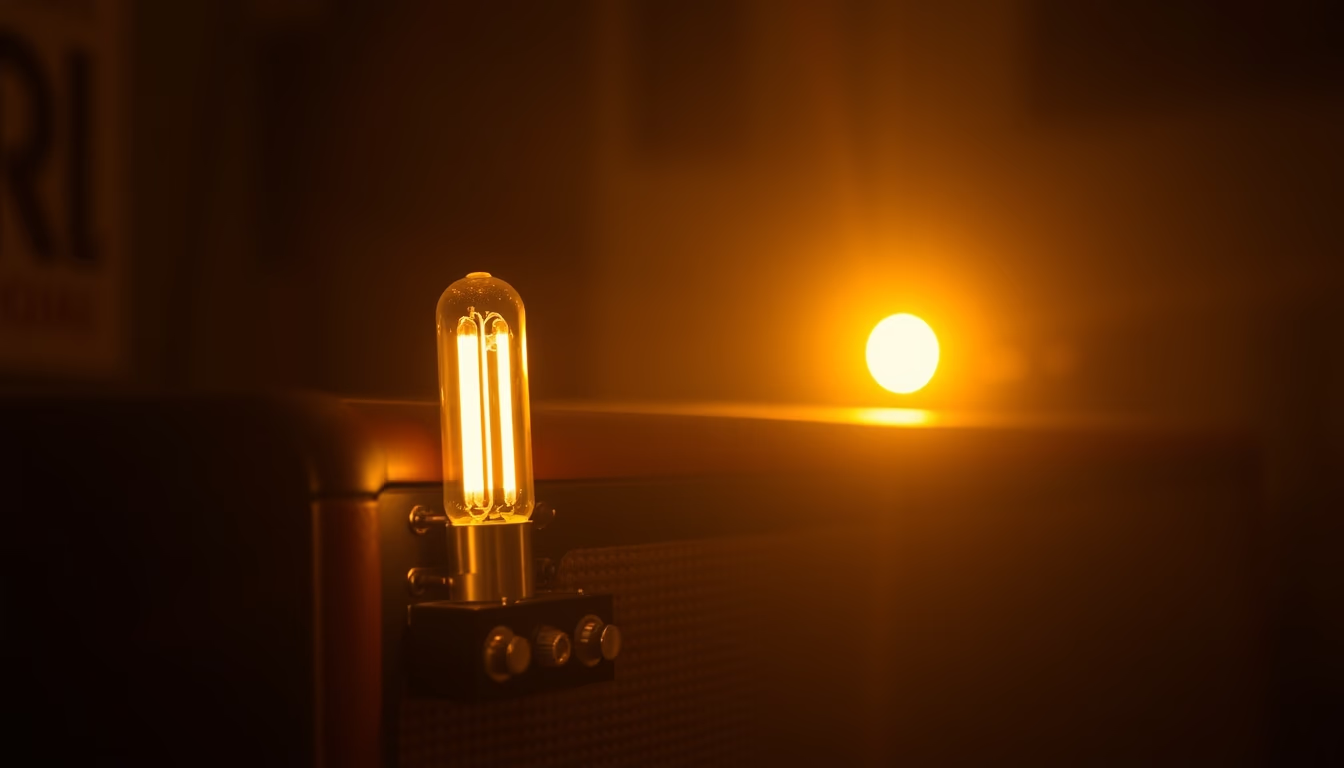
Tube amplifier glowing
1344×768 · AVIF · CC BY 4.0

Vacuum tube amplifiers use glass tubes to amplify audio signals, emitting a distinctive orange glow while operating.
About this subject
Vacuum tube amplifiers, also known as valve amplifiers, were the dominant amplification technology from the early 20th century until the rise of transistors in the 1960s. Invented by Lee De Forest in 1906, the triode allowed electrical signal amplification, becoming essential for radio, telephony, and early computers. In audio, tubes produce a characteristic sound described as warm and musical, due to their nonlinear harmonic distortion that adds richness to the tone.
The operation of a tube relies on heating a cathode, which releases electrons through thermionic emission. These electrons are attracted to a positively charged plate, while an intermediate grid controls the flow, allowing linear or nonlinear amplification. The orange glow seen in tubes is a result of the heated filament, typically made of tungsten, reaching temperatures between 800°C and 1000°C. Unlike transistors, tubes are less efficient and generate more heat, but many audiophiles and musicians prefer their dynamic and natural sound.
In music culture, tube amplifiers are iconic for electric guitars, with legendary models like the Fender Twin Reverb, Marshall JCM800, and Vox AC30. They provide harmonic compression and smooth saturation, fundamental for rock, blues, and jazz. Starting in the 1990s, there was a resurgence of interest in tubes, with boutique builders and brands like McIntosh and Audio Research producing high-end equipment. In Brazil, the tube tradition is maintained by small luthiers and recording studios that value analog timbre.
Curiosities include the need for preheating before use, the famous “warm up”, and the limited lifespan of tubes, typically 500 to 2000 hours for power tubes. Different tube types like EL34, 6L6, and 12AX7 significantly alter the sound. Maintenance requires caution due to high voltages, even when unplugged, as capacitors can store dangerous charges. Despite cheaper and more compact transistor technology, tube amplifiers continue to be revered for their vintage aesthetics and unique sound quality.
Frequently Asked Questions
What is the difference between a tube amplifier and a transistor amplifier?
Tube amplifiers use vacuum tubes to amplify the signal, producing a warm, natural sound with smooth harmonic distortion. Transistor amplifiers use semiconductors, being more efficient, compact, and with lower distortion, but many consider their sound less musical.
Why do tubes glow when the amplifier is on?
The orange glow comes from the heated internal filament, usually tungsten, which reaches high temperatures to emit electrons via thermionic emission. It is a byproduct of the heating process necessary for tube operation.
How long do tubes in a tube amplifier last?
Lifespan varies by type and usage: power tubes (e.g., EL34 or 6L6) last 500 to 2000 hours, while preamp tubes (e.g., 12AX7) can reach 10,000 hours. Deterioration is gradual, noticeable by loss of gain or excessive noise.
Direct URL
https://pub-c7d6a6ea828543ac903a74a341ccb2e1.r2.dev/imagens/tube-amplifier-glowing-long-exposure-fresh12.avifHow to credit
Include a visible link back to UtilizAí. Copy one of the snippets below:
<a href="https://xn--utiliza-eza.com/en/midia/imagens/tube-amplifier-glowing-long-exposure-fresh12">Tube amplifier glowing</a> by <a href="https://xn--utiliza-eza.com">UtilizAí</a>, licensed under <a href="https://creativecommons.org/licenses/by/4.0/">CC BY 4.0</a>.
[Tube amplifier glowing](https://xn--utiliza-eza.com/en/midia/imagens/tube-amplifier-glowing-long-exposure-fresh12) by [UtilizAí](https://xn--utiliza-eza.com), CC BY 4.0
License: CC-BY-4.0