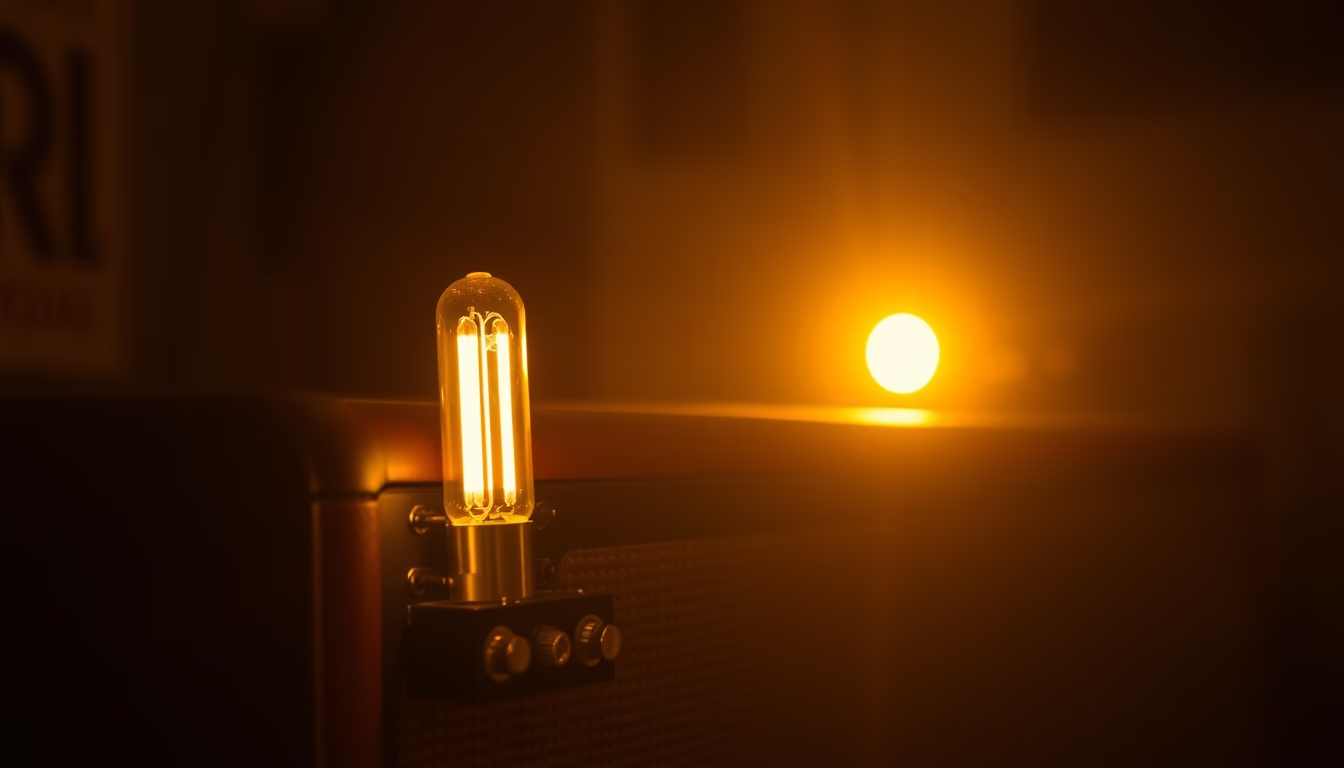
Tube amplifier glowing
1344×768 · AVIF · CC BY 4.0

Glowing vacuum tubes in audio amplifiers: the analog technology that warms the sound and captivates audiophiles worldwide.
About this subject
Tube amplifiers use vacuum tubes to amplify audio signals. These electronic components, invented in the early 20th century, were the foundation of the first radios, televisions, and sound systems. The characteristic glow of the tubes comes from their tungsten filaments, which are heated to high temperatures to emit electrons through thermionic emission. This process produces a soft harmonic distortion, prized by musicians and audiophiles for its 'warm' and natural sound, in contrast to the colder distortion of transistor amplifiers.
During the golden age of hi-fi, between the 1950s and 1970s, iconic brands like McIntosh, Marantz, and Fisher produced legendary tube amplifiers. In Brazil, companies like Gradiente and Polyvox also manufactured tube equipment, which are now collector's items. Despite the rise of solid-state electronics, vacuum tubes never disappeared. Guitarists still prefer them in guitar amps, and the high-end audio market maintains strong demand for tube preamplifiers and amplifiers.
A technical curiosity is that tubes, due to the heating process, require a warm-up period before functioning fully. This waiting ritual is part of the charm for enthusiasts. Moreover, many audiophiles believe tube amplifiers better reproduce musical dynamics and spatiality, especially when paired with high-efficiency speakers. The periodic replacement of tubes also creates a hands-on relationship with the gear.
In the contemporary scene, there is a revival of vacuum tubes in modern equipment, with manufacturers like Audio Research and Line Magnetic blending vintage design with current engineering. The glow of the tubes, besides being functional, has become an aesthetic element, often displayed through windows or grilles. Thus, the image of a glowing tube amplifier evokes both a technological heritage and a enduring sonic preference.
Frequently Asked Questions
Why do vacuum tubes glow?
Tubes glow because their internal filaments, usually made of tungsten, are heated to high temperatures (around 800 to 1000 °C) to emit electrons via thermionic emission. This glow is a byproduct of the heat generated.
What is the difference between tube and solid-state amplifiers?
Tube amplifiers use vacuum tubes for amplification, producing smooth harmonic distortion and a 'warm' sound. Solid-state amplifiers use semiconductors, are more efficient and compact, but can generate harsher distortion when overdriven.
Are tube amplifiers better than solid-state ones?
Not necessarily. They offer a different sound signature, preferred by many for their musicality and smoothness. However, they require more maintenance, consume more power, and are less practical. The choice depends on personal taste and the audio system.
Direct URL
https://pub-c7d6a6ea828543ac903a74a341ccb2e1.r2.dev/imagens/tube-amplifier-glowing-fine-art-photography-fresh3.avifHow to credit
Include a visible link back to UtilizAí. Copy one of the snippets below:
<a href="https://xn--utiliza-eza.com/en/midia/imagens/tube-amplifier-glowing-fine-art-photography-fresh3">Tube amplifier glowing</a> by <a href="https://xn--utiliza-eza.com">UtilizAí</a>, licensed under <a href="https://creativecommons.org/licenses/by/4.0/">CC BY 4.0</a>.
[Tube amplifier glowing](https://xn--utiliza-eza.com/en/midia/imagens/tube-amplifier-glowing-fine-art-photography-fresh3) by [UtilizAí](https://xn--utiliza-eza.com), CC BY 4.0
License: CC-BY-4.0