Trumpet golden detail
1344×768 · AVIF · CC BY 4.0
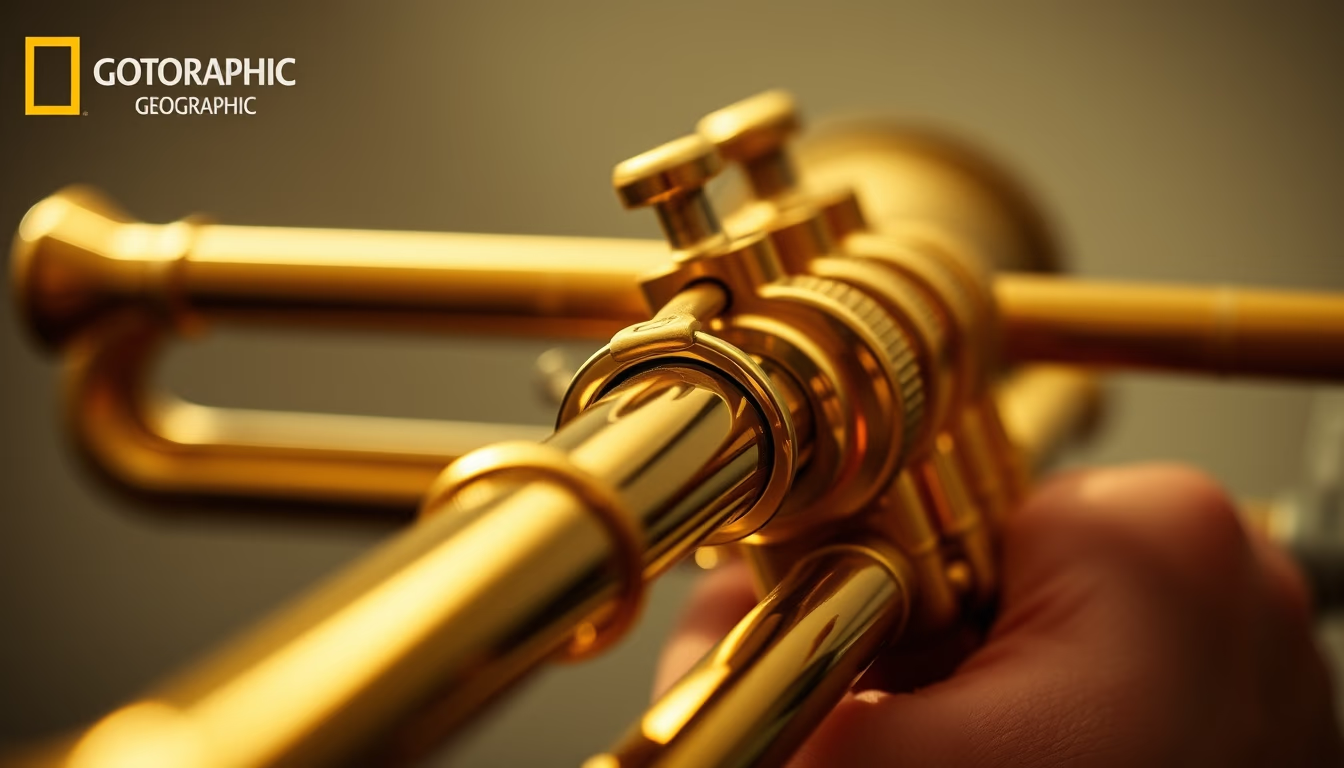
Golden details on trumpets are not merely ornamental: the gold layer affects sound projection and corrosion resistance of the instrument.
About this subject
The trumpet is one of the oldest and most versatile brass instruments, found in symphony orchestras, jazz bands, popular music, and military ceremonies. Its traditional construction in brass (a copper-zinc alloy) often receives a silver or gold plating. The golden finish is not merely aesthetic: gold is a noble metal that does not tarnish, protecting the instrument from corrosion caused by sweat and air humidity. Moreover, the gold layer subtly alters the acoustic response, yielding a brighter sound with longer sustain, preferred by many professional trumpet players.
Gold application on trumpets dates back to the 19th century, when European goldsmiths began gilding instruments for royalty and elite musicians. Today, manufacturers like Bach, Yamaha, and Schilke offer models with gold details on bells, valves, and tubing. The gilding process uses electrodeposition: a thin layer of 18- to 24-karat gold is deposited onto polished brass. Typical thickness ranges from 0.5 to 2 micrometers, enough to ensure durability without adding significant weight.
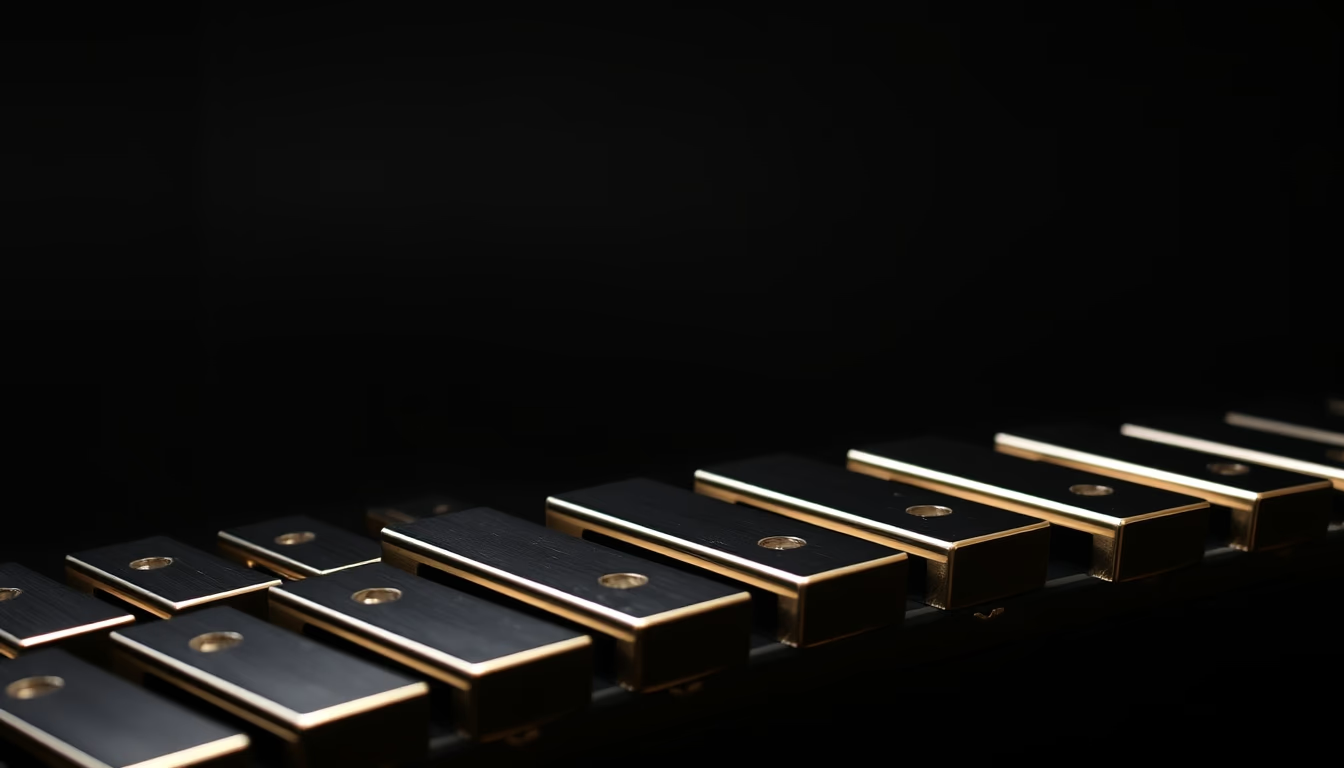
Culturally, the gold trumpet has become a symbol of prestige and virtuosity. Great names like Louis Armstrong, Dizzy Gillespie, and Wynton Marsalis used gold-accented trumpets in historic performances. In Brazil, the trumpet shines in choro, samba, and popular music, with artists such as Sivuca and Márcio Montarroyos. A close-up image of golden details reveals the artisan's minuteness: the grooves of the valves, the curve of the bell, and the reflective shimmer of gold. This style of photography, reminiscent of National Geographic, highlights texture and reflections, showcasing the intersection of art and musical engineering.
Frequently Asked Questions
Why do some trumpets have gold details?
Gold details offer corrosion resistance (gold does not tarnish) and may slightly improve sound projection, yielding a brighter tone. Additionally, the gold finish gives a sophisticated look associated with high-quality instruments.
Is a gold trumpet more expensive than a silver one?
Yes, gold plating is more costly than silver or bare brass due to the precious metal value and the electrodeposition process. A trumpet with gold details can cost 20% to 50% more than an equivalent silver model.
How thick is the gold plating on a trumpet?
Typically between 0.5 and 2 micrometers. This thin layer is sufficient for durability and luster for many years, provided the instrument is properly cleaned.
Direct URL
https://pub-c7d6a6ea828543ac903a74a341ccb2e1.r2.dev/imagens/trumpet-golden-detail-national-geographic-style-p1.avifHow to credit
Include a visible link back to UtilizAí. Copy one of the snippets below:
<a href="https://xn--utiliza-eza.com/en/midia/imagens/trumpet-golden-detail-national-geographic-style-p1">Trumpet golden detail</a> by <a href="https://xn--utiliza-eza.com">UtilizAí</a>, licensed under <a href="https://creativecommons.org/licenses/by/4.0/">CC BY 4.0</a>.
[Trumpet golden detail](https://xn--utiliza-eza.com/en/midia/imagens/trumpet-golden-detail-national-geographic-style-p1) by [UtilizAí](https://xn--utiliza-eza.com), CC BY 4.0
License: CC-BY-4.0