Truck driver with shipping invoices on a clipboard near a cargo truck
1344×768 · AVIF · CC BY 4.0
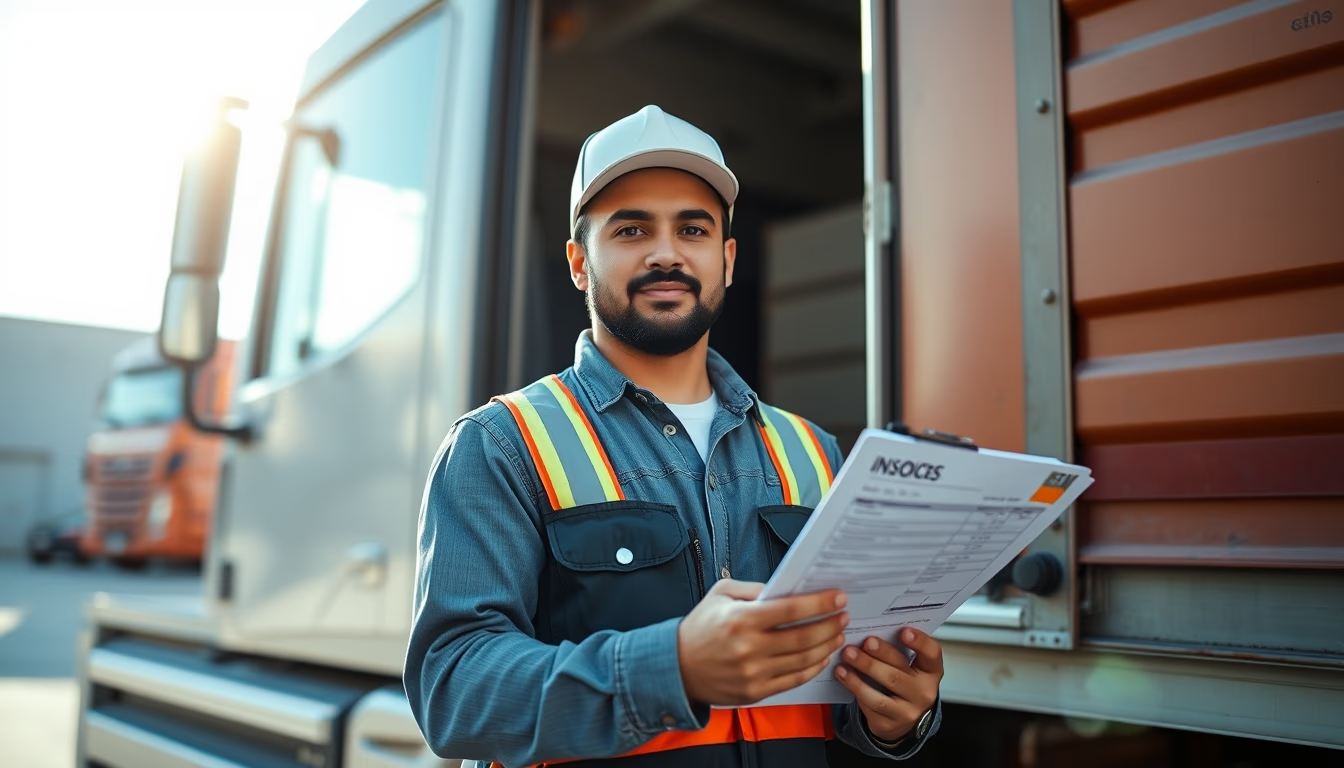
Truck driver holding shipping invoices and a pen beside a cargo truck during a workday.
About this subject
Road freight transport is the backbone of Brazilian logistics, accounting for over 60% of all goods moved in the country. The truck driver, a central figure in this ecosystem, deals daily with stacks of documents such as invoices, bills of lading, and cargo manifests. These papers are not empty bureaucracy: each electronic invoice (NF-e) must be issued and checked before departure, ensuring fiscal traceability and legal security of the operation. The professional driver, besides driving, takes on administrative tasks like checking weights, seals, and delivery addresses, often under tight deadlines. The image captures this verification moment, common at gas stations, distribution centers, or loading docks. The use of clipboard and pen persists even in the digital age, as not all operations have tablets or integrated onboard systems. The truck driver profession in Brazil is regulated by Law 12.619/2012, which sets maximum working hours and mandatory rests, but the reality on the roads often poses additional challenges. The transportation sector accounts for about 10% of the national GDP and employs millions of direct and indirect workers. The scene, lit by midday sunlight, highlights the symmetry between the professional and his vehicle, a symbol of an economy that depends on the incessant flow of goods.
Frequently Asked Questions
What documents does a truck driver need to have during cargo transport?
The driver must carry the electronic invoice (NF-e), the bill of lading (CT-e or MDF-e), the cargo manifest, the work card, and the professional driver's license (CNH with EAR). Vehicle documents and insurance are also required.
How does invoice checking work in practice?
Before departure, the truck driver verifies if the NF-e data matches the actual load: quantity, weight, seals, and delivery address. Many carriers require a signed checklist to avoid discrepancies and tax fines.
Why are truck drivers important for the Brazilian economy?
Road transport is the main mode of freight in the country, moving about 60% of all cargo. The sector employs millions and directly impacts product prices, as freight represents a significant part of logistics costs.
Direct URL
https://pub-c7d6a6ea828543ac903a74a341ccb2e1.r2.dev/imagens/truck-driver-with-shipping-invoices-on-a-clipboard-near-a-cargo-truck-symmetric-bright-midday-3.avifHow to credit
Include a visible link back to UtilizAí. Copy one of the snippets below:
<a href="https://xn--utiliza-eza.com/en/midia/imagens/truck-driver-with-shipping-invoices-on-a-clipboard-near-a-cargo-truck-symmetric-bright-midday-3">Truck driver with shipping invoices on a clipboard near a cargo truck</a> by <a href="https://xn--utiliza-eza.com">UtilizAí</a>, licensed under <a href="https://creativecommons.org/licenses/by/4.0/">CC BY 4.0</a>.
[Truck driver with shipping invoices on a clipboard near a cargo truck](https://xn--utiliza-eza.com/en/midia/imagens/truck-driver-with-shipping-invoices-on-a-clipboard-near-a-cargo-truck-symmetric-bright-midday-3) by [UtilizAí](https://xn--utiliza-eza.com), CC BY 4.0
License: CC-BY-4.0
Tags
Related images
 Brazilian e-commerce founder with packages and laptop showing tax software
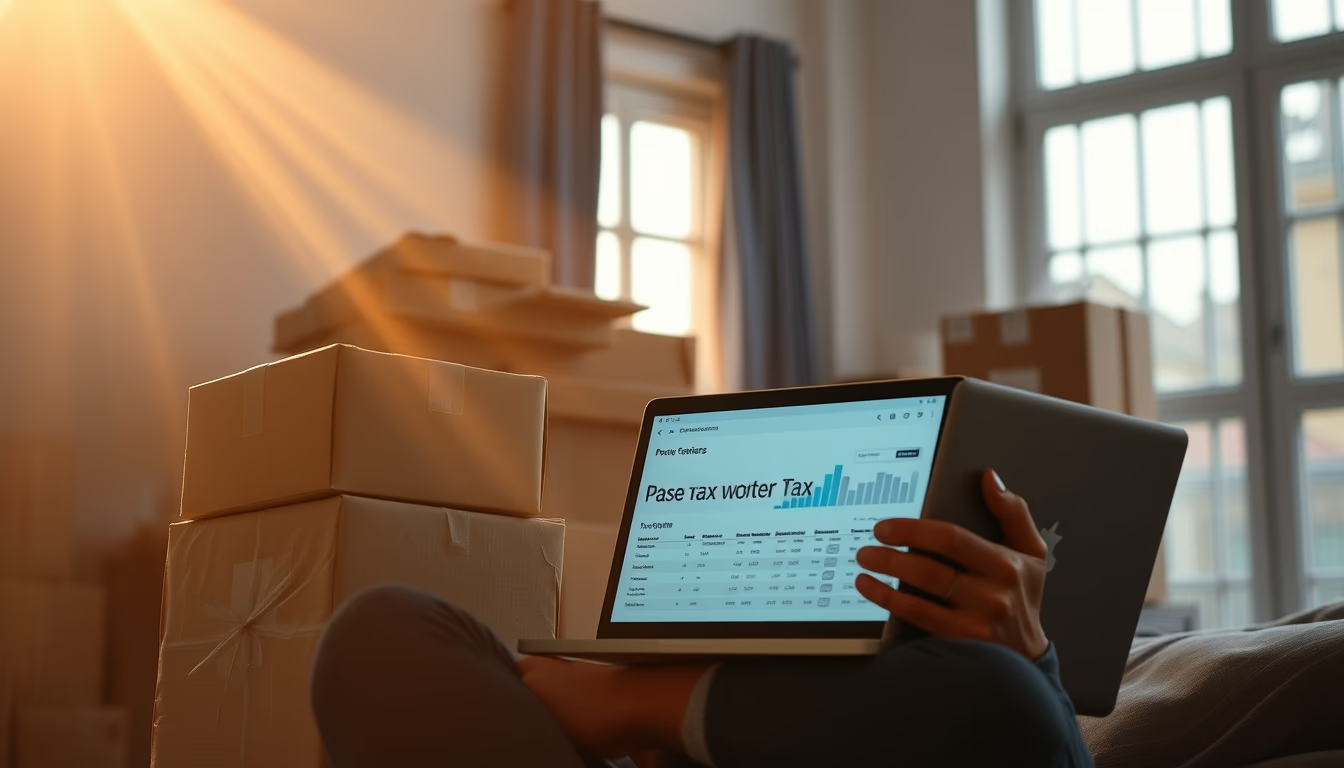 Brazilian e-commerce founder with packages and laptop showing tax software
 Brazilian e-commerce founder with packages and laptop showing tax software
 Brazilian e-commerce founder with packages and laptop showing tax software
 Brazilian e-commerce founder with packages and laptop showing tax software
 Brazilian e-commerce founder with packages and laptop showing tax software