Truck driver with shipping invoices on a clipboard near a cargo truck
1344×768 · AVIF · CC BY 4.0
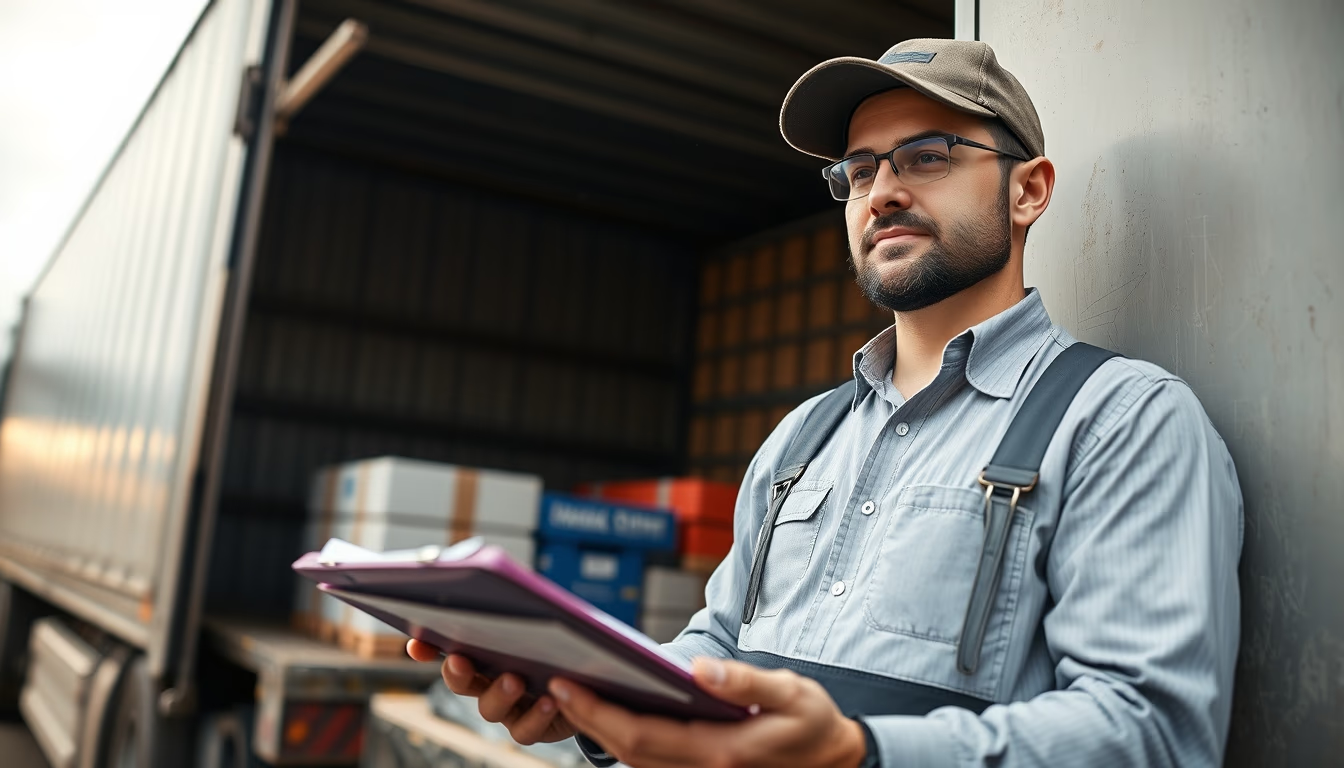
Truck driver holding shipping invoices on a clipboard next to a cargo truck on an overcast day.
About this subject
Road freight transport is the backbone of Brazilian logistics, accounting for over 60% of all cargo moved in the country, according to the National Transport Confederation (CNT). The truck driver pictured holds a clipboard with shipping invoices, essential documents that accompany every shipment, detailing origin, destination, value, and taxes such as ICMS and PIS/Cofins. In Brazil, electronic invoices (NF-e) have been mandatory since 2008, and drivers must verify that the data matches the actual load to avoid fines and tax issues.
The scene takes place on an overcast day, a common condition on many Brazilian highways, especially in the Southeast and South during winter. The truck, likely a single-axle or tandem model, is typical of fleets transporting food, beverages, or construction materials. The professional in the image represents over 2 million self-employed and employed truck drivers who face grueling shifts, expensive tolls, and cargo theft risks.
The clipboard with invoices symbolizes the bureaucracy inherent in the sector. Brazil's Truck Driver Law (12.619/2012) sets rest and work hour rules, but delivery pressure often leads to violations. In 2023, the Federal Highway Police seized over 10,000 tons of goods with irregular documentation, highlighting the importance of paperwork accuracy.
The overcast setting is not merely aesthetic: such days reduce visibility and increase accident risks, which kill about 5,000 truck drivers annually in Brazil, according to the Brazilian Association of Traffic Medicine. The image thus captures a moment of pause and verification, crucial for safety and tax compliance.
Frequently Asked Questions
Why are shipping invoices so important for truck drivers?
Invoices prove the origin and legality of the cargo. Without them, the driver can be fined and the goods seized by authorities.
What is the difference between electronic and printed invoices?
The electronic invoice (NF-e) has been mandatory since 2008. The printed version (DANFE) accompanies the transport, but the original is in the Sefaz system.
What should a driver do if the invoice does not match the load?
The driver should refuse transport or request immediate correction from the shipper. Transporting mismatched cargo can constitute tax evasion.
Direct URL
https://pub-c7d6a6ea828543ac903a74a341ccb2e1.r2.dev/imagens/truck-driver-with-shipping-invoices-on-a-clipboard-near-a-cargo-truck-editorial-overcast-daytime-7.avifHow to credit
Include a visible link back to UtilizAí. Copy one of the snippets below:
<a href="https://xn--utiliza-eza.com/en/midia/imagens/truck-driver-with-shipping-invoices-on-a-clipboard-near-a-cargo-truck-editorial-overcast-daytime-7">Truck driver with shipping invoices on a clipboard near a cargo truck</a> by <a href="https://xn--utiliza-eza.com">UtilizAí</a>, licensed under <a href="https://creativecommons.org/licenses/by/4.0/">CC BY 4.0</a>.
[Truck driver with shipping invoices on a clipboard near a cargo truck](https://xn--utiliza-eza.com/en/midia/imagens/truck-driver-with-shipping-invoices-on-a-clipboard-near-a-cargo-truck-editorial-overcast-daytime-7) by [UtilizAí](https://xn--utiliza-eza.com), CC BY 4.0
License: CC-BY-4.0
Tags
Related images
 Brazilian e-commerce founder with packages and laptop showing tax software
 Brazilian e-commerce founder with packages and laptop showing tax software
 Brazilian e-commerce founder with packages and laptop showing tax software
 Brazilian e-commerce founder with packages and laptop showing tax software
 Brazilian e-commerce founder with packages and laptop showing tax software
 Brazilian e-commerce founder with packages and laptop showing tax software